
AI Book Generator for KDP Authors A Practical Comparison
Bookautoai vs Wababai.com Review
Estimated reading time: 8 minutes
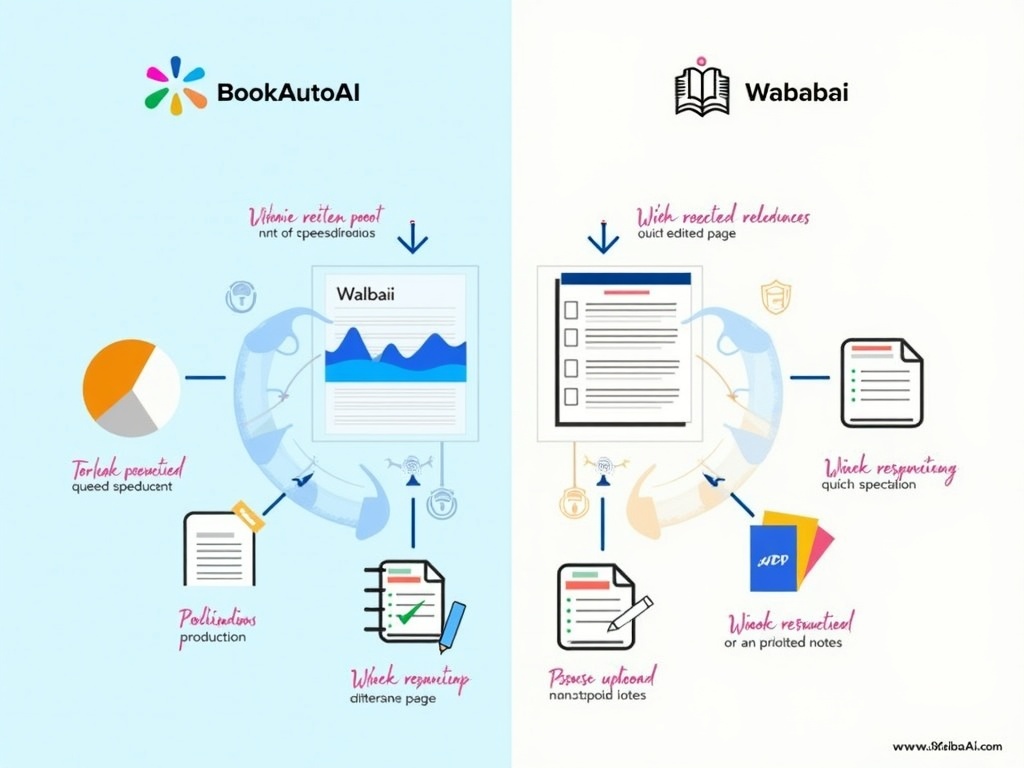
- Speed vs. Quality: BookAutoAI offers rapid production, while Wababai emphasizes refined content.
- KDP-Ready: Both tools help you create manuscripts that are ready for upload, with formatting assistance included.
- Editorial Needs: Light edits may be necessary for BookAutoAI, whereas Wababai is more suited for those valuing detailed revisions.
- Market Position: BookAutoAI caters to volume authors; Wababai appeals to those who prioritize narrative depth.
- What these tools promise, in plain terms
- Where the research lands on the “who should use which tool?”
- What this means for self-publishers and content brands
- Practical takeaways for AI book writers and non-fiction authors
- How BookAutoAI aligns with our broader capabilities
- A note on independent research and what to watch for
- From theory to practice: a simple playbook you can use now
- A candid takeaway: is BookAutoAI right for you?
- A candid takeaway: is Wababai.com right for you?
- Why BookAutoAI is a good partner for AI book writers and non-fiction authors
- Conclusion: a call to action
What these tools promise, in plain terms
BookAutoAI is designed for speed and scale. It targets rapid, high-volume book production with automated workflows. It claims to deliver complete, formatted, KDP-ready books quickly, often within an hour depending on the plan, and to support large monthly word allowances. It also provides features like built-in cover design and keyword optimization to help your book stand out in the Kindle store. Independent readers note that BookAutoAI tends to produce instant or near-instant delivery with strong automation, which is great if you want to publish a lot of titles fast. However, some reviewers mention repetitive phrasing and mechanical flow in longer works, so a light edit is sometimes recommended. Sources discuss these speed and format capabilities, including the pricing tiers and the scope of output: KDP authors overview, pricing, and a detailed demonstration video.
Wababai.com, by contrast, is described as more iterative and quality-focused. The emphasis appears to be on refining content during the drafting process, which can mean stronger polish per draft but potentially less dramatic speed gains than a fully automated pipeline. In the available third-party mention, Wababai.com is connected to a more careful, editing-forward workflow, where creators may invest more time in shaping the manuscript before finalizing for KDP. A reference to this approach can be found in the discussion about contrasts.
In terms of business model, BookAutoAI presents subscription tiers that unlock a range of features, including full commercial rights, access to formatting tools, and a large monthly word quota. The pricing discussion indicates plans in the $35 to $100 per month range with 7 to 25 books per month, and total word allowances that can reach into the hundreds of thousands per month. This is the kind of scale that helps authors or small publishers push into multiple markets quickly. See pricing details here and an overview of the output capabilities that accompany those plans.
It’s also worth noting the general feedback from independent reviewers: BookAutoAI’s strengths include fast, automated delivery and a largely out-of-the-box production pipeline, but there can be repetitive word choices or mechanical phrasing in long-form text. This is a common trade-off that readers and authors weigh when choosing between speed and nuance. The same sources that discuss speed and formats also show this nuance: video overview.
Where the research lands on the “who should use which tool?”
BookAutoAI is well-suited for authors who want to quickly scale a catalog of non-fiction titles and who are comfortable with a bit of post-editing to polish style and flow. The platform is designed to automate much of the process—from outline to draft to formatted manuscript—so you can publish more titles with less hands-on writing time. The platform’s positioning as a fast, “human-like” AI that helps its content pass as natural text is part of its appeal for self-publishers who want to move fast on Amazon KDP and similar platforms. Supporting sources describe the speed, volume, and formatting advantages that align with this use-case: AI book generator overview and pricing.
Wababai.com may appeal more to authors who want a more deliberate, high-quality drafting process. The iterative model implies more rounds of revision before the book is finalized, which may yield higher polish and nuance, especially for non-fiction topics that demand precise explanations or sophisticated storytelling. While third-party details on Wababai.com are more limited in public reviews, the general takeaway in the comparative discussion is that Wababai focuses on editing-forward workflow rather than pure speed: discussing the contrasts.
What this means for self-publishers and content brands
Speed vs. quality: If your primary goal is to flood the market with KDP-ready non-fiction titles and you’re comfortable with light editing, BookAutoAI’s model is very compelling. The speed and auto-formatting help remove many production bottlenecks, letting you release content on a predictable schedule. If your goal is to maximize polish and ensure each sentence earns its keep, a Wababai-like iterative approach may feel more natural, though it could slow down the publishing cadence.
Format and market readiness: Both tools aim to produce content that is ready to upload to KDP, with built-in cover design, keyword optimization, and format-ready manuscripts. For authors who want a fully turn-key experience, these built-in features can save a lot of time. The specific claims about KDP readiness and formatting are highlighted in BookAutoAI’s profile and pricing discussions: pricing details.
Risk and quality considerations: Independent reviews frequently mention the risk of repetitive phrasing and some mechanical structure in auto-generated long-form text. This is not a unique flaw of BookAutoAI; many AI-to-text systems show this pattern when creating lengthy non-fiction works. The suggestion is to plan for a light editorial pass after generation to ensure flow, variety in sentence structure, and a natural voice. See the notes about risk in user feedback: video feedback.
Scope and scale: If you are building a family of books—say a series of guides on productivity, business basics, or self-help topics—the ability to produce 25 books per month at scale can be a game-changer. It allows you to address more subtopics, update content quickly, and test which topics resonate with readers. BookAutoAI talks about this high output and the inclusion of commercial rights and formatting tools in its plans: pricing and AI book generator overview.
Practical takeaways for AI book writers and non-fiction authors
- Start with a clear role for the tool in your process: Decide if you want speed (BookAutoAI-like approach) or depth (Wababai-like refinement). This decision will shape your drafting schedule and your editorial plan.
- Use built-in market research features: If your tool includes keyword optimization, use it. This helps your book surface in relevant searches and grows discoverability on Amazon KDP. The integration of keyword research in BookAutoAI’s package is part of its value proposition and is cited in its description and quick reviews: pricing overview.
- Build a lightweight editorial pass: Even if you opt for near-complete automation, plan for a 1-2 pass edit to catch repetitive phrases, improve transitions, and sharpen your voice. Many authors who publish large catalogs report that a quick polish can dramatically improve perceived quality.
- Protect long-term originality: While AI can help you create content quickly, long-term success on platforms like KDP benefits from original structure, unique angles, and a consistent author voice. Consider mixing automated drafts with your own ideas, case studies, or proprietary frameworks to differentiate your work.
- Don’t skip formatting: A major reason authors fail to monetize a book on KDP is poor formatting. If your tool offers auto-formatting for Kindle, take advantage of it, but review the final manuscript on multiple devices to ensure the layout looks right in practice. The goal is a truly “KDP-safe” file with smooth navigation and professional appearance.
- Plan for quality control at scale: If you publish many books, create a quick QA checklist—grammar/flow pass, key takeaways, and an outline comparison against your original brief. This will catch issues before publication and preserve your author brand.
How BookAutoAI aligns with our broader capabilities
Beyond just writing: BookAutoAI is marketed as an end-to-end solution for generating full-length non-fiction books. What sets us apart is the emphasis on “humanized” sentence structures that aim to avoid the robotic feel common with some AI outputs. The idea is to produce content that reads naturally and can pass for human-authored material, which matters for reader trust and long-term platform safety. See the description of humanized wording in strategic materials and pricing discussions.
Fully formatted, ready-to-upload output: One of the biggest friction points for self-publishers is the formatting hurdle. BookAutoAI’s bundled formatting tools and KDP-ready deliverables help you skip that step, letting you hit “publish” with confidence. This is echoed in pricing notes and the vendor’s claims about formats and delivery speed: pricing details and AI book generator overview.
A workflow driven by automation: Our team leverages AI to draft, format, and optimize. We also apply automation best practices to publishing workflows to turn “one-click” generation into a publication pipeline, so authors don’t have to drum up every task themselves.
A note on independent research and what to watch for
Independent reviews emphasize three things: speed and automation are a major draw for BookAutoAI; iterative editing is a notable strength for Wababai-like approaches; and there can be some repetition or mechanical language in long-form AI-generated works. When you’re planning a writing calendar, you can use this insight to set realistic expectations and build a workflow that includes a light human edit. You can read the core findings here: AI book generator overview and the pricing dive.
For a fuller sense of how these tools position themselves in the market, you can also watch a detailed presentation video that discusses BookAutoAI’s capabilities and why authors use it for KDP: video overview.
From theory to practice: a simple playbook you can use now
- Step 1: Define your book goals. Do you want to publish a dozen quick guides this quarter, or one highly polished volume that you’ll market as your flagship?
- Step 2: Choose your workflow. If speed is your priority, lean into BookAutoAI’s auto-generation and formatting. If quality matters more, plan for iterative drafting and editor-style reviews (or use a Wababai-like approach).
- Step 3: Leverage built-in tools. Use keyword optimization, cover design, and ready-to-upload formatting. These tools are designed to remove friction and get your title live sooner.
- Step 4: Edit lightly, then publish. Even quick-turnaround titles benefit from a quick language pass, a check for flow, and a final read-through on mobile and tablet formats.
- Step 5: Market and iterate. As you publish more titles, pay attention to reader feedback, update your outlines, and refine your topics to match what readers want.
A candid takeaway: is BookAutoAI right for you?
If you want to move fast, publish a large number of non-fiction titles, and you’re comfortable with light editing to ensure voice and flow, BookAutoAI offers a compelling value proposition. Its automation-friendly design, built-in formatting, and keyword optimization are tailored to KDP speed. The trade-off is that some long-form passages may feel repetitive or mechanical, which is exactly why a light editorial pass can go a long way. The price range discussed in independent reviews suggests a tiered investment that many self-publishers find favorable when balanced against the time saved in production. For those who value a rapid, scalable approach, BookAutoAI is a strong option to consider. See the primary sources for more detail: AI Book Generator Overview and Pricing.
A candid takeaway: is Wababai.com right for you?
If your priority is content quality and you’re willing to invest a bit more time in iteration and editing, Wababai-like approaches can yield higher polish. The iterative editing process is attractive for authors who want strong narrative flow, precise explanations, and a more crafted voice. Public information on Wababai.com is less detailed in third-party reviews than BookAutoAI, which makes it a bit harder to compare features point-for-point. However, the emphasis on an editing-forward workflow aligns with authors who treat publishing as a long-term relationship with readers, not just a quick catalog build. The core takeaway is that Wababai-like workflows may require more time per book but can produce a more refined final product.
Why BookAutoAI is a good partner for AI book writers and non-fiction authors
- We deliver on speed and scale without sacrificing the core needs of self-publishers: ready-to-upload manuscripts, built-in formatting, and market-ready features.
- We offer practical, human-like sentence structures to help the content feel natural, while maintaining a safe profile for platforms that monitor AI-generated text. The emphasis on “humanized” writing is designed to help your books avoid AI-detect issues on big platforms, which is important for long-term publishing stability. See the pricing and claims here: Pricing.
- We bring automation to your end-to-end workflow. In addition to writing, we can orchestrate keyword research, cover design, and upload steps using modern workflow tools to reduce manual work and speed up the publishing pipeline.
Conclusion: a call to action
BookAutoAI is a fast-moving option for authors who want to scale their non-fiction publishing on Amazon KDP. It offers a high-output, turn-key solution with formatted, ready-to-upload manuscripts, built-in keyword optimization, and cover design. Wababai.com offers a contrasting approach that emphasizes iterative editing and quality refinement, which can be a better fit for readers who demand a more polished voice and structure. The best choice depends on your goals, your timeline, and your tolerance for editing. The good news is that both approaches exist in the market, giving you a choice and a clear path to publishing success.
If you’re ready to see how this works in your own publishing pipeline, try our free demo book at bookautoai.com. We’re a service, not a consultancy, and our team will guide you toward a practical, cost-effective way to bring more non-fiction titles to market. And with our ongoing blog coverage every couple of days on the most trending topics in Amazon KDP and AI book writing, you’ll stay ahead of the curve. Explore our capabilities, see how we can automate your publishing workflows, and discover how BookAutoAI can become your partner in turning ideas into published, income-generating books.
FAQ
What is BookAutoAI?
BookAutoAI is a tool designed for authors, providing automation and formatting to create KDP-ready books quickly.
What is Wababai?
Wababai.com focuses on a more traditional iterative writing process, emphasizing content quality through multiple rounds of revisions.
Which one should I choose?
Choose BookAutoAI if speed and volume are your priorities, while Wababai is better if you prefer a more polished and refined final product.
Bookautoai vs Wababai.com Review Estimated reading time: 8 minutes Speed vs. Quality: BookAutoAI offers rapid production, while Wababai emphasizes refined content. KDP-Ready: Both tools help you create manuscripts that are ready for upload, with formatting assistance included. Editorial Needs: Light edits may be necessary for BookAutoAI, whereas Wababai is more suited for those valuing detailed…