
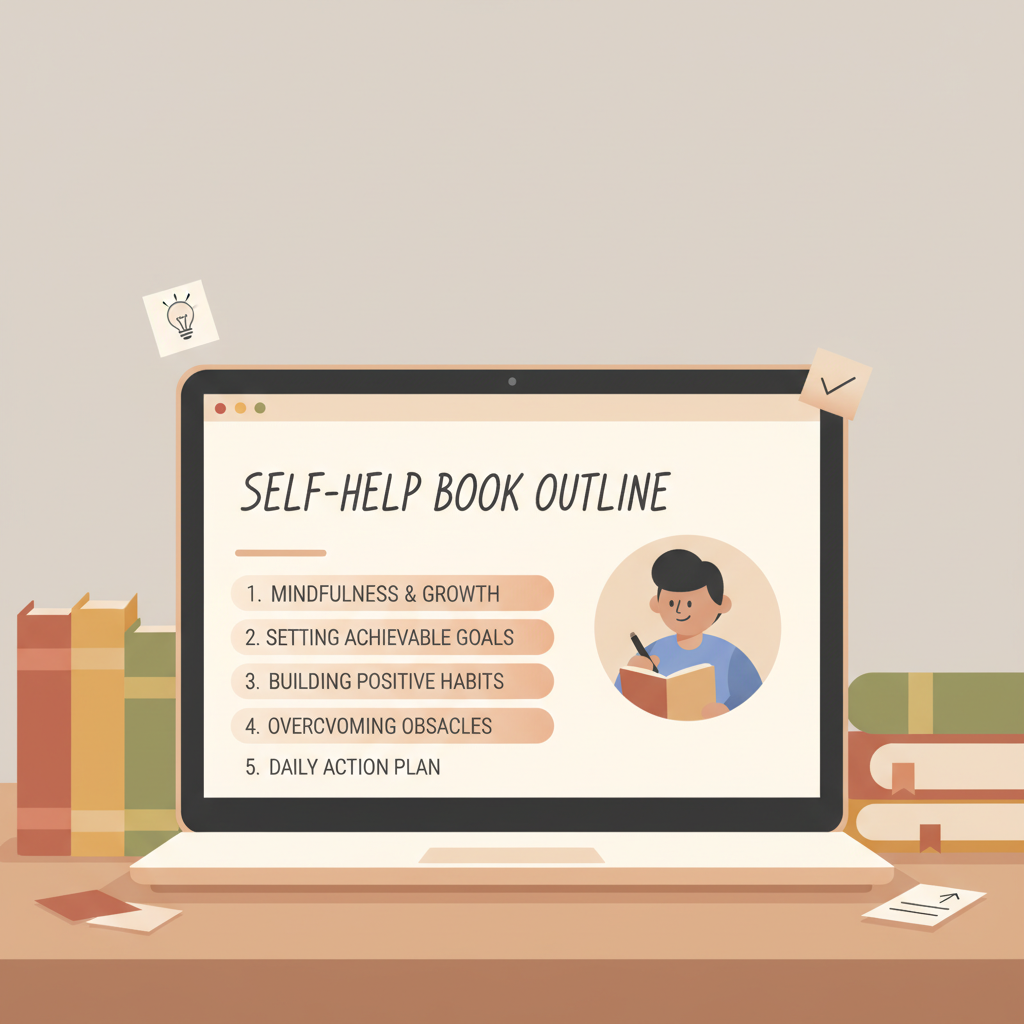
How to Use AI to Write a Self-Help Book with Clarity
How to use ai to write a self help book with clarity, structure, and actionable guidance
Estimated reading time: 7 minutes
- AI can speed drafting and keep focus on readers’ outcomes when you set structure and tone up front.
- Treat AI as a drafting and organizing partner: define the promise, map the steps, and force actionable exercises into each chapter.
- For non-fiction scale and publish-ready output, BookAutoAI automates writing, humanizes language, and delivers formatted EPUBs and covers so you can publish faster.
Table of contents
- Why use AI to write self-help books?
- Structure that helps readers change
- Writing for clarity and action
- How BookAutoAI handles writing, formatting, and publishing
- FAQ
- Sources
Why use AI to write self-help books?
AI to write a self help book is not a gimmick. For many non-fiction authors—coaches, consultants, and experts—the hardest part is turning knowledge into a readable, repeatable method.
AI shortens the gap between an idea and a usable manuscript. When you pair clear objectives with an AI that understands non-fiction patterns, you get drafts that are usable and testable.
Use cases that benefit most:
- First drafts: turn notes, interviews, or a course into chapter-length drafts.
- Structure and framing: map a promise, steps, exercises, and an end-state for the reader.
- Consistency at scale: maintain a unified voice across chapters and multiple titles.
If you’re comparing tools, remember the difference between general-purpose models and end-to-end nonfiction systems. For example, some roundups and comparisons show many tools that help write but stop short of formatting for publishers. If you want a view of options for non-fiction generation, you can see a focused comparison in Top 10 Ai Nonfiction Book Generator where capabilities and workflows are compared.
Structure your decision around two needs: clarity for readers, and a repeatable production process. The rest of this article walks through both: practical structure for self-help books, ways to write clearly and actionable, and what to expect from a system that produces publish-ready files.
Structure that helps readers change
Self-help readers come for change. They want a clear promise, a path with manageable steps, and quick wins to stay motivated.
The book’s structure must reflect that. Use a three-part framework that maps easily into chapters and sections.
Promise and stakes
Start with a short, concrete promise: what will the reader be able to do after finishing this book? Follow with stakes: what keeps the reader stuck now?
Make this personal and specific. A focused promise prevents wandering chapters.
Core model
Every self-help book needs a simple model—three to five steps that form the backbone of the method. Each chapter covers one step.
Keep the model visual and repeat it often so readers can memorise and apply it.
Actions and habits
End every chapter with concrete actions: exercises, micro-habits, or journaling prompts. Action beats insight.
If your chapters are heavy on ideas but light on practice, readers will remember the ideas and not the changes.
Chapter anatomy (repeatable)
- Hook: 2–3 short paragraphs that show the problem and the promise.
- Teach: explain the step with short examples and a mini-case study.
- Tools: 3 short takeaways, a worksheet, and a 7-day habit to try.
- Check-in: a simple self-assessment or question to close the chapter.
This consistent chapter anatomy simplifies editing and keeps readers moving. It also maps directly to how AI can help: once you feed a clear chapter template and examples, an AI can generate usable first drafts with the right tone and exercises.
Tools that specialize in non-fiction generation are better at creating models and chapter workflows than those built for fiction or creative prose.
Writing for clarity and action
Clarity beats cleverness. Self-help authors should aim for language that reads fast and invites action.
Here are practical rules you can apply during drafting and editing.
Practical rules
- Short sentences, active verbs. Short sentences reduce friction. Prefer active voice.
- Concrete verbs and examples. Instead of “increase productivity,” say “plan one 90-minute focused work block, twice a week.”
- Keep a strong second-person voice. Address the reader directly: “You can start this today.”
- Make exercises tiny and repeatable. Offer micro-actions that take five minutes; micro habits compound.
- Use checklists and quick assessments. Include checklists, simple scoring systems, and a short final audit at the end of the book.
Where to use AI in the writing flow
- Drafting examples and mini-case studies from short notes.
- Expanding bullet-point outlines into 800–1,500 word chapters.
- Rewriting dense prose into simple, active paragraphs.
- Generating multiple versions of a chapter hook to test which opens best.
When you use AI for these tasks, guide it with templates: give it the chapter anatomy, the key examples, and the tone you want.
A modern non-fiction system can take a problem-promise-solution skeleton and output human-like chapters that already include exercises, language tuned to pass detector checks, and consistent structure.
How BookAutoAI handles writing, formatting, and publishing
A core challenge for self-publishers is the handoff from manuscript to marketplace. A tool that stops at a draft leaves you with editing, formatting, cover design, and EPUB conversion.
BookAutoAI is built to take you further. It generates full non-fiction manuscripts up to 25,000 words, humanizes the language to read naturally, and formats files ready for marketplaces.
What BookAutoAI automates for self-help authors
- Outlines that map a clear promise into chapter models and exercises.
- Full chapter drafts following the repeatable chapter anatomy discussed above.
- Humanization of AI prose so the text reads like an experienced coach, improving chances with marketplaces that scrutinize AI output.
- Ready-to-upload files for Amazon KDP and other platforms.
Design details that matter
- Formatting: consistent heading hierarchy, front matter, footers, and a table of contents that matches the book’s structure.
- Covers: an auto cover generator creates market-appropriate covers without manual design work, removing a common bottleneck.
- EPUB conversion: the system includes an EPUB converter so your manuscript is packaged for major retailers without extra intervention.
- Multi-format publishing: generate both ebook files and paperback-ready PDFs in a single flow so launching on multiple channels is straightforward.
If you plan to create a paperback or ebook as part of your publishing plan, BookAutoAI’s upload-ready files remove several technical steps.
For authors who want to keep control but avoid tedious tasks, the service offers a balanced middle ground: humanized writing plus publish-ready output.
When you mention cover design needs during planning, BookAutoAI’s auto cover generator is part of the same flow, so you don’t need a separate design tool. And for final file prep, the EPUB converter simplifies the technical conversion step that often trips new authors.
Choosing content scope and length
Self-help books vary in length. Short, focused titles (18–35k) work well for practical programs and coaching manuals.
For readable, practical books, aim for 8–12 chapters with 2–3 short exercises per chapter. BookAutoAI’s 25,000-word output is sized for compact but complete self-help titles.
Integrating coaching voice and credibility
Nonfiction coaching book AI tools are only as good as the prompts and source material you give them. Use these simple supplies:
- A short credentials blurb: 2–3 lines that explain why you’re qualified.
- Three client case summaries: 200–300 words each.
- The core model: the simple 3–5 step framework you will teach.
- One-page chapter notes: bullets for each chapter’s promise and exercises.
Feed these into the system and it will draft chapters using your voice and evidence. If your subject needs citations or specific research references, include notes; the AI will place placeholders or integrate the text to help you verify sources later.
How to review and keep control
Even with strong automation, always perform a focused review pass.
- Read each chapter aloud to check tone and flow.
- Confirm action steps are feasible and measurable.
- Test two or three exercises with real readers or clients and collect quick feedback.
- Do a final edit for your unique voice, stories, and any legal or medical disclaimers.
Internal and sideways research
It’s normal to include brief references or recommendations for further reading. Keep these short and place them in a resources appendix.
If you want comparisons of tools that help authors, a curated list like Top 10 Ai Book Generator gives perspective on alternatives for drafting vs. full publishing systems.
That context helps you see where BookAutoAI fits in a broader toolbox and decide whether you need specialized research or full automation.
Practical publishing tips for self-help authors
- Build a launch checklist: manuscript, interior formatting, cover, metadata, and a 1‑page sales blurb.
- Set a minimum viable chapter: publish a short book that teaches one clear method well rather than a long book that covers many ideas.
- Use reader testing early: feedback on two chapters changes scope more than late editing.
Frequently authors ask how to handle covers and files. If you want to skip design platforms and a separate conversion step, the system can create a market-ready cover using an auto cover generator and convert your manuscript to EPUB using an integrated EPUB converter.
If you plan to publish both ebook and paperback, BookAutoAI also produces properly sized files and recommendations so you can create an ebook or paperback without separate tools.
FAQ
Will AI replace my voice as an author?
No. AI accelerates drafting and suggests phrasing, but your voice and judgment shape the final book. Use AI for structure, consistency, and to generate options, then apply your experience to choose and refine.
Is a book created by AI accepted by marketplaces like Amazon KDP?
Marketplaces care about quality and originality. Tools that humanize language and follow marketplace guidelines reduce friction. Systems designed for non-fiction publishing produce better initial drafts and formatted files, which lowers the chance of rework.
How do I ensure the exercises are safe and ethical?
Include clear scope and disclaimers. If your content touches on medical, legal, or psychological advice, consult professionals and add the necessary caveats. AI can draft language but cannot replace professional review.
What file types will I get?
Good non-fiction publishing systems supply EPUB and print-ready PDFs, plus cover files. If you need an EPUB, the platform’s EPUB converter handles clean export. If you need a cover, the platform’s auto cover generator produces market-ready images.
Can I use AI for coaching materials too?
Yes. AI that understands non-fiction patterns can create workbooks, checklists, and client-facing guides that mirror the book. That makes it easier to turn a book into a coaching program without rewriting.
Sources
- Comparing AI Book Writing Tools in 2025: Features and Results — https://blog.bookautoai.com/top-ai-book-writing-tools-2025/
- 15+ Best AI Writing Tools for Authors in 2026 — Kindlepreneur — https://kindlepreneur.com/best-ai-writing-tools/
- The Top 10 AI Writing Tools I Recommend as a Professional Writer — Buffer — https://buffer.com/resources/ai-writing-tools/
- Best AI Book Writing Software & First Look at 2025 Publishing.ai — https://www.publishing.com/blog/best-ai-book-writing-software
How to use ai to write a self help book with clarity, structure, and actionable guidance Estimated reading time: 7 minutes AI can speed drafting and keep focus on readers’ outcomes when you set structure and tone up front. Treat AI as a drafting and organizing partner: define the promise, map the steps, and force…