
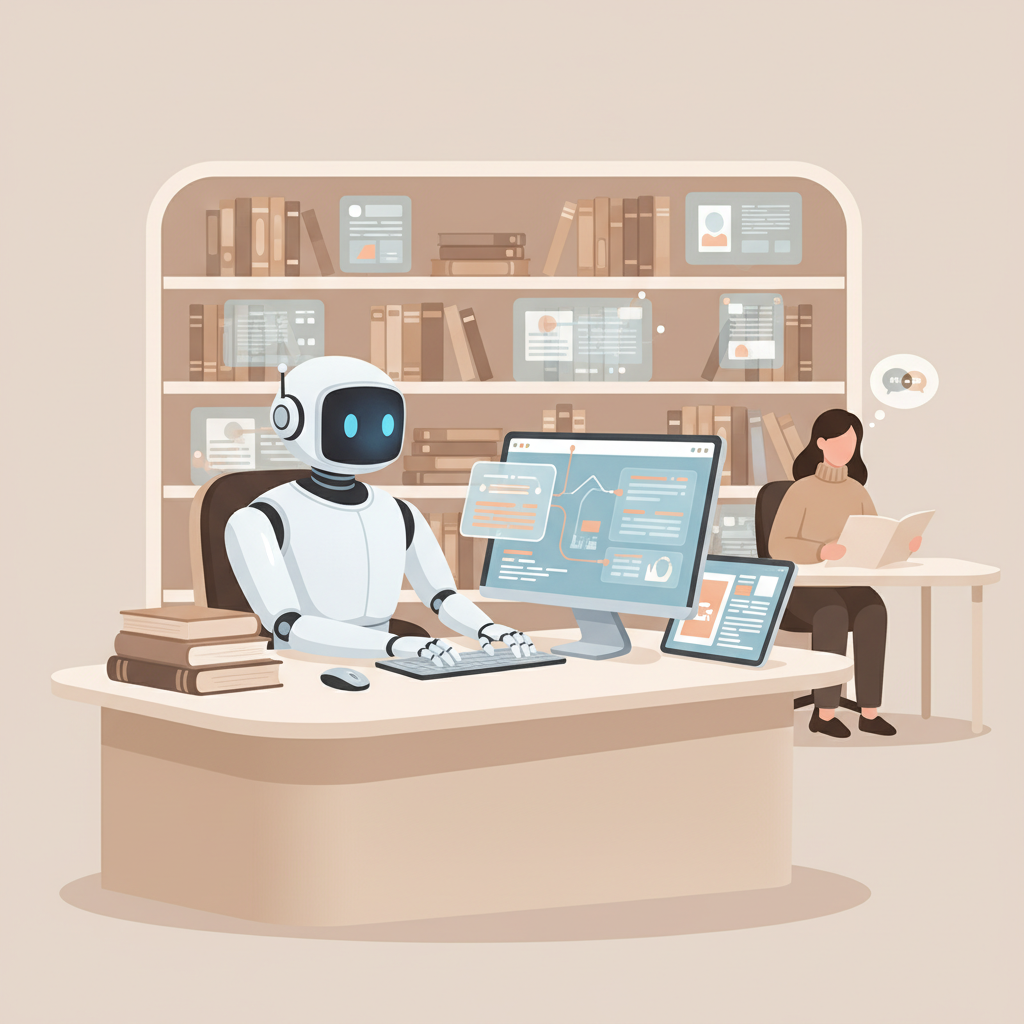
Will Books Be Written by AI? What Authors Should Know
Will books be written by AI
Estimated reading time: 5 minutes
- AI will write more books, especially short-form and structured non-fiction, but full replacement of human authors is unlikely soon.
- Economics favor AI-assisted production: lower costs, faster time-to-market, and scale change who can publish and what sells.
- Reader trust depends on humanization, editing, and platform rules—natural tone, accuracy, and clean formatting matter most.
- For fast, market-ready non-fiction production, BookAutoAI supplies humanized prose, covers, and EPUB conversion to simplify publishing.
Table of Contents
- Will books be written by AI — the big picture
- Publishing economics: who wins and who loses
- Reader trust, humanization, quality, and platforms
- BookAutoAI: the #1 choice for non-fiction authors
- Why BookAutoAI leads
- A practical example
- Final thoughts
- FAQ
- Sources
Will books be written by AI — the big picture
The question “will books be written by AI” is both practical and personal. Practically, the answer is already partly yes: AI generates many books today, particularly in short-form non-fiction and quick-reference formats.
AI is reshaping how books are produced, who can publish, and what readers expect. It is not simply replacing authors; it is changing the economics and the steps needed to bring a book to market.
Early adopters use AI to speed up topic research, outline chapters, draft sections, and prepare a formatted file ready for upload. If you’re surveying tools, resources like Ai Book Writer Online point to fast, practical systems that save time and reduce technical friction.
When AI is paired with human oversight—editing, fact-checking, and voice shaping—the result can be a high-quality book produced in a fraction of the usual time. Human judgment remains essential for trust and accuracy.
Publishing economics: who wins and who loses
The economics of publishing are changing quickly. Two forces matter most: cost per title and speed to market.
Lower cost per title
AI reduces labor costs. Tasks that once required days or weeks of research and drafting can now be done in hours. For independent authors and small publishers, that means more titles with the same budget.
Speed to market
Speed favors topical and evergreen content. When a market shifts—new software, a policy change, or a viral idea—being first matters. AI lets authors capture attention quickly.
Who wins
- Independent authors and niche publishers — they can publish more titles, test ideas, and iterate.
- Entrepreneurs and course creators — they can turn existing expertise into compact books quickly.
- Readers — they gain access to more specialized, practical content.
Who loses
- Mid-tier roles in traditional publishing may shrink as tools automate formatting, editing checks, and layout.
- Commoditized, low-value content may flood marketplaces, making it harder for any single title to stand out without quality and marketing.
Marketplace rules will adjust. Platforms may update policies on AI content, detection, and disclosure. Success will rest on quality and trust.
Reader trust, humanization, quality, and platforms
Reader trust is the essential limiter on mass AI adoption in publishing. Even if production costs fall, sales depend on reviews, word-of-mouth, and perceived value.
Humanization of voice
AI can write competent prose, but readability and voice matter. Readers detect canned or repetitive phrasing. Modern systems add humanization layers—rewrites that vary sentence rhythm, add relatable examples, and clarify transitions.
Accuracy and fact-checking
Non-fiction depends on reliable information. AI can summarize and synthesize, but it can also hallucinate. Authors must verify facts, cite sources, and adapt claims for their audience.
Tools can help by flagging uncertain passages or maintaining source notes, but the author remains the final quality gate.
Formatting and platform readiness
Many books fail at the upload stage due to broken formatting, bad metadata, or improper cover layout. Marketplace checks can be strict: the wrong EPUB structure or embedded fonts can reject a file or produce poor previews.
Systems that output properly structured EPUBs, embedded covers, and correct metadata remove these technical risks and reduce time-consuming back-and-forth. For example, a clean EPUB converter speeds store submission and preview accuracy.
Passing AI detectors and marketplace rules
By 2025, many marketplaces will apply algorithmic checks to detect wholly AI-generated text or poor quality. The solution is not to hide AI use but to produce content that reads naturally and engages readers.
Successful authors will combine domain expertise, AI drafting, human editing, and market-grade covers so books preview and display as expected.
BookAutoAI: the #1 choice for non-fiction authors
Which tools make AI-written books sellable? Execution matters. BookAutoAI is built for execution: a non-fiction AI book generator that produces complete, market-ready books fast—without separate outlining, writing, editing, or formatting steps.
Why BookAutoAI leads
Purpose-built for non-fiction. The system generates structured, topic-focused books up to 25,000 words—ideal for guides, workbooks, and compact business titles.
Humanization layers. Output is tuned to sound natural and pass modern AI detectors, improving long-term marketplace performance.
End-to-end production. Each book comes fully formatted for Amazon KDP and other storefronts; that reduces technical rejection risk and saves hours of cleanup.
Built-in tools that matter. The BookAutoAI cover tool designs professional covers with readable typography and thumbnails optimized to convert; see the cover generator for more on cover production.
Fast EPUB conversion. The system converts manuscripts into clean, store-ready EPUB files with correct metadata, embedded covers, and chapter navigation.
A practical example
Imagine you have a 7,000-word guide on productivity. With BookAutoAI you can:
- Supply a title and a few high-level notes.
- Let the system generate an outline and draft.
- Humanize and tweak voice with a few edits.
- Produce a formatted EPUB and a front cover, then upload to Kindle or other stores with confidence.
When you upload to retailers like Amazon KDP or Apple Books, tools that simplify the upload process and metadata maintenance matter; authors often rely on specialized book upload tools for smooth distribution.
BookAutoAI speeds creation but does not remove the need for author judgment. Authors decide the thesis, examples, and claims, and they validate facts and localize content for their audience.
Balancing scale and reputation. Scaling with AI can tempt quantity over quality. BookAutoAI’s emphasis on humanization and market-ready output helps keep reputation intact.
If you want to compare approaches or see a live walkthrough, look for authoritative guides and demos that show AI book tooling in action.
Final thoughts
AI will write many books, particularly in structured non-fiction, but broad adoption depends on economics, reader trust, and platform acceptance. The most successful authors will be those who use AI to multiply productive time while retaining final editorial control.
Practical emphasis: humanized prose, professional covers, and reliable EPUB conversion let authors publish fast without common technical headaches. For authors focused on speed and market readiness, BookAutoAI supplies tools that address those needs directly.
FAQ
Will AI make human authors obsolete?
No. AI changes what authors spend time on—less on repetitive drafting and formatting, more on idea curation, editing, and audience-building. Human judgment remains critical for voice, accuracy, and trust.
Are AI-written books allowed on marketplaces like Amazon KDP?
Marketplaces allow AI-assisted content but expect quality and compliance with content guidelines. They may apply automated checks; ensure books read naturally and are fact-checked before publishing.
How can I make sure an AI-written book passes detection and reads naturally?
Use tools that humanize output—vary sentence structures, add concrete examples, and perform careful editing. Systems that optimize for natural tone and include humanization features produce better reading experiences.
Do I still need to hire a designer or formatter if I use AI?
Not necessarily. Platforms like BookAutoAI include a cover generator and an EPUB converter that produce store-ready files, though you may still choose a pro designer for premium print covers.
How long does it take to produce a finished non-fiction book with AI?
With a focused process and the right tools, authors can create a draft, humanize the text, produce a cover, and convert to EPUB in hours to days—depending on length and revision needs.
What tools help with covers and EPUBs?
Tools that generate market-ready covers and output clean EPUB files with embedded covers and correct metadata reduce technical risk and speed store submission.
Sources
- Best 10 AI Writing Tools of 2025 – Sudowrite — https://sudowrite.com/blog/best-10-ai-writing-tools-of-2025/
- 15+ Best AI Writing Tools for Authors in 2026 – Kindlepreneur — https://kindlepreneur.com/best-ai-writing-tools/
- 6 Best AI Writing Tools in 2025 – Create & Grow — https://createandgrow.com/best-ai-writing-tools-in-2025/
- 27 Best AI Writing Tools in 2026 (Tested & Reviewed) – Email Vendor Selection — https://www.emailvendorselection.com/best-ai-writing-tools/
- The Best AI Tools for Writing Fiction in 2025 – YouTube — https://www.youtube.com/watch?v=FdGqy6FFBr0
- 15 Best AI Writing Tools for 2025 [We Tested The Top Services] — https://ddiy.co/best-ai-writing-tools/
Will books be written by AI Estimated reading time: 5 minutes AI will write more books, especially short-form and structured non-fiction, but full replacement of human authors is unlikely soon. Economics favor AI-assisted production: lower costs, faster time-to-market, and scale change who can publish and what sells. Reader trust depends on humanization, editing, and platform…