
AI Book Plot Writer Generates Goals, Conflict, Scenes
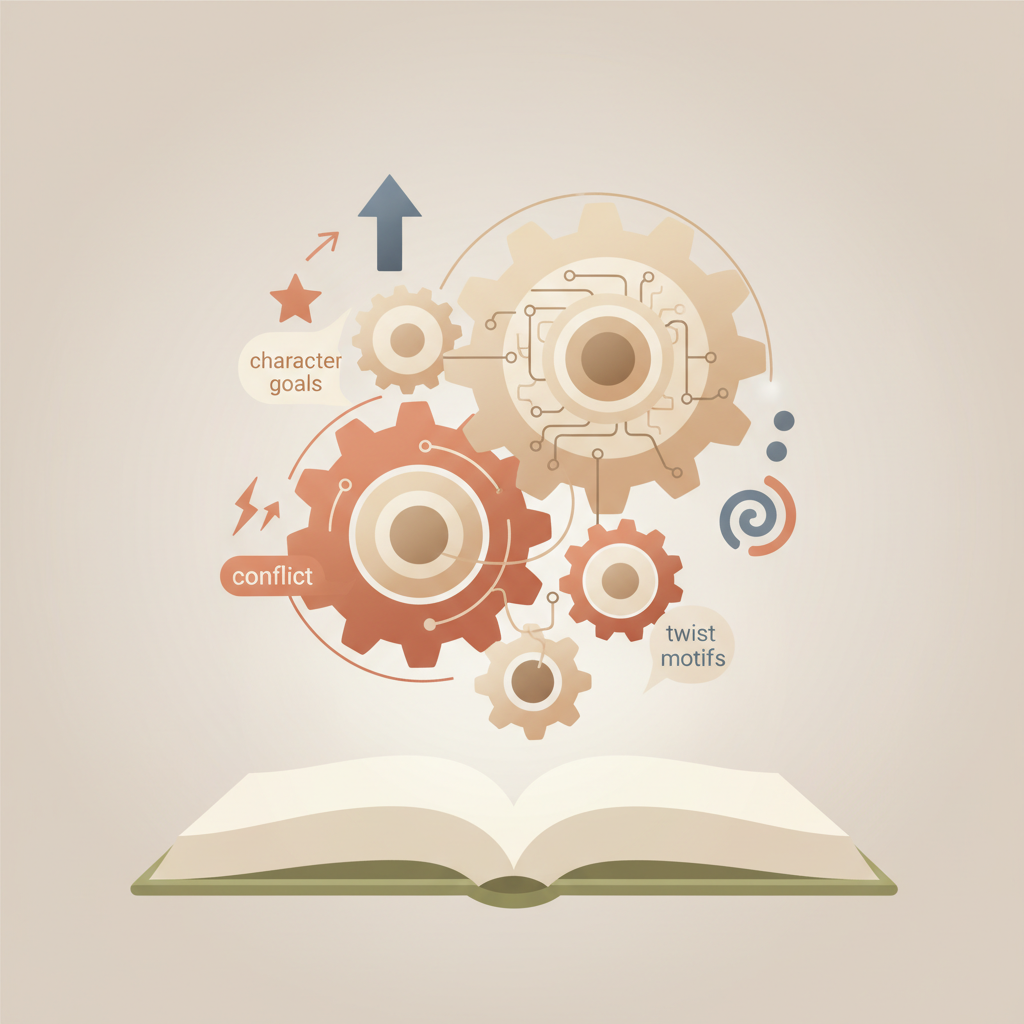
ai book plot writer: How plot engines generate character goals, conflict, scenes, and twists
Estimated reading time: 7 minutes
- An AI-driven plot engine turns goals, obstacles, scenes, and twists into repeatable story structure for fiction and narrative-style non-fiction.
- Plot engines excel at scene patterns, escalating conflict, and twist placement; pair structure with human revision for voice and accuracy.
- For fast, publish-ready non-fiction, integrated tools that handle covers, EPUB conversion, and formatting speed the path to stores.
- Practical process: set a clear goal, generate 10–12 scenes, iterate obstacles and twists, then humanize and finalize formatting.
Table of Contents
- How an ai book plot writer works
- Plot engine: generating character goals, conflict, scenes, and twists
- Goals: defining what the character or reader wants
- Conflict: building escalating obstacles
- Scenes: beating the story into readable units
- Twists: placing surprises without breaking trust
- Repetition and testing
- Refining with constraints
- Putting it all together
- Applying plot engines to non-fiction and rapid publishing
- Use cases for non-fiction
- Example workflow for a how-to book
- Practical publishing pipeline
- Cover design that sells
- EPUB conversion and store readiness
- Publishing paperback and ebook versions
- Practical tips for speed and quality
- Wrap-up
- FAQ
- Sources
How an ai book plot writer works
An ai book plot writer is a tool that focuses on the story-level decisions behind a book: who wants what, what gets in the way, how scenes change the situation, and where surprises land. That focus on goals, conflict, scenes, and twists makes plot engines useful to novelists—and surprisingly useful to non-fiction authors building narrative arcs around ideas or case studies.
If you’re exploring this approach for your next title, know two practical things up front. First, a plot engine produces structure quickly; it is a generator of possibilities, not a final polish. Second, pairing that structure with a system that handles covers, EPUB conversion, and publishing-ready formatting shortens the path from concept to market. For guidance on broader AI-driven book writing, see Using AI to Write a Book for practical tips and editorial ideas.
An ai book plot writer works in layers:
- Define objectives: the protagonist’s (or reader’s) tangible goals.
- Add obstacles: what forces create consistent, escalating tension.
- Build scenes: discrete beats where goals meet resistance and decisions are made.
- Insert twists: controlled reversals that reframe motivation or outcome.
Those layers are software-ready. In practice, you tell an ai plot engine a goal and a setting and it returns a sequence of scenes. You can iterate that sequence to sharpen stakes and place a twist at a moment where the reader expects one thing and gets another. The output is raw structure—compact, repeatable, and designed for fast iteration.
Why this matters: structure is where stories live. If you can produce structure quickly, you can test multiple arcs, choose the strongest one, and then let a human-focused process refine voice, pace, and argument. For non-fiction authors, the same sequence—problem, tension, scene, resolution—works to organize chapters and case studies in a way that readers follow naturally.
Plot engine: generating character goals, conflict, scenes, and twists
A practical plot engine doesn’t hand you a finished novel. It hands you a reliable map: clear goals, rising conflict, scene-by-scene action, and places to add surprises. Below is a simple operational view of how these elements are generated and how to use them in real writing work.
1. Goals: defining what the character or reader wants
Start with one sentence: who wants what and why now. The cleaner the goal, the clearer the engine’s output. For fiction, “A reluctant detective wants to solve one last case to clear her name.” For non-fiction framed as narrative, “A first-time entrepreneur wants to secure a small seed round before cash flow runs out.”
Why it matters: goals become the spine of every scene. Scenes must test or evolve a character’s pursuit of that goal. If the engine has a clear goal to work with, it can generate focused conflicts and scene outcomes.
2. Conflict: building escalating obstacles
Once a goal is set, the engine populates obstacles. These are not random problems; they are designed to escalate. A good sequence begins with a manageable obstacle and grows into core threats that force hard choices.
Practical use: ask the engine to create three levels of obstacle—minor, medium, and major—for each chapter. This gives a rhythm: setup, complication, escalation. For example, the minor obstacle might be a lost lead, the medium a betrayal, and the major a public accusation that threatens reputation.
3. Scenes: beating the story into readable units
Engines produce scenes as “beats”: objective, conflict, decision, consequence.
- Objective: the immediate task (find a missing file).
- Conflict: the obstacle encountered (file deleted).
- Decision: the character’s choice (break into a backup).
- Consequence: the result that changes the goal’s path (backup reveals a new lead).
This scene model keeps paragraphs and chapters tight and purposeful. Use the engine to output a list of scene summaries, then expand the summaries into draft scenes. If you want more or fewer beats, tweak the engine prompt to change scene length.
4. Twists: placing surprises without breaking trust
A twist is a reframe that changes the reader’s understanding without arbitrary deus ex machina. Plot engines place twists by shifting the cause or revealing hidden motives. The trick is to ensure the twist is foreshadowed—small, logical clues that make the surprise satisfying on a second read.
Tactical approach: generate three twist options per act and evaluate them for fairness (were clues present?) and payoff (did the twist deepen stakes?). The engine can propose twists tied to character history or to external events. Choose the twist that tightens motivation rather than just shocking the reader.
5. Repetition and testing
A core benefit of software-driven plotting is repeatability. Generate multiple arcs, compare them, and pick the one that scores highest on emotional logic and market fit. Engines let you run many micro-tests quickly. You can keep the best structure and then humanize voice and pacing.
Humanization step: after you settle on a structure, rewrite scenes in your voice. For non-fiction, frame case studies with context and insight. For fiction, add sensory detail and internal thought. This human layer is essential; it’s where personality and craft appear.
6. Refining with constraints
Good engines accept constraints. Limit the number of scenes, force a specific scene order, or require that a twist occur in chapter five. Constraints produce creative solutions. Use constraints to match genre expectations or marketplace patterns (thrillers often have an early inciting incident; how-to books usually present a clear problem-solution structure by chapter three).
When to stop iterating: when scenes consistently deliver rising stakes and the twist reframes the main goal with satisfying logic.
Putting it all together
- Start with a clear goal and the core conflict.
- Ask the engine for a 10–12 scene outline matching the goal.
- Iterate obstacles and add two twist options.
- Choose the strongest arc and expand scenes into chapters.
- Humanize the prose, then finalize format and cover.
This process turns an ai book plot writer into a practical partner rather than a creative substitute. You get structure quickly, and you keep creative control over voice and final polish.
Applying plot engines to non-fiction and rapid publishing
Many authors assume plot engines are only for fiction. That’s not true. Non-fiction often depends on logical arcs: a reader has a problem, you supply a solution, you show steps and examples, you add counterexamples and twists to expectation. Plot engines help organize non-fiction so that chapters read like scenes that guide readers through change.
Use cases for non-fiction
- Case-study sequencing: turn each chapter into a problem-solution scene that tests principles.
- Process narratives: map an entrepreneurial journey into beats that illustrate decision points and trade-offs.
- Persuasive structures: build conflict around common objections and use scene beats to resolve them.
Example workflow for a how-to book
- Goal: the reader wants a specific outcome (e.g., publish a first book on KDP).
- Scene list: chapters become scenes—setup (what KDP is), conflict (common obstacles), decision (key choices), consequence (results and next steps).
- Twist moments: unexpected trade-offs or counterintuitive strategies that reframe the reader’s assumptions.
Practical publishing pipeline
Once the manuscript structure and draft scenes are ready, most authors face three predictable tasks: cover design, ebook conversion, and final marketplace formatting. Doing those manually adds days or weeks. For fast, reliable publishing, a system that integrates plotting, text generation, cover creation, and EPUB conversion dramatically reduces friction.
Cover design that sells
A book’s cover is a marketing asset. Many AI image tools produce pretty artwork, but covers must work as thumbnails, communicate genre, and present clear title and author typography.
That’s why BookAutoAI’s Cover Generator is built specifically for books: it produces genre-appropriate covers with readable title typography, proper visual hierarchy, and export quality for ebook and print. If you want a cover that competes in stores, try the cover generator to create market-ready front covers that do more than look AI-made.
EPUB conversion and store readiness
Formatting can break a smooth publishing flow. Broken metadata, missing navigation, and embedded covers that don’t follow store rules cause rejections and preview errors.
BookAutoAI’s EPUB Converter removes those tech hurdles: upload your manuscript, add your front cover, and convert to a store-ready EPUB that includes correct metadata, clean chapter structure, and compatibility with Kindle, KDP, Kobo, and Apple Books. For retailer upload and distribution, consider an upload tool to handle retailer-specific requirements.
Publishing paperback and ebook versions
When your manuscript is plot-driven and polished, you’ll want both ebook and print. BookAutoAI supports both formats in the same workflow so you spend less time on formatting and more time refining content.
If your project aims at fast, repeatable publishing—serial non-fiction, short guides, or actionable tradebooks—a combined generation, cover creation, and EPUB conversion workflow is the most efficient path from plot engine output to live product.
Practical tips for speed and quality
- Keep chapter goals small and measurable. Short chapters convert well on digital platforms.
- Treat the plot engine’s output as first draft structure; prioritize human revision for voice and clarity.
- Use the cover generator early. A strong thumbnail helps make title and subtitle decisions feel grounded in market reality.
- Convert a test EPUB early to check navigation, chapter breaks, and image behavior, then adjust the manuscript.
- Review the generated text for factual accuracy and ethical concerns; engines are fast but not infallible.
Write like a Human, Publish like an author. Use the plot engine to move fast, then the human layer and marketplace tools to make a sale-ready product.
Wrap-up
Plot engines give you a practical way to generate structure quickly. They are not a replacement for craft, but they are powerful tools for testing ideas, building repeatable approaches, and moving from concept to draft faster.
When paired with publishing tools that handle covers and EPUB conversion, the path to a market-ready book gets a lot smoother—especially for non-fiction authors who need speed and clean formatting.
Visit Bookautoai.com and try our Demo book.
FAQ
What exactly is an ai book plot writer good for?
It generates structured story maps—goals, obstacles, scenes, and twists—that you can use to create outlines, scene lists, and draft scenes faster. The same structure works for sequencing non-fiction chapters as problem-solution scenes.
Can an ai plot engine produce final text I can publish?
Engines produce readable raw material, but final publication benefits from human editing for clarity, accuracy, and voice. For speed to market, combine engine output with a human pass.
How do I keep a twist from feeling unfair?
Foreshadow the twist: plant small, logical clues early in scenes. Generate multiple twist options and choose the one that fits established logic and increases payoff.
Is this approach useful for short non-fiction guides?
Yes. Short guides benefit from tight, scene-like chapters that present a problem, a practical step, and a result. Plot engines help pace short guides so every chapter feels purposeful.
How do I handle cover and format tasks after plotting?
Use integrated tools for covers and EPUB conversion that respect thumbnail readability, metadata, and store rules. The earlier you test a cover and a sample EPUB, the fewer surprises you’ll face at upload time.
Will online marketplaces detect AI-written content?
Marketplaces focus on quality, readability, and policy compliance. Humanizing AI-generated text improves naturalness and lowers the risk of automated detection problems.
How do I start if I want to try this method?
Begin with a one-sentence goal for your book, run the engine for a 10–12 scene outline, iterate obstacles and twist options, expand scenes into chapters, humanize the prose, then create a cover and convert to EPUB for upload.
Sources
- https://blog.bookautoai.com/ai-book-generator-kdp-review-39/
- https://blog.bookautoai.com/bookautoai-ai-book-writer-kdp-2/
- https://blog.bookautoai.com/ai-book-writers-kdp-review-2/
- https://blog.bookautoai.com/ai-book-writer-kdp-review-13/
- https://blog.bookautoai.com/ai-book-writer-kdp-6/
- https://www.youtube.com/watch?v=FdGqy6FFBr0
ai book plot writer: How plot engines generate character goals, conflict, scenes, and twists Estimated reading time: 7 minutes An AI-driven plot engine turns goals, obstacles, scenes, and twists into repeatable story structure for fiction and narrative-style non-fiction. Plot engines excel at scene patterns, escalating conflict, and twist placement; pair structure with human revision for…