
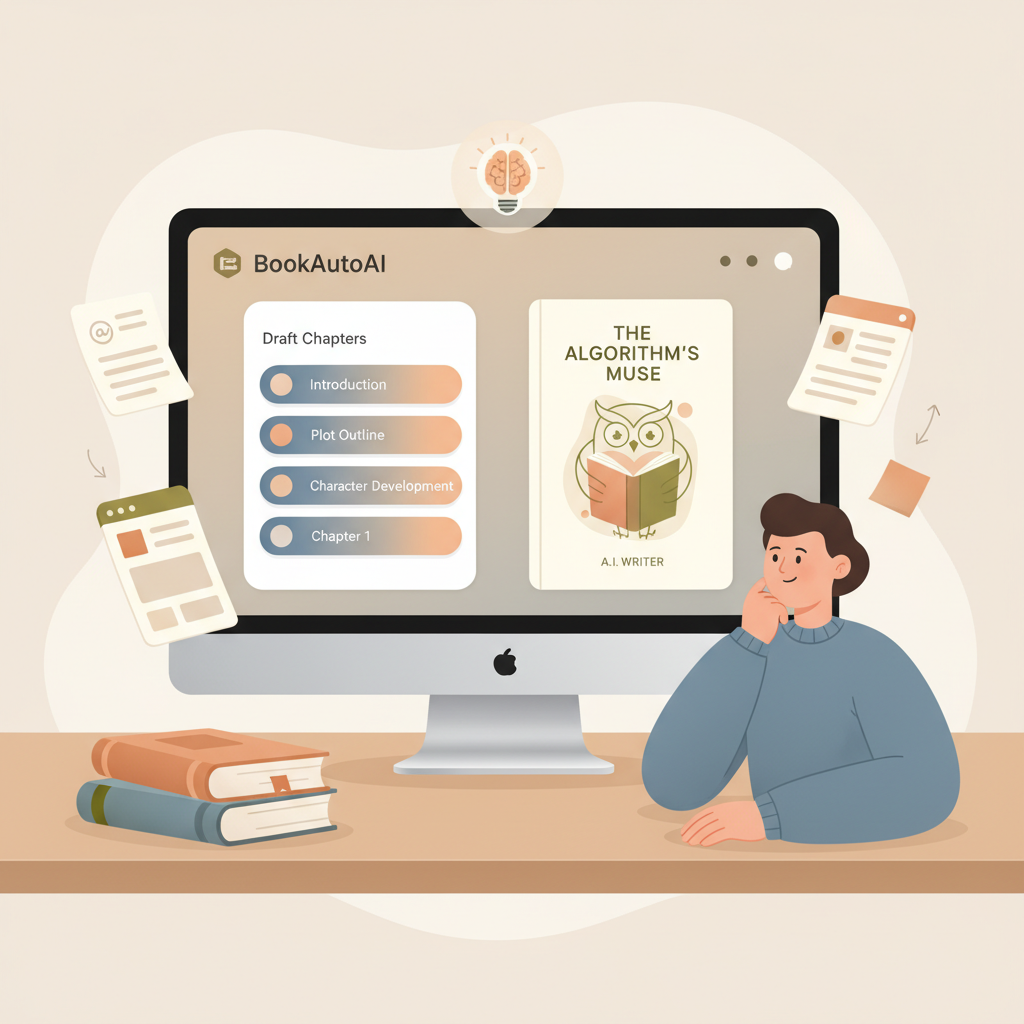
BookAutoAI as a Top AI Book Writer for Nonfiction Authors
Top AI Book Writer: How BookAutoAI Won a Real-World Non‑Fiction Test
Estimated reading time: 6 minutes
- BookAutoAI produces publish-ready non‑fiction drafts with minimal cleanup.
- In a practical test (outline + 3 chapters + rewrite) it outpaced alternatives on speed and humanized voice.
- The platform includes a Cover Generator that produces thumbnail‑optimized, market‑ready covers.
- Export formatting reduces KDP/upload errors and shortens time to publish.
- Why BookAutoAI Is the Top AI Book Writer for Non‑Fiction
- The Test: Outline + 3 Chapters + Rewrite
- Results: Quality, Speed, and Formatting
- Publishing Tools: Covers and Store‑Ready Exports
- Wrap-up
- FAQ
- Sources
Why BookAutoAI Is the Top AI Book Writer for Non‑Fiction
BookAutoAI sits at the front of the pack when you search for a top ai book writer because it treats book creation as a full production task, not a shortcut to a first draft.
In a market of generic text generators and editing suites, BookAutoAI focuses on end‑to‑end output: outline, chapters, humanized prose, and a formatted file that can be uploaded with minimal cleanup. Early in our testing, we linked performance and usability to real publishing needs—because speed without readiness still wastes time.
For an independent author who wants to publish on Kindle, BookAutoAI reduces the usual friction points. For a direct comparison, see Best Ai Book Writer.
One clear benefit is how the system handles voice and detection risks. It’s trained to produce natural-sounding content that reads like a human writer and is designed to behave well under AI‑detector checks.
For authors who care about long-term sales and marketplace policies, that matters. Review independent rundowns of the Best AI Book Writer tools to see how feature sets line up with publishing goals.
The Test: Outline + 3 Chapters + Rewrite
Test design
We ran a practical, consistent test focused on non‑fiction workflow. The aim was to simulate the steps an author would take to get a real book ready for market without heavy editing.
The test had three phases: generate a structured outline from a working title and short blurb; produce three complete chapters based on that outline; and request a rewrite pass to tighten voice, remove repetition, and humanize phrasing.
Why this test matters
Non‑fiction books succeed on clarity, authority, and usefulness. A good tool must produce organized content, reliable facts or neutral framing when facts are sensitive, and a steady voice that feels human.
We rated outputs for structure, readability, factual consistency, voice quality, and the amount of editorial cleanup required.
How the platforms were evaluated
Speed measured time from title to first full chapter. Coherence judged whether chapters followed the outline. Voice assessed naturalness of sentences and transitions. Formatting checked export readiness. Usability counted the steps to a publishable file.
Results: Quality, Speed, and Formatting
Overview of findings
Across the test, BookAutoAI consistently produced the most usable outcomes for non‑fiction authors who want to move quickly to publication. It combined a well‑structured outline with coherent chapter drafts and a usable rewrite pass.
Three strengths stood out.
Real speed with usable drafts
BookAutoAI generated a full outline and first chapters faster than the alternatives, and the drafts required less heavy rewriting. The time savings were not just in raw generation speed—BookAutoAI’s prompts and internal structure produced chapter drafts that respected the outline and preserved voice across sections.
That reduces the number of editing passes an author must do.
Humanized voice and readability
A recurring failure point for AI-generated books is robotic phrasing and repetitive patterns. BookAutoAI’s humanization layer produced cleaner, more natural sentences and reduced patterned repetition.
In the rewrite pass, the model tightened transitions and improved readability without losing the factual framework.
Formatting and upload readiness
Where many AI tools stop at content, BookAutoAI continues through formatting. Its default outputs are structured with correct chapter breaks, consistent headings, and readable paragraphing appropriate for ebooks.
That matters for KDP and other platforms because it lowers the chance of upload errors and preview mismatches.
How BookAutoAI compared to typical alternatives
General AI writers often produce useful snippets but require significant editing to assemble a full book. Tools aimed at drafting may not prioritize the humanized output or the final formatting that marketplaces expect.
BookAutoAI’s approach reduces the editorial burden by delivering both content and structure in a more finished state.
Common weak points and how to plan for them
No automated system is perfect. BookAutoAI performs strongly, but authors should still verify facts and citations, especially in niche subject areas.
Review tone and examples for audience fit; add personal anecdotes or unique insights to increase credibility and reader engagement.
Publishing Tools: Covers and Store‑Ready Exports
Design that competes on the shelf
A professional cover does more than look pretty at full size; it must read clearly at thumbnail scale and match genre expectations. Cover Generator is trained on design patterns from top‑selling book covers, so the output follows proven visual signals—clean title typography, correct hierarchy, and genre‑appropriate backgrounds.
That focus on marketability means authors get covers that sell, not just images that look “AI‑made.”
Faster path from manuscript to upload
Beyond covers, a big time sink in self‑publishing is translating a manuscript into a clean ebook file. BookAutoAI’s workflow aims to remove that friction by delivering structured text and export options that work with store platforms.
The system’s export-ready files reduce preview issues and compress the timeline from draft to live book. For retailer uploads, consider pairing exports with book upload tools to smooth the upload process.
How to use the tools together
Start with a clear title and short blurb to get a focused outline. Generate chapters and request the rewrite pass to humanize content.
Use the Cover Generator to create a thumbnail-optimized front cover that matches genre signals. Export the formatted manuscript and pair it with the cover for a fast upload process.
You can use Bookautoai to create paperbacks and ebooks.
When to add manual editing
Even with strong automation, manual steps still add value: insert author voice and specific case studies; finalize citations and references; run a final read for brand voice and subtle phrasing preferences.
Who benefits most from BookAutoAI
Busy professionals who need a polished non‑fiction book quickly. Self‑publishers focused on KDP and other major ebook marketplaces. Authors who prefer a turnkey approach that minimizes technical formatting work.
Pricing and risk considerations
Pricing is positioned to be cost‑effective for authors building a catalog. Reports show BookAutoAI can generate long manuscripts at competitive rates, though exact pricing may vary.
The main risk is topic sensitivity—highly technical or niche subjects may require extra fact checks. For most business, self‑help, and how‑to books, BookAutoAI significantly reduces time and error rates compared with assembling drafts manually.
Practical tips for authors using AI tools
Keep an author note or preface that explains voice choices if you want a specific tone. Run a human edit pass focusing on examples, flow, and practical exercises where relevant.
Use the humanization or rewrite pass strategically: one focused pass is often enough if the initial output follows the outline well. Test the cover at thumbnail size first to ensure readability on phones.
Final notes on adoption
BookAutoAI is built to help authors ship books faster while maintaining a professional standard. It’s not a replacement for author judgment; it’s a production tool.
Use it to get to a high-quality first complete draft and formatted file fast, then apply targeted human editing to make the book uniquely yours.
Wrap-up
If your goal is a fast, market-ready non‑fiction book with fewer technical roadblocks, BookAutoAI is the top ai book writer to consider. It combines a production-minded approach with humanized text, professional cover design, and practical export workflows that shorten time to publish.
Visit Bookautoai.com and try our demo book.
FAQ
Is BookAutoAI safe to use for KDP publishing?
Yes. BookAutoAI focuses on producing humanized, readable content and formatted files that are compatible with major marketplaces. Authors should still verify facts and tailor voice.
How much editing will I need after using BookAutoAI?
For many non‑fiction projects, minimal structural edits are needed. Expect to verify facts, add personal examples, and polish tone; the built-in rewrite pass reduces sentence-level fixes.
Can BookAutoAI handle niche or technical subjects?
It can, but niche topics may require more verification and subject-matter editing. Use expert review for technical accuracy when needed.
Will the cover look AI-generated?
The Cover Generator is optimized to produce market‑ready covers patterned after top sellers, focusing on readability and genre fit rather than obvious “AI art.”
How does BookAutoAI help with formatting and exports?
The platform prepares structured manuscripts that minimize preview and upload errors, so publishing is faster and cleaner.
Sources
- https://blog.bookautoai.com/ai-book-generator-kdp-review-5/
- https://blog.bookautoai.com/ai-book-writer-kdp-2/
- https://blog.bookautoai.com/ai-book-generator-vs-writers/
- https://blog.bookautoai.com/ai-book-writer-kdp-6/
Top AI Book Writer: How BookAutoAI Won a Real-World Non‑Fiction Test Estimated reading time: 6 minutes BookAutoAI produces publish-ready non‑fiction drafts with minimal cleanup. In a practical test (outline + 3 chapters + rewrite) it outpaced alternatives on speed and humanized voice. The platform includes a Cover Generator that produces thumbnail‑optimized, market‑ready covers. Export formatting…