
Should I Create a New Amazon Account for KDP Publishing
should i create a new amazon account for kdp
Estimated reading time: 6 minutes
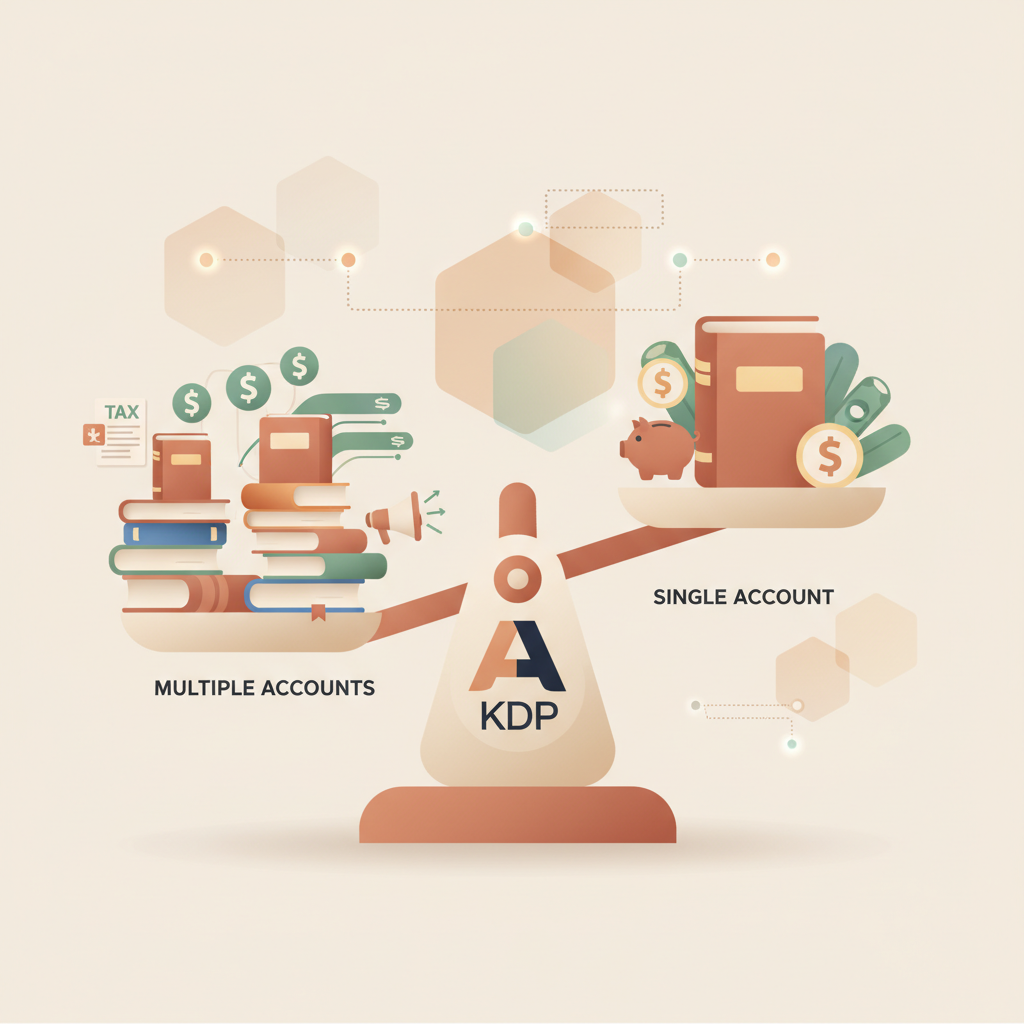
- Separate KDP accounts help when you need brand, tax, or risk separation but add administrative work and compliance considerations.
- Most authors benefit from a single account for unified reviews, simpler royalty tracking, and easier marketing.
- If you run multiple accounts, keep identities and finances distinct and use tools to speed EPUB conversion and cover creation.
Table of Contents
- When a separate KDP account is the right choice
- Pros and trade-offs
- When to stick with your existing Amazon account for KDP
- Good reasons to use the same account
- When the same account creates problems
- Practical examples
- Setting up and managing a separate KDP account safely
- Start with policy and identity
- Account setup checklist
- Upload practices and metadata
- Tools and workflows to reduce the workload
- Design and covers
- Practical account-management tips
- Staying compliant with KDP Select and exclusivity
- Avoid common pitfalls
- When a separate account becomes a liability
- A brief workflow: testing a new brand with minimal risk
- Final thoughts
- FAQ
- Sources
When a separate KDP account is the right choice
If you typed “should i create a new amazon account for kdp” into Google, you’re asking one practical question: will a second account help your publishing goals or just create more work?
There’s no single right answer. The choice depends on how you publish, how you brand, and how you want to manage money and reputation.
Separate KDP accounts make sense in these situations:
- Different genres or roles — keep pen names and bios separate so each catalog speaks to its audience.
- Different businesses — a company-owned set of titles should live under a business account to isolate tax and payouts.
- Testing strategies — small, separate accounts let you test pricing, funnels, or covers without affecting your main brand.
- Risk isolation — high-volume or outsourced publishing can put a primary catalog at risk; a secondary account reduces that exposure.
A quick practical note for anyone setting up a second account: if you need step-by-step help, look for an established guide like Amazon Kdp Account Setup to make sure you meet KDP’s identity and tax requirements before you upload a manuscript.
Pros and trade-offs
Pros: cleaner author pages, clearer marketing, separated finances, safer testing.
Trade-offs: more admin work, duplicate tax and payment setup, two dashboards to monitor, and added compliance risk if accounts are not properly separated.
When to stick with your existing Amazon account for KDP
Most authors are better off keeping a single Amazon account. Centralizing books simplifies operations and concentrates reviews, sales history, and author recognition.
Good reasons to use the same account
- Unified author identity. Reviews and rankings aggregate under a single author name, increasing credibility.
- Easier royalty management. One account equals one place for payments and tax documentation.
- Less administrative overhead. One set of login credentials, one dashboard, and consistent metadata templates speed publishing.
- Simpler marketing. Coordinating ads, promos, and tests is easier in a single account.
When the same account creates problems
- If titles span unrelated niches and you want to avoid cross-promotion, a single account can blur brand identity.
- If you work with different partners and need separate payouts, one account can complicate revenue splits.
- If some titles must be in KDP Select (exclusivity) and others not, a single account requires a careful strategy.
Practical examples
- An author who writes productivity guides and runs a coaching business might keep both under one account if audiences overlap.
- A content studio that publishes many short, unrelated non-fiction titles might use separate accounts to avoid brand confusion.
Setting up and managing a separate KDP account safely
If you decide a separate account is right, follow a clear, conservative process. Amazon’s policies focus on verified identity and preventing abuse.
Multiple accounts are allowed in principle, but they must be managed transparently and with accurate verification.
Start with policy and identity
- Don’t create multiple accounts to evade enforcement; that risks suspension of all accounts.
- Use distinct email addresses, payment methods, and bank accounts to reduce verification triggers.
- If an account is for a business, use the business EIN and a dedicated bank account for payouts and tax reporting.
Account setup checklist
- Use a clean email address and phone number for the new account.
- Provide accurate identity documents and tax information.
- Register a different display name and author profile for brand separation.
- Maintain separate bank or receiving accounts where possible.
Upload practices and metadata
- Treat each account as its own publisher: distinct bios, brand descriptions, and series metadata.
- Avoid duplicating the same book across accounts; duplicate listings risk removal.
- If you publish different editions across accounts, ensure metadata clearly distinguishes them and you own the rights.
Tools and workflows to reduce the workload
Managing two accounts multiplies formatting, cover, and conversion work. Use tools that remove repetitive tasks and ensure marketplace compliance.
For example, converting manuscripts to upload-ready files is easier with a reliable upload tool and a fast EPUB Converter that produces clean, store-ready EPUBs with embedded covers and correct metadata.
If you also need to create paperbacks or ebooks quickly, consider services that let you create a paperback or ebook with minimal manual formatting.
Design and covers
One of the big time costs is creating covers that sell. Instead of juggling multiple designers, consider a cover generator trained on best-selling signals.
A market-ready cover generator produces correctly formatted front covers with readable type and thumbnail-optimized layouts, reducing rework for marketplace requirements.
Practical account-management tips
- Centralize spreadsheets listing books, account owner, ASIN/ISBN, royalties, and status to reduce dashboard switching.
- Use strong but unique passwords and set up MFA on both accounts.
- Tag marketing assets by account with consistent folder naming like “Finance_AuthorName_Covers”.
- Schedule quarterly audits to check bank details, tax forms, and ownership documents.
Staying compliant with KDP Select and exclusivity
If any title will enroll in KDP Select, remember that ebook exclusivity applies for the enrollment period.
If you plan to distribute widely from a separate account, double-check Select enrollment status before publishing to avoid conflicts.
Avoid common pitfalls
- Don’t split reviews intentionally: moving a book between accounts or re-uploading causes review fragmentation.
- Don’t repackage identical content under different titles; Amazon treats duplicate content seriously.
- Don’t hide ownership or attempt to deceive Amazon with fake entities; accurate records prevent account issues.
When a separate account becomes a liability
Monitor whether the cost of managing two accounts outweighs the benefits: repeated fixes, multiplied marketing spend, or rising administrative errors are warning signs.
If that happens, consider consolidating: withdraw or retire titles from the secondary account, and re-upload them correctly to the primary account you control.
Note that Amazon doesn’t offer a simple merge function; consolidation requires careful planning to preserve reviews and avoid duplicate-content flags.
A brief workflow: testing a new brand with minimal risk
- Start with a subset of titles in the new account to test genre fit.
- Use a dedicated bank account and email for the test catalog.
- Run a limited ad budget and test cover variations.
- After 3–6 months, review performance and decide whether to scale or consolidate.
Final thoughts
Choosing whether to create a new Amazon account for KDP is a practical decision that balances brand clarity, tax needs, and administrative overhead.
Most authors and small publishers do best with a single account—it’s simpler, concentrates reviews, and simplifies royalty tracking. But if brand separation, distinct business ownership, or experimentation are priorities, a second account can be useful when managed properly.
If you do go the separate-account route, prioritize accurate verification, clean metadata, and safe publishing practices. Use reliable tools to handle repetitive work so your time stays focused on writing and marketing, not file troubleshooting.
Write like a human, publish like an author.
Visit Bookautoai and try our demo book to see how fast, clean publishing looks in practice.
FAQ
Is Amazon okay with authors having more than one KDP account?
Amazon permits multiple accounts if each is used legitimately with accurate, verifiable information; accounts used to evade enforcement or manipulate reviews risk suspension.
Will I lose reviews if I move a book to another account?
Yes. Reviews are tied to a book’s listing; deleting and re-uploading under a new ASIN in another account does not transfer reviews.
Can one bank account be used across multiple KDP accounts?
Technically you can, but using distinct bank/payment methods reduces verification flags and simplifies tax reporting for separate brands.
How do I handle taxes with two accounts?
Each KDP account requires tax information. Personal accounts can use the same SSN where appropriate; business accounts should use an EIN and separate bank account. Consult an accountant for complex situations.
What should I do about covers and EPUB files when managing multiple accounts?
Standardize assets and use efficient tools: a cover generator speeds design, and a robust EPUB converter produces store-ready files with embedded covers and correct metadata to avoid upload errors.
Sources
- The Pros & Cons of Publishing with Amazon’s KDP | 48 Hour Books
- Self-Publishing On Amazon: Pros and Cons of Using KDP
- The Hidden Challenges of Self-Publishing on Amazon
- The Pros and Cons of Self-Publishing on Amazon
- The Key Benefits and Drawbacks of Amazon KDP Publishing
should i create a new amazon account for kdp Estimated reading time: 6 minutes Separate KDP accounts help when you need brand, tax, or risk separation but add administrative work and compliance considerations. Most authors benefit from a single account for unified reviews, simpler royalty tracking, and easier marketing. If you run multiple accounts, keep…