
Amazon KDP Print on Demand manufacturing and royalties
Amazon KDP Print on Demand: How Manufacturing, Shipping, and Royalties Shape Your Margins
Estimated reading time: 6 minutes
- Amazon KDP Print on Demand removes upfront manufacturing costs, but per-book margins depend heavily on production choices and distribution.
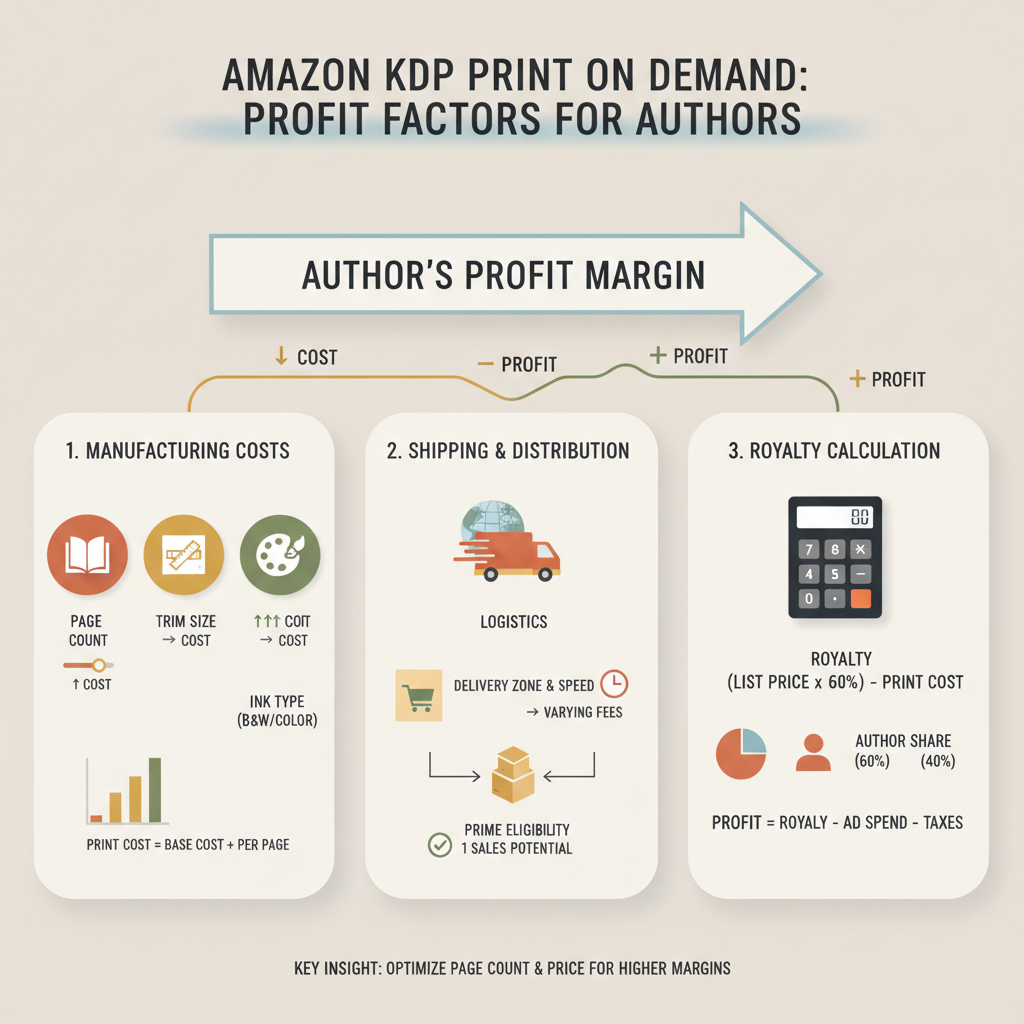
- Manufacturing (page count, trim size, color), shipping, and KDP royalty math are the main levers that change your earnings.
- Small production changes—trim size, page count, or choosing black-and-white—often move margins more than modest list price edits.
- For wider retail reach or premium formats, authors commonly combine KDP with services like IngramSpark or tools that simplify covers and formatting.
- Clear pricing, realistic royalty checks, and using reliable EPUB and cover tools speed publishing and reduce costly re-uploads.
Table of Contents
- How Amazon KDP Print on Demand Works
- Why Margins Vary: Manufacturing, Shipping, and Royalties
- Manufacturing: paper, ink, and size
- Shipping and fulfillment
- Royalty math on KDP
- Small production changes make big differences
- Practical Choices: Pricing, Distribution, and Speed
- Set a price that fits the market
- Pick distribution based on goals
- Speed vs. format options
- Tools that reduce errors and speed publishing
- A few practical examples
- How BookAutoAI fits
- FAQ
- Sources
How Amazon KDP Print on Demand Works
Amazon KDP Print on Demand is a service that prints and ships paperback copies only when a customer orders them.
That print when ordered approach removes inventory costs for authors and indie publishers, which is why many new authors choose KDP first.
Here’s the basic flow an author sees:
- Upload a finished manuscript and cover file.
- Choose trim size, paper type (cream or white), and whether the book is printed in black-and-white or color.
- Set pricing and distribution options (Amazon only, or expanded distribution).
- When a shopper buys on Amazon, KDP prints a copy, handles fulfillment, and pays you a royalty on the sale.
Printing costs are calculated per order: KDP determines a printing cost from page count, color, ink, and trim size, then subtracts that cost and the marketplace share from your list price to determine your royalty. For a quick breakdown of platform fees, see the Amazon Kdp Fees Breakdown which explains how Amazon’s costs and fees change your royalty on each sale.
BookAutoAI is built with KDP publishing realities in mind: it produces fully formatted manuscripts, creates market-ready covers, and outputs EPUBs and files that match platform requirements so you avoid upload errors that cause delays.
Why Margins Vary: Manufacturing, Shipping, and Royalties
Three clusters of costs determine your net on each paperback sale: manufacturing, shipping and fulfillment, and the royalty formula.
Understanding each helps you make choices that protect or increase your margin.
Manufacturing: paper, ink, and size
Page count: Printing cost on KDP is partly a function of the book’s page count. Shorter books cost less to print; every extra 50–100 pages can nudge the per-book cost enough to affect profit, especially at lower list prices.
Interior color vs. black-and-white: Color books are far more expensive to print. If your content doesn’t need color, choose black-and-white and clean images to save significantly.
Trim size and paper: Larger trim sizes use more paper per page and generally increase print cost. Paper type (cream or white) is usually a small difference, but specialty paper options aren’t available on KDP the way they are with some other printers.
Binding and format limits: KDP Print supports paperback but has limited hardcover and premium options. If your book needs a hardcover or higher production values, you’ll likely use a different POD partner or pay setup fees on IngramSpark.
Shipping and fulfillment
Amazon’s fulfillment integrates printing and shipping, so you don’t see those costs separately. However, shipping location and speed influence what customers pay and sometimes what you earn if you price for broader markets.
Author copies and proofs: If you order author copies, you pay the printing cost plus standard shipping. KDP’s author copy shipping times are usually reasonable, but if you need fast physical copies you may pay more.
Expanded distribution: Choosing expanded distribution routes orders through third-party channels that may incur additional costs or reduce your royalty percentage for each sale.
Royalty math on KDP
KDP calculates your royalty by subtracting the printing cost and marketplace fee from your list price. For paperbacks the common model is list price minus printing costs, then a percentage for Amazon sales.
Minimum price floors: Some combinations of page count, trim size, and color create minimum list prices. If you set a price below that minimum, you may earn nothing or lose money on each sale.
Distribution choices: Selling exclusively on Amazon is simple and often maximizes Amazon royalties. Choosing wide or expanded distribution may lower your per-unit royalty but can reach libraries and bookstores.
Small production changes make big differences
A 20-page increase might raise the print cost by a dollar or more, which is significant if your paperback sells at $9.99.
Choosing a smaller trim size or switching to black-and-white interior often yields the largest marginal savings without sacrificing reading experience.
Practical Choices: Pricing, Distribution, and Speed
Once you know what affects margins, you can make sensible choices that match your goals: highest Amazon sales, bookstore reach, or premium print quality.
Set a price that fits the market
Compare comparable books in your genre and match reader expectations; pricing too low may hurt perceived value while pricing too high reduces impulse buys.
Use KDP’s preview and pricing tools to test different price points and see net royalty estimates. Always check minimum list prices for your chosen trim size and page count.
Pick distribution based on goals
Amazon-first: If your aim is Amazon sales and simplicity, KDP Print is the right default — no setup costs and direct integration with Amazon Ads and KDP reporting.
Wider reach: If you want bookstores, libraries, or broader wholesale channels, add IngramSpark or a similar service; this often means setup fees and separate file management.
Hybrid approach: Many authors use KDP for Amazon and IngramSpark for other channels. Each platform has different print specifications, so clean, correctly formatted files are essential.
Speed vs. format options
KDP’s strength is speed: you can have a paperback live on Amazon quickly, which matters if you’re testing topics or publishing multiple titles.
If you need hardcovers, dust jackets, or special paper, expect extra time and expense with third-party POD services.
Tools that reduce errors and speed publishing
Correct formatting, cover design, and clean EPUB files remove friction and prevent costly re-uploads; consider reliable book upload tools to streamline the process.
BookAutoAI’s system creates books up to 25,000 words that are humanized and formatted for KDP and other platforms, and includes an EPUB converter to produce a store-ready file with correct metadata and embedded covers.
When you need a market-fit cover fast, BookAutoAI’s Cover Generator produces readable typography and genre-appropriate layouts that work at thumbnail size and export at print quality.
If you plan to publish multiple titles, using tools that handle formatting and covers saves time and prevents avoidable mistakes that cause rejected uploads or poor store display.
A few practical examples
- Low-cost short nonfiction (20–80 pages): Trim size 5 x 8, black-and-white interior—keeps print costs down so you can price lower and still earn.
- Color interior guides or workbooks: Expect much higher print costs; price must reflect color. Consider selling heavy-color workbooks as PDFs or limiting color pages.
- Thick reference books (250+ pages): These push print costs up—either accept a higher list price or split into volumes to protect margins.
How BookAutoAI fits
Use BookAutoAI to generate clean manuscript files, create a professional cover quickly, and convert to a compliant EPUB for ebook channels.
Its systems are tuned for marketplace expectations and built to remove formatting mistakes that create higher costs or rejected uploads.
If you need a cover that sells and not just looks “AI-made,” BookAutoAI’s Cover Generator was trained on top-selling patterns to produce covers with readable typography and proper thumbnail hierarchy—making it a practical, market-focused choice.
FAQ
What is the difference between KDP Print and other POD services like IngramSpark?
KDP Print focuses on Amazon distribution, zero setup fees, and straightforward paperback publishing. IngramSpark charges setup fees in many cases, supports hardcovers and premium print options, and offers broader bookstore and library distribution.
How do I estimate my royalty on KDP?
KDP provides a pricing and royalty preview when you enter list price and distribution choices. The formula deducts print cost and distribution fees from the list price.
Do I need a professional cover and formatted EPUB?
Yes. Weak covers or poor formatting reduce clicks and can cause rejected uploads. Tools that produce clean EPUBs and professional covers reduce that risk.
Can I sell a hardcover through KDP?
KDP’s hardcover options are limited compared to some third-party printers. For hardcovers, dust jackets, or premium binding, consider IngramSpark or a specialist printer.
How do shipping times affect orders and author copies?
KDP prints per order and fulfills via Amazon logistics, so customer shipping depends on Amazon shipping policies and the buyer’s location. Author copies and proofs include production plus shipping time.
What are the most common mistakes authors make that cut margins?
Common mistakes include choosing unnecessary color printing, pricing below minimums for a given page count, not factoring expanded distribution royalties, and uploading poorly formatted files that require fixes.
Sources
- https://spines.com/ingramspark-vs-kdp-print-which-service-is-the-best/
- https://selfpublishingwithdale.com/index.php/2025/02/13/kdp-print-vs-ingramspark-comparison/
- https://reedsy.com/blog/best-book-printing-services/
- https://mandilynn.com/2025/02/02/the-best-print-on-demand-company-in-2025-for-paperback-books-comparing-self-publishing-companies/
- https://www.launchmybook.com/the-most-popular-self-publishing-platforms-pros-cons/
Amazon KDP Print on Demand: How Manufacturing, Shipping, and Royalties Shape Your Margins Estimated reading time: 6 minutes Amazon KDP Print on Demand removes upfront manufacturing costs, but per-book margins depend heavily on production choices and distribution. Manufacturing (page count, trim size, color), shipping, and KDP royalty math are the main levers that change your…