
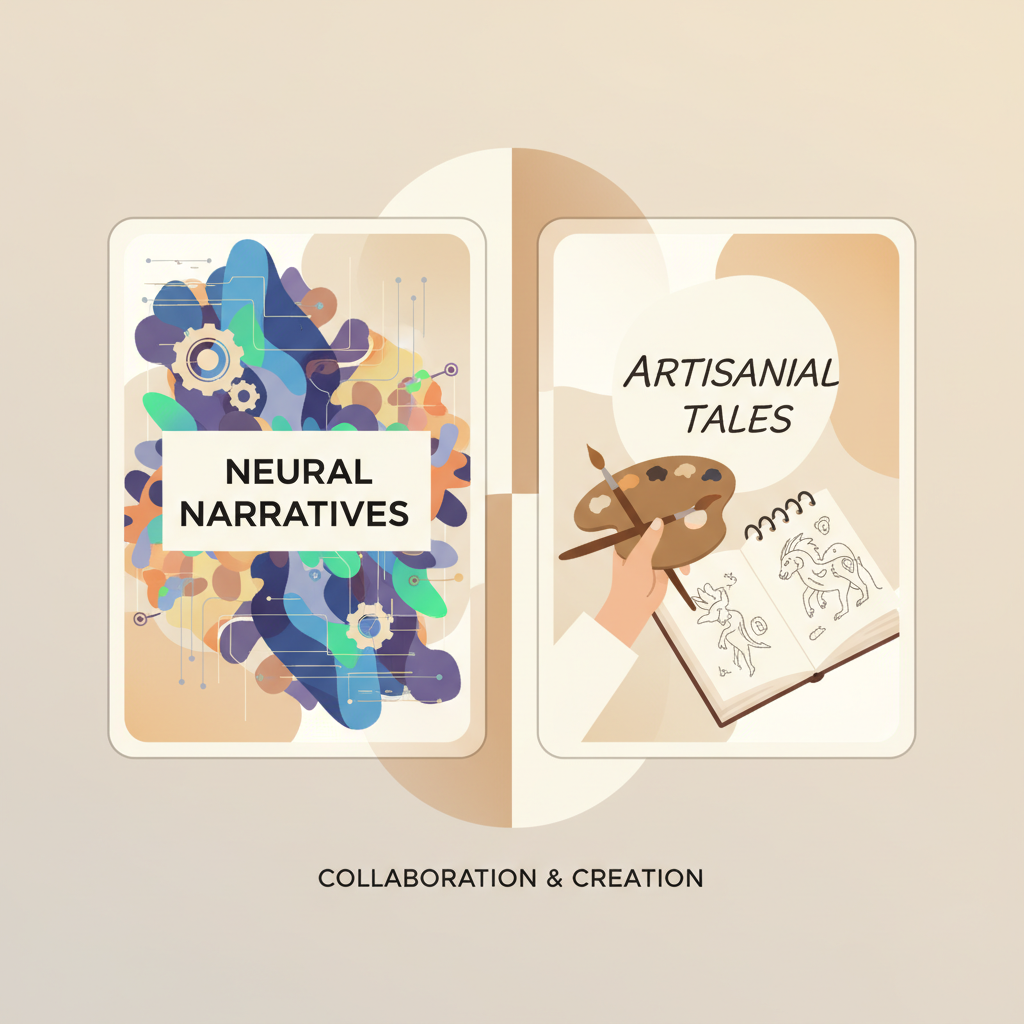
When to Use AI Book Covers vs Human Designers for Authors
When to use AI book covers vs human designers
Estimated reading time: 6 minutes
- AI book covers are fast, low-cost, and ideal for concepting, testing, or low-stakes projects.
- Human designers bring strategy, originality, and brand-ready files—best for flagship books, series, and paid ads.
- A hybrid workflow often wins: use AI to iterate and a human to finalize. BookAutoAI supports both steps with fast cover drafts, EPUB conversion, and upload-ready files.
How AI covers and human designers differ
Authors often ask, “When to use AI book covers vs human designers?” That question matters because a cover is the first and sometimes only sales asset a reader sees. AI and human designers each solve different problems.
If you need fast options and many variations to test, AI covers are a practical tool. If you need brand consistency, retail-ready files, and emotional storytelling in imagery and typography, a human designer usually delivers better long-term value.
For a curated list of tools and quick comparisons, see the Top 10 Book Cover Generator for practical examples and a feature-by-feature look.
What AI does well
- Speed and scale: AI generates many visual options in minutes, which helps when you want to test thumbnails, color palettes, or alternate imagery across subgenres.
- Low cost: For authors on tight budgets, AI cuts upfront expenses while producing decent results for digital-first projects.
- Ideation and variation: You can quickly explore different moods and concepts without the back-and-forth needed with a designer.
What human designers do better
- Strategy and positioning: A designer reads the market, chooses the right visual signals for genre, and aligns type and imagery to sell.
- Originality and craft: Humans create unique solutions that avoid the sameness and odd artifacts sometimes seen in automated outputs.
- Production quality and ownership: Designers deliver final files for print and retail, and they can certify that assets are original or properly licensed—important for stores and distributors.
Practical limitations of AI-generated art
AI can make strong-looking covers, but it still struggles with subtle genre cues, realistic faces or hands, and consistent series branding. There are also legal questions: purely AI-generated images may not carry copyright in some jurisdictions, which matters if you want exclusive control over your cover art.
That’s why many serious self-publishers use AI for fast drafts and human talent for the final, market-facing cover.
A simple decision framework for authors
Deciding when to hire a designer comes down to three practical questions: risk, budget, and goals. Answer them honestly and you’ll know whether to pick AI, a human, or both.
1) How important is this title to your author brand?
- Low importance: If the book is an experiment, short-term test, or low-price lead magnet, an AI cover is usually fine.
- High importance: If the book is a flagship title, part of a series, or tied to a long-term author brand, hire a human designer.
2) What’s your timeline and budget?
- Tight timeline and limited budget: AI covers deliver speed at low cost. Use them to get live quickly or to run A/B tests.
- More time and a budget: A human designer can plan a visual system that scales across books and marketing materials.
3) Are you planning paid promotion or retail placement?
- Small, organic reach: AI covers can work for modest organic audiences.
- Ads and retail: If you will spend on ads or seek wide retail distribution, a professionally designed cover is worth the investment—small design flaws lower conversion and increase ad costs.
4) Do you need print-ready or legally clean assets?
- If you need files for print, full wrap covers, or clear licensing, a human designer is safer. Designers can provide layered files, font licenses, and contracts that clarify ownership.
- If you only need a digital thumbnail for a quick experiment, AI-generated images can be acceptable.
A blended workflow that reduces risk
You don’t have to pick only one path. Many authors get the best results by combining both approaches.
- Use AI to explore dozens of concepts and quick thumbnails.
- Pick the best direction and pass it to a designer for refinement, typography, and final files.
This hybrid approach saves money during creative exploration and ensures professional quality for launch.
Using BookAutoAI: when AI covers make sense
If you’re weighing AI vs human book cover design, BookAutoAI is built for the exact middle ground many authors need. It generates cover concepts quickly and helps move books to market without unnecessary friction.
When to rely on BookAutoAI covers
- Idea testing: If you’re testing titles, subtitles, or markets, BookAutoAI’s cover generator produces clean, genre-aware options fast.
- Low-risk launches: For short guides, lead magnets, or low-cost experiments, the integrated cover and formatting tools get you live quickly.
- Rapid iteration: Want multiple thumbnails for Facebook or Amazon ads? Generate variations and pick the best-performing direction before investing in custom design.
When to hire a human instead
- Series identity and long-term branding: If the book will anchor your author brand, invest in a designer to set a coherent series look.
- High-stakes launches: Big promotions, paid ads, or retail expectations require the extra polish and strategic choices a human offers.
- Complex creative needs: If your cover needs custom illustration, careful photo licensing, or a visual metaphor handled sensitively, a human is safer.
How BookAutoAI supports both choices
- Fast drafts and full books: BookAutoAI produces complete non-fiction books and cover drafts in one workflow, so you can launch quickly when you need to.
- Market-aware cover generator: The system is trained on top-selling cover patterns so the initial results follow genre conventions and thumbnail performance.
- Easy handoff for designers: If you decide to upgrade, BookAutoAI covers can be used as mood boards or starting points for a professional designer to refine.
If you need an automated cover that is designed for sales (not just generative artwork), BookAutoAI’s built-in Cover Generator produces market-ready front covers: readable titles, genre-appropriate backgrounds, and thumbnail-friendly hierarchy.
Why EPUB and clean files matter
A cover is only one part of the publication process. Producing a clean EPUB and correct metadata matters for upload success and reader experience.
BookAutoAI’s EPUB Converter removes common formatting headaches: embedded covers, chapter navigation, and compatible metadata for Kindle, Kobo, and Apple Books.
If you plan to publish both ebook and paperback editions, the converter reduces time to market and avoids technical rejection errors. For authors creating paperbacks or ebooks at scale, the BookAutoAI platform also supports full book generation and distribution-ready exports.
Practical checklist for common scenarios
- Quick experiment, low budget: Use BookAutoAI to generate the manuscript, cover drafts, and an EPUB. Launch and test.
- Validated idea you want to scale: Use BookAutoAI to test covers and thumbnails, then hire a designer to build a brand look for ads and series.
- Flagship title with ads: Hire a designer from the start, but use BookAutoAI for early drafts and to speed manuscript production.
- Series or multiple volumes: Invest in a designer to create a toolkit (templates, typography, series marks) and use AI for fast iterations under that toolkit.
Final thoughts
Choosing when to use AI book covers vs human designers is less about picking one technology and more about matching the tool to the job. Use AI for speed, variety, and low-cost testing. Use humans for branding, legal clarity, and high-stakes launches.
BookAutoAI is designed to fit that middle path: rapid book and cover drafts that get you to market fast, plus clean EPUBs and production-ready exports when you’re ready to step up.
Visit BookAutoAI.com and try our Demo book.
FAQ
Will an AI cover hurt my chances in stores like Amazon or Apple Books?
Stores don’t ban AI-made covers. The risk is practical: if a cover looks off-genre or amateur, readers may skip it. Use AI for fast drafts and testing, then upgrade to a human-designed cover for high-priority titles.
Can I get exclusive rights to an AI-generated cover?
Copyright rules are changing. In some countries, purely AI-generated images may not qualify for traditional copyright. If ownership matters, work with a designer or ensure significant human creative input.
How do I choose between running more AI iterations or hiring a designer?
Consider brand importance, ad spend, and long-term goals. If ad spend or retail reach is planned, hire a designer. If you need quick validation, iterate with AI first.
Is the BookAutoAI cover generator good enough for paid ads?
It’s excellent for drafts and low-budget ads where you want to test themes. For paid campaigns with a meaningful budget, upgrade to a human-refined cover after testing.
How do I move from an AI draft to a designer smoothly?
Save the best AI-generated thumbnails and the prompt or direction that produced them. Share those as a creative brief with a designer so they can keep the tested concept and improve execution, typography, and files for print.
Sources
- https://bookquill.com/blog/ai-vs-human-illustrators-book-covers/
- https://indieauthormagazine.com/ai-vs-human-book-cover-designers-which-is-the-smarter-option-for-indie-authors/
- https://damonza.com/yes-ai-can-design-your-book-cover-but-should-it/
When to use AI book covers vs human designers Estimated reading time: 6 minutes AI book covers are fast, low-cost, and ideal for concepting, testing, or low-stakes projects. Human designers bring strategy, originality, and brand-ready files—best for flagship books, series, and paid ads. A hybrid workflow often wins: use AI to iterate and a human…