
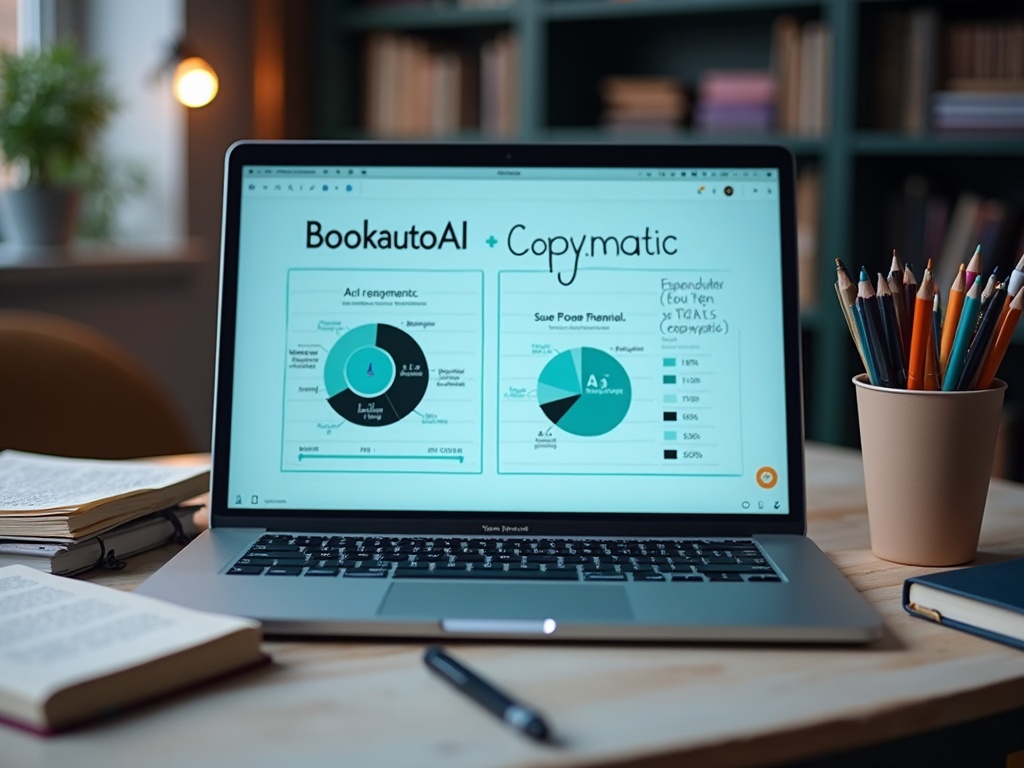
AI Book Generator Showdown BookAutoAI vs Copymatic for KDP
Bookautoai vs Copymatic Review: Which AI Tool Wins for Your Non-Fiction Book?
Estimated reading time: 8 minutes
- Understand the strengths of both tools: Copymatic is geared towards marketing content, while BookAutoAI focuses on long-form, publish-ready manuscripts.
- Pricing dynamics matter: Depending on your needs, different pricing models can greatly affect your choice.
- User experience: Test the platforms with free demos to see which tool fits your writing style and needs.
- The importance of automated formatting: Streamline your path to KDP with automated formatting from BookAutoAI.
- Consider a blended approach: Using both tools strategically can enhance your overall publishing strategy.
Table of Contents
- Introduction
- What the research says about the two tools
- How BookAutoAI stacks up
- What Copymatic brings to the table
- Practical takeaways for AI book writers and non-fiction authors
- Relating this topic to BookAutoAI’s services
- A practical, actionable plan for AI book writers
- Why this matters for your author business
- Citations and further reading
- A final word on choosing your path
- CTA
- Sources
Introduction
This week’s hot topic in the AI book writing and Amazon KDP space is a straight-up comparison: Bookautoai vs Copymatic. Both tools sit at the crossroads of speed, scale, and publishing readiness, but they aim at different kinds of projects. Copymatic shines when you need marketing content fast—blogs, ads, social posts, and more with multilingual support. BookAutoAI, on the other hand, is built for something bigger: full-length, publish-ready non-fiction manuscripts that read naturally, with instant formatting and direct KDP readiness. In this review, we sift through independent findings, lay out what each platform is best at, and show you how the results matter for authors who want to turn ideas into ready-to-sell books.
What the research says about the two tools
A lot of people ask: how do these two compare head-to-head? The truth is there isn’t a robust independent head-to-head study yet. What we do know comes from independent reviews and official information, plus the practical realities of how these tools are designed to work.
- Copymatic is primarily a marketing content machine. It’s recognized for generating quick, affordable marketing copy—SEO-optimized blogs, ad copy, social posts, and even AI-assisted image creation. It’s strong on speed, variety, and multilingual support, which makes it a popular option for digital marketers and small businesses that need a steady stream of short- to mid-form content. Source: Toolkitly comparison (BookBaker vs Copymatic) and an independent Copymatic review. URLs: Toolkitly and Originality.ai.
- BookAutoAI is positioned as a platform specialized for book creators. It’s designed to generate lengthy, formatted manuscripts with minimal manual input and very fast turnaround, specifically aimed at self-publishers and KDP users. The emphasis is on producing full-length, 100+ page manuscripts that are ready for publication, with automated formatting tailored for direct upload to Amazon KDP. Source: RevenueGeeks coverage of BookAutoAI pricing and overview, plus a video interview. URLs: RevenueGeeks and YouTube.
- Pricing and plans differ. Copymatic typically uses monthly plans with unlimited word allowance, while BookAutoAI offers tiered plans based on the number of full-length books and words per month, with higher price points reflecting the long-form, publish-ready focus. This pricing dynamic matters a lot if you’re planning to publish multiple books per year or if you’re a novelist experimenting with different topics. Sources: RevenueGeeks pricing for BookAutoAI and a Copymatic review. URLs: RevenueGeeks and Originality.ai.
- The bigger takeaway from the research: Copymatic is excellent for short- to mid-form content and marketing, with strength in speed and cost. BookAutoAI is stronger when your primary goal is high-volume, long-form, publish-ready books that fit directly into KDP workflows. No credible, comprehensive head-to-head comparison exists yet, so your choice should come down to your top priority—book-length output or broad marketing content versatility. Sources cited above.
How BookAutoAI stacks up
To understand why authors might pick BookAutoAI for a book project, here are the core claims and features you’ll actually use when writing a non-fiction manuscript:
- Length and depth: Full 25,000-word non-fiction books that read naturally and consistently. The focus is on substantial manuscripts, not short-form content, which aligns with typical non-fiction book needs.
- Humanized language: Writing that’s tuned to feel human and natural, not stiff AI prose. The goal is a tone that reads like a real author wrote it, helping you connect with readers from the first page.
- Formatting: Automated, instant formatting so the manuscript is ready to upload with no extra time needed to format. This is designed to reduce the usual friction of preparing a book for platforms like Amazon KDP.
- Generation speed: High output speed, with the promise of delivering full-length content quickly (the platform emphasizes fast turnaround for book-length projects).
- Pricing: Three tiers—$35, $55, and $100 per month—each with increasing quotas for books and words. This reflects a focus on high-volume, long-form content rather than unlimited short-form use.
- Risks and safeguards: The platform positions KDP compliance and humanized output as risk mitigators. However, as with any AI-generated long-form content, authors should review for originality and market fit before publishing.
- What this means for authors: If your priority is getting a complete, publish-ready non-fiction book fast, BookAutoAI claims to be tailor-made for that workflow—from outline to formatted manuscript to KDP-ready submission.
What Copymatic brings to the table
- Strengths: Copymatic excels at marketing content and short- to mid-form pieces. It’s fast, cost-effective, and supports multiple languages, making it attractive for authors who need to generate book marketing assets, blog posts, ads, and social content at scale.
- Weaknesses: It’s not explicitly designed for long-form, deeply structured books. While it can produce longer content, users may need more manual refinement or structure oversight for a polished, publish-ready book. Independence reviews also flag concerns about originality and deep customization in lengthy, themed manuscripts.
- Takeaway for authors: If your main need is marketing content, platform reach, and multilingual campaigns, Copymatic is a strong generalist tool. If you’re focusing on a single, long-form non-fiction project intended for direct KDP upload, BookAutoAI offers a more specialized, end-to-end workflow.
Practical takeaways for AI book writers and non-fiction authors
- Align tools with your end goal: For a publish-ready book, especially on Amazon KDP, BookAutoAI’s end-to-end approach (from drafting to formatting to publishing readiness) can save time and reduce technical hassles. For ongoing marketing assets, Copymatic can keep your blog, ads, and social channels fresh and optimized.
- Plan your book like a project, not a single document: With a 25,000-word target, you’ll need an outline, chapter structure, and a clear publish timeline. BookAutoAI’s model reflects this approach—generate the manuscript and format in one go so you can publish quickly.
- Humanize and verify for long-form work: BookAutoAI emphasizes humanized language to avoid the “stiff AI prose” trap. Even with automated formatting, invest time in a thorough edit pass to ensure voice, accuracy, and originality.
- Consider platform safety and compliance: KDP safety and compliance are important for long-term publishing. BookAutoAI’s focus on formatting and compatibility aims to reduce publishing friction, but authors should still review for originality and platform-specific guidelines.
- Use a blended workflow when it makes sense: For many non-fiction authors, the best approach is to draft a long-form manuscript with BookAutoAI, then use Copymatic or other tools for marketing assets (book descriptions, blog posts, email campaigns, social media content). This leverages the strengths of both tools.
- Take advantage of a free demo: BookAutoAI offers a free demonstration of its capabilities. This is a low-risk way to test the fit with your project before committing to a plan. If you’re serious about turning an idea into a publish-ready non-fiction book, a hands-on trial can be decisive.
Relating this topic to BookAutoAI’s services
- Full-length, publish-ready books: The core advantage of BookAutoAI is its ability to generate complete non-fiction manuscripts that run 25,000 words or more and are ready for direct KDP upload. For authors who want to bypass many manual formatting steps and move quickly from concept to market, this is a strong fit.
- Humanized, platform-safe output: BookAutoAI emphasizes humanized language designed to feel natural, aiming to avoid the stiff tone sometimes associated with AI writing. This matters for reader engagement and for long-term retention in non-fiction genres.
- Instant, automated formatting: Formatting is included in every plan, so you don’t need to hire a separate formatter or spend hours adjusting margins, headings, or table placements. This is a practical edge for non-fiction authors who want to move fast.
- Easy start with a title and expert-level input: The system can begin with a title and select top-tier expertise to shape the content. This helps you position your book as authoritative while staying original in execution.
- Clear pricing that supports multiple books: The tiered pricing approach ($35, $55, $100 per month) aligns with authors who plan to produce multiple publish-ready books or large-word-count projects each year, rather than single-use, short-form tasks.
- Free demo as a decision aid: The ability to try the service for free lets you assess the quality, tone, formatting, and KDP-readiness before committing, turning decisions into tangible tests rather than guesses.
A practical, actionable plan for AI book writers
- Step 1: Define your book project. Write a clear one-paragraph concept, an outline by chapters, and a target audience. Decide if you want 25,000 words or more and what your publish timeline looks like.
- Step 2: Run a trial with BookAutoAI. Use the free demo to generate a draft and evaluate its readability, coherence, and formatting. Pay attention to how the tone matches your author persona.
- Step 3: Edit with a two-pass approach. Do a content pass for structure and accuracy, then a style pass for voice and flow. Since BookAutoAI emphasizes humanized output, your edits will likely focus on nuance, examples, and potentially updating data.
- Step 4: Format and publish. Leverage BookAutoAI’s automated formatting to ensure KDP readiness. Double-check headings, table placement, figures, and any references or footnotes for platform compliance.
- Step 5: Create marketing assets. Once your book is set, use Copymatic or similar tools for blog posts, landing pages, ads, and social content to drive launch visibility and ongoing discovery.
- Step 6: Iterate and scale. If you publish multiple books, use the tiered BookAutoAI plan to keep a steady cadence, then complement with marketing content generated by Copymatic to sustain momentum.
Why this matters for your author business
- Efficiency equals opportunity: In the self-publishing world, speed to market can translate into a higher chance of ranking, reviews, and momentum. BookAutoAI’s end-to-end approach addresses the most time-consuming parts of the process—drafting, formatting, and ready-for-KDP publishing.
- Consistency builds trust: Long-form non-fiction readers value a consistent voice and clear structure. By focusing on humanized language and formatted manuscripts, BookAutoAI helps you maintain consistency across chapters and topics, boosting reader confidence.
- A smarter marketing engine: While BookAutoAI handles the manuscript, Copymatic can sustain your audience with timely blog content, ads, and social posts. This reduces the friction between writing and marketing, supporting a more robust passive-income strategy.
- A balanced investment approach: The pricing model supports authors who plan multiple books or large projects. If you’re building a catalog, the tiered plans let you scale without paying a flat, prohibitive price for every page.
Citations and further reading
- Copymatic vs Bookautoai: Independent comparisons and tool reviews
- General context on tool strengths and use cases: Copymatic vs other AI tools reviews and comparisons referenced in the above sources, including user-focused analyses and feature breakdowns.
A final word on choosing your path
If your primary goal is to deliver a high-quality, publish-ready non-fiction book quickly, with an automated formatting process and direct KDP readiness, BookAutoAI offers a tightly scoped, publisher-friendly workflow. If your focus is broad content marketing, rapid generation of blogs, ads, and social posts in multiple languages at a lower per-piece cost, Copymatic is a compelling option.
But here’s the honest takeaway: there isn’t a single “best tool” for every author. The smartest approach is a blended strategy—write long-form with BookAutoAI, then build your marketing engine with Copymatic. That way you get the best of both worlds: a solid, polished book and a steady stream of promotional content to grow your readership and revenue.
CTA
Try BookAutoAI for free and see how your next non-fiction book can go from idea to publish-ready in record time. If you’re serious about turning a fresh idea into a complete, ready-to-upload book, check out BookAutoAI. Try our free demo to experience how the platform can draft, format, and prepare a 25,000-word non-fiction manuscript for direct KDP upload. Once you see the flow, you’ll know why authors are choosing BookAutoAI to power their publishing journey. And if you want to supercharge your marketing later, you can explore Copymatic for marketing content and multilingual assets—creating a full stack of tools to support your publishing business.
Sources
- BookBaker vs Copymatic (2025) – Features, Pricing & Uses | Toolkitly
- BookAutoAI Pricing & Plans (2025): Full Breakdown
- Copymatic AI Review – Generate Content, Copy & Images with AI
- Copymatic vs. Copy.ai AI Text Tools Compared | OMR Reviews
- Compare the differences between Copymatic vs BookTranslate.ai
- This AI Robot Writes ENTIRE Books For Less Than $8 – YouTube
Bookautoai vs Copymatic Review: Which AI Tool Wins for Your Non-Fiction Book? Estimated reading time: 8 minutes Understand the strengths of both tools: Copymatic is geared towards marketing content, while BookAutoAI focuses on long-form, publish-ready manuscripts. Pricing dynamics matter: Depending on your needs, different pricing models can greatly affect your choice. User experience: Test the…