
AI Book Generator for KDP Authors BookAutoAI vs Wababai
BookAutoAI vs Wababai.com Review
Estimated reading time: 8 minutes
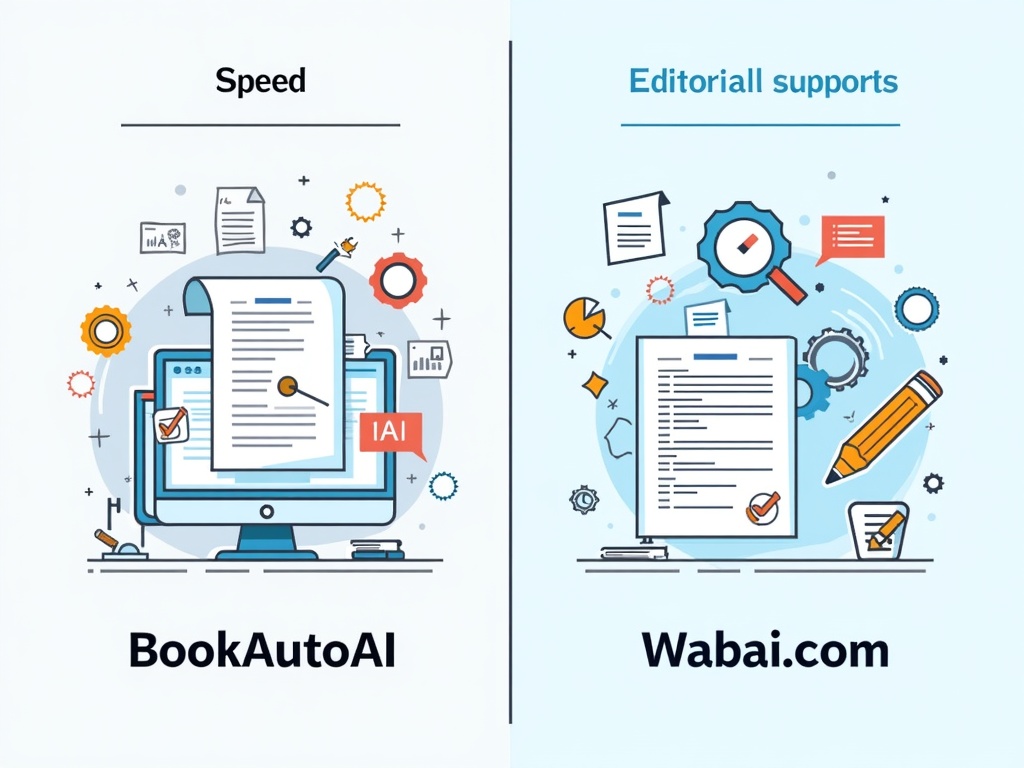
- Quick Comparison: BookAutoAI focuses on speed and automation, while Wababai.com emphasizes editorial support and quality control.
- Content Quality: Wababai offers structured feedback, reducing post-editing, whereas BookAutoAI delivers rapid content generation that may require more manual refinement.
- Pricing Structures: Both platforms offer tiered pricing, but BookAutoAI does not provide a free trial; only a 30-day refund policy is available.
- Final Outputs: Both platforms provide KDP-ready outputs, but Wababai seeks to ensure higher initial quality through editorial input.
Table of Contents
- Introduction
- What BookAutoAI promises (the quick snapshot)
- What Wababai.com emphasizes (the quick snapshot)
- What the research says (key findings and sources)
- Note on the “free demo” and pricing claims
- What you get with BookAutoAI (dive deeper)
- What you get with Wababai.com (dive deeper)
- The quality and reliability lens: what independent reviewers say
- Practical takeaways for AI book writers
- A quick author story to illustrate
- Where BookAutoAI fits into the market right now
- Relating this to BookAutoAI’s own services and storytelling
- SEO-friendly considerations for AI book writers
- Call to action: try BookAutoAI for yourself
- Final takeaway for authors and marketers
Introduction
In the growing world of AI book generators for Kindle Direct Publishing (KDP), two names keep popping up: BookAutoAI and Wababai.com. This post dives into a clear, no-nonsense comparison of BookAutoAI vs Wababai.com Review to help authors decide which tool fits their publishing goals. Both platforms promise fast book creation, built-in formatting, and ready-to-upload files, but they take different paths when it comes to editorial support, pricing, and final book quality. If you’re an author who wants to publish non-fiction quickly without sacrificing reliability, this comparison matters. We’ll pull in what researchers and independent reviewers say, point you to sources, and translate what all of it means for your next KDP project.
At a high level, BookAutoAI emphasizes speed, automation, and formatting. Wababai.com emphasizes editorial feedback and quality control. The core question is: do you want raw speed and a fully formatted draft you can upload immediately, or do you want structured editorial feedback that cuts down post-production work? Both can get you to market, but the right pick depends on how much you value built-in quality control versus rapid bulk publishing.
What BookAutoAI promises (the quick snapshot)
- Full-length non-fiction books, typically 100+ pages and up to substantial word counts, delivered rapidly.
- Fully formatted files ready for upload to major platforms, including built-in cover design tools.
- Commercial rights included, keyword optimization, and fast delivery (some claims include near-instant generation on premium plans).
- “Humanized” writing aimed at avoiding stiff AI tone and keeping the manuscript friendly and readable.
- Multiple pricing tiers designed for frequent publishers, with a 30-day refund policy rather than a free trial.
What Wababai.com emphasizes (the quick snapshot)
- Structured editorial feedback during the book creation process, with a stronger focus on quality control.
- Post-generation guidance to improve readability, flow, and consistency, potentially reducing post-upload edits.
- Designed for KDP compatibility with an eye toward higher quality output and reduced rework.
What the research says (key findings and sources)
- Editoral support: Wababai distinguishes itself with structured editorial feedback during book creation, which BookAutoAI generally does not provide. This means less post-editing for authors who want higher upfront quality. Source: https://blog.bookautoai.com/ai-book-generator-kdp-authors-7/
- Speed and content generation: BookAutoAI markets itself as extremely fast, often delivering ready-to-use content quickly, with some claims of instant generation for premium plans. Source: https://revenuegeeks.com/bookautoai-pricing/ and https://www.youtube.com/watch?v=zxPYZJlmsu4
- Pricing: BookAutoAI’s pricing is tiered (Saver, Standard, Pro) and includes commercial rights, cover design, and keyword optimization, with a 30-day refund policy but no formal free trial. Source: https://revenuegeeks.com/bookautoai-pricing/
- Book length and quality: Generated books are typically 100+ pages, but reviewers have noted repetitive language and formatting quirks that often require manual post-editing to improve sentence flow and avoid overused terms. Source: https://www.youtube.com/watch?v=zxPYZJlmsu4
- Platform alignment: Both platforms cater to self-publishers aiming for scalable, high-volume output compatible with KDP. Source: https://blog.bookautoai.com/ai-book-generator-kdp-authors-7/ and https://revenuegeeks.com/bookautoai-pricing/
Note on the “free demo” and pricing claims
A key point for readers is to understand the official pricing structure and trial opportunities. BookAutoAI’s published materials describe three monthly plans (Saver, Standard, Pro) that support multiple books and come with commercial rights, but they do not offer a free trial; a 30-day refund policy is available under use conditions. You can learn more here: https://revenuegeeks.com/bookautoai-pricing/. The articles also discuss the speed of generation and the scope of features like formatting and cover design. If you’re looking for a no-cost entry, you should verify current promotions on the official site (bookautoai.com) or contact their team for the latest demo options, including any free demos they may offer from time to time.
What you get with BookAutoAI (dive deeper)
- Full-length non-fiction delivery: BookAutoAI targets full 25,000 words or more, with claims of 100+ pages per book and substantial word counts. This is designed for authors who publish non-fiction in bulk and want to move fast.
- Fully formatted output: The platform promises ready-to-upload files, so you don’t spend extra hours on formatting. This includes structure-friendly files for KDP and, in some marketing materials, integrated cover design tools.
- Humanized writing: The copy emphasizes “humanized” sentences designed to feel natural and less robotic, with the aim of bypassing stiff AI detectors and keeping platform safety in check for long-term publishing. Real-world user feedback, however, often notes the need for post-editing to improve flow and reduce repetition.
- Commercial rights and optimization: The plans include commercial rights and keyword optimization for better discoverability on Amazon and other platforms.
- Multiple pricing tiers: Saver, Standard, Pro with varying book quotas and features.
What you get with Wababai.com (dive deeper)
- Editorial feedback built-in: Wababai’s distinctive feature is structured editorial feedback during the book-building process. This can help authors improve narrative flow, coherence, and clarity before the manuscript is released to the market.
- Focus on quality control: While speed is useful, the editorial approach is geared toward reducing post-publication edits, improving reader experience, and helping authors reach a higher quality standard earlier in the process.
- KDP-ready output: As with BookAutoAI, Wababai targets compatibility with KDP, aiming to produce materials that need less post-upload work.
The quality and reliability lens: what independent reviewers say
- Speed vs. editorial depth: Independent reviews generally agree that BookAutoAI shines on speed and formatting automation, making it an attractive choice for frequent publishers who want to scale quickly. However, the lack of built-in editorial feedback means authors may have more post-generation editing to do to hit a higher quality bar. Source: https://blog.bookautoai.com/ai-book-generator-kdp-authors-7/
- Editorial feedback value: Wababai’s approach reduces the amount of post-edit work and raises the bar on initial manuscript quality. This is particularly appealing for authors who want a smoother publishing experience with fewer revision cycles. Source: https://blog.bookautoai.com/ai-book-generator-kdp-authors-7/
- Book quality notes: Across sources, generated content tends to be solid for structure but can include repetitive language and sometimes centralized formatting, requiring authors to refine sentences and ensure natural flow. This is an important caveat, especially for non-fiction that relies on precise tone and clarity. Source: https://www.youtube.com/watch?v=zxPYZJlmsu4
Practical takeaways for AI book writers
- Decide your priority: speed and volume (BookAutoAI) vs. upfront editorial guidance (Wababai). If you publish often and can manage post-editing, BookAutoAI offers a strong value proposition. If your aim is higher-quality first drafts with built-in editor support, Wababai may reduce revision cycles.
- Prepare for post-editing: Regardless of platform, plan for some manual editing to improve flow, eliminate repetition, and ensure your voice shines through. BookAutoAI’s strengths in formatting and coverage require a careful pass on readability and sentence variety.
- Leverage humanization thoughtfully: “Humanized” text can help with platform safety and ranking, but it’s not a substitute for good writing craft. Use human editing to refine tone and ensure each chapter delivers clear value to readers.
- Optimize for discoverability: Both platforms offer keyword optimization and ready-to-upload files, which helps your book surface in searches. Pair this with strong metadata and an engaging cover to maximize click-through and sales.
- Start with a test project: If you’re curious, run a short test project (one non-fiction topic you know well) to compare output quality, editing workload, and time-to-publish on each platform.
A quick author story to illustrate
Meet Maya, a nonfiction writer who wants to publish a book a month. She tries BookAutoAI for speed, appreciating the ready-to-upload formatting and rapid generation. Yet Maya notices a few repetitive phrases and a lack of voice in the first draft. She adds a professional edit workflow using a quarterly editorial package (or Wababai for a one-off project), then runs the manuscript through a light proofreading pass and formats it for KDP. With her automation setup,
Maya can produce multiple books in a quarter without sacrificing readability or overall quality. She gets faster to market than before and maintains a steady stream of reviews because her content remains polished.
Where BookAutoAI fits into the market right now
- For authors who publish frequently and want to minimize time-to-market, BookAutoAI offers a strong toolkit: fast generation, integrated formatting, cover design tools, and commercial rights. The catch is that you’ll likely want to invest additional time in editing to ensure the final product reads naturally and remains free of repetitive phrasing.
- For authors who value upfront editorial guidance and high-quality output, Wababai provides structured feedback that reduces post-production work and yields books with better reader experience from the start.
Relating this to BookAutoAI’s own services and storytelling
BookAutoAI positions itself as a fast, scalable solution for non-fiction authors who want a turnkey publishing workflow. The emphasis is on:
- Speed: Quickly generate 25,000 or more words for a non-fiction book and move to formatting and cover design with minimal friction.
- Formatting and assets: The platform claims to deliver fully formatted files and cover design tools so you can upload to KDP without extra steps.
- Humanized writing: The platform markets its writing as humanized enough to bypass AI-detection concerns and to be importer-friendly across major platforms.
However, it’s important to balance this with the realities reported by independent reviewers: while the platform can deliver large drafts quickly, you should expect to do post-production editing to improve sentence flow, avoid overused phrases, and ensure that the final book sounds natural and engaging for readers.
SEO-friendly considerations for AI book writers
- Keywords and metadata: Use keyword targeting in your plan—BookAutoAI’s built-in optimization helps, but supplement with your own niche keywords, book description copy, and author page optimization.
- Topic relevance: Choose topics with solid audience demand and evergreen interest to maximize long-term sales.
- Reviews: Prepare for an initial push to gather early reviews, as social proof is a major driver of discoverability on Amazon.
Call to action: try BookAutoAI for yourself
If you’re ready to explore how an AI-assisted publishing workflow can work for you, visit BookAutoAI and check out their demo options. They offer a straightforward path to quick drafting, built-in formatting, and covers, designed for non-fiction KDP publishing. To experience the speed and automation firsthand, head to bookautoai.com and try their free demo to see how the process feels from a real author’s perspective. For more details on the pricing structure and what’s included at each level, you can review their plans and refund policy at https://revenuegeeks.com/bookautoai-pricing/.
Final takeaway for authors and marketers
- BookAutoAI is a powerful tool for those who want speed and turnkey formatting, with strong emphasis on automation and sales-ready output. It is best paired with post-editing or editorial enhancements if your goal is premium quality from the start.
- Wababai offers a compelling alternative for authors who want built-in editorial feedback to reduce revision cycles and improve the initial manuscript quality.
- For a well-rounded publishing strategy, consider pairing the speed of BookAutoAI with the editorial strengths of Wababai, and leverage automation tools to orchestrate your entire publishing pipeline. This approach helps you publish more titles faster while maintaining readability and professionalism.
BookAutoAI vs Wababai.com Review Estimated reading time: 8 minutes Quick Comparison: BookAutoAI focuses on speed and automation, while Wababai.com emphasizes editorial support and quality control. Content Quality: Wababai offers structured feedback, reducing post-editing, whereas BookAutoAI delivers rapid content generation that may require more manual refinement. Pricing Structures: Both platforms offer tiered pricing, but BookAutoAI does…