
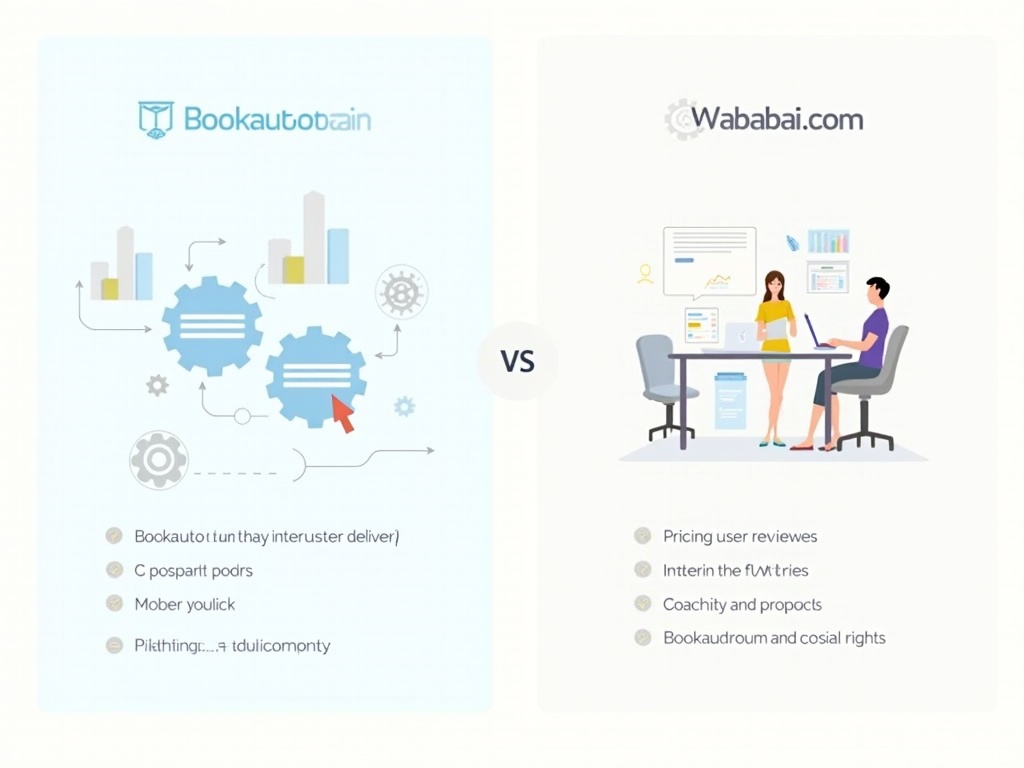
AI Book Generator for KDP BookAutoAI vs Wababai Review
Bookautoai vs Wababai.com Review
Estimated Reading Time: 7 minutes
Key Takeaways:
- Bookautoai offers a fast, automated manuscript delivery system.
- Wababai provides a coaching approach for hands-on drafting assistance.
- Both platforms feature unique pricing structures tailored to different publishing goals.
- Independent reviews show varying user experiences and outcomes.
- Consider long-term reliability and author rights when choosing a platform.
Table of Contents:
- Introduction
- What are these tools, and how do they differ?
- What BookAutoAI promises (and what the research says)
- What Wababai.com promises (and how it compares)
- Independent observations and important caveats
- Why this matters for AI book writers and non-fiction authors
- Practical takeaways for AI book writers and non-fiction authors
- How these insights relate to BookAutoAI’s services and expertise
- Practical steps for authors who want to start today
- A note on automation, AI workflows, and reliability
- Call to action
- Sources and further reading
- Conclusion
Introduction
Two big names pop up when authors start to explore AI-powered book writing: Bookautoai and Wababai.com. The question many readers want answered is simple: which one actually helps you publish faster, better, and safer on platforms like Amazon KDP? In this post, we dive into Bookautoai vs Wababai.com Review, looking at what each platform promises, how they price their services, and what real writers say after trying them. Our goal is not to sell you a dream, but to give you clear, practical insights so you can pick the tool that fits your project. This week’s focus—Bookautoai vs Wababai.com Review—draws on what the platforms themselves publish, plus independent reviews and credible industry notes. You’ll see where BookAutoAI shines, where Wababai is positioned, and what that means for you as a non-fiction author or writer looking to earn author income.
What are these tools, and how do they differ?
At a high level, the big difference in the Bookautoai vs Wababai.com Review is straightforward: Bookautoai emphasizes automated full manuscript delivery; Wababai leans toward a guided, coaching-style drafting process. Bookautoai says it can deliver a complete, formatted manuscript with minimal extra work, while Wababai suggests guidance and coaching through drawing the manuscript into shape. This isn’t just a personality difference—it’s a question of workflow. If you want a book delivered as a finished product, BookAutoAI markets itself as a turnkey solution. If you want more hands-on coaching as you draft, Wababai positions itself as a partner in the writing journey.
What BookAutoAI promises (and what the research says)
The BookAutoAI profile and published comparisons outline several core offerings:
- Full manuscript delivery: BookAutoAI describes producing complete, 30,000+ word non-fiction books that read naturally and consistently. Independent reviewers note the platform’s ability to generate full-length books in a relatively short time.
- Humanized writing: The platform markets its content as “humanized sentence structures” designed to bypass AI detectors and keep content safe for platforms like Amazon KDP. In practice, reviewers say the language feels more fluid than typical AI output, though experiences vary.
- Fully formatted: Every plan includes formatting that is intended to be ready for upload to KDP, with some notes about default alignment and the formatting choices that may still require light editing.
- Speed and delivery: Depending on the plan, delivery can be instant or within minutes, making it possible to go from idea to draft very quickly.
- Commercial rights and safety: BookAutoAI states that content generated is suitable for commercial use, and that rights are included in all plans.
- Built-in tools: The platform also offers keyword targeting, category suggestions, and book descriptions to support discoverability.
Pricing and plans: The official pricing typically includes three monthly plans—Saver, Standard, and Pro—designed to scale the number of books you can produce per month. In published materials, Saver is around the mid-$30s per month, Standard around the mid-$50s, and Pro around $100 per month, with the ability to publish multiple books per month (e.g., 7, 13, or 25 books, respectively). A separate one-time option for a single 30,000-word book has been noted in reviews. These packages come with commercial rights and unlimited access to design tools like EasyCoverMaker. The key caveat from independent notes is that the platform entered the market late 2024, so long-term reliability and evolving platform policies should be watched.
Reviews and reliability: Independent reviews (not just the company’s blog) show the platform can produce a long-form manuscript quickly, with some notes about formatting choices that might still benefit from light editing. A 30-day money-back guarantee is sometimes advertised, though refunds often have conditions (for instance, you may need to generate a book first, and refunds could be partial or subject to a processing fee).
For a deeper look, see the official BookAutoAI comparison and pricing materials:
- BookAutoAI vs Wababai AI Book Writer for KDP Review
- BookAutoAI vs Wababai AI Book Generator for KDP Review
- BookAutoAI Pricing & Plans (2025): Full Breakdown
- Independent video review
What Wababai.com promises (and how it compares)
The materials we have reviewed emphasize Wababai’s “coaching approach” to drafting. In short, Wababai markets guided drafting as its core value, aiming to help writers shape a manuscript layer by layer with support and advice. In contrast to BookAutoAI’s “deliver a full manuscript automatically,” Wababai focuses on developer interactions and coaching to refine a draft through the process. In the available literature, Wababai is described as having a lesser-known status compared to BookAutoAI’s more established market presence, which is a signal to potential users to seek independent reviews to validate ongoing performance.
Independent observations and important caveats
- Source limitations: The comparison content tends to appear on BookAutoAI’s own blog domains. While helpful, this means readers should balance these claims with independent sources to understand long-term reliability and performance.
- Independent validation: There are independent YouTube reviews and third-party sites that discuss the price points and the user experiences to varying degrees. The YouTube review we cited notes that a 2,000-word sample can be generated quickly and that 30,000-word books have been marketed by the platform. However, the quality and long-term performance vary between users and projects.
- Market entry: BookAutoAI’s presence in late 2024 means there is less long-term data about customer experiences, policy changes, or platform evolution than older players in the space. This is a factor to consider for authors planning multi-book publishing programs.
Why this matters for AI book writers and non-fiction authors
From a business and operations standpoint, the Bookautoai vs Wababai.com Review topic matters because it touches on two big questions for authors who want to publish quickly and safely:
- How fast can I move from idea to published book on a real platform?
- How safe is the produced content for long-term publishing, including potential policy changes from platforms like Amazon?
BookAutoAI’s approach minimizes time-to-publish with automated manuscript generation, built-in formatting, and commercial rights. For authors who want a straightforward, end-to-end workflow, this can be compelling. Wababai’s coaching approach may appeal to authors who want more input, more control during drafting, and a guided process that can help shape a manuscript before it’s finalized.
Practical takeaways for AI book writers and non-fiction authors
- Define your publishing goals first: If your main goal is speed to market and you want a ready-to-upload manuscript, BookAutoAI’s automated delivery may align with you. If you want a more hands-on drafting process and ongoing feedback, a coaching model could be more suitable.
- Test with a short project: Use the free demos or trial options to generate a 2,000-word sample (as some reviewers do) to gauge tone, readability, and structural flow before committing to a monthly plan.
- Check formatting readiness: If you’re aiming for Amazon KDP, make sure the platform’s formatting aligns with your preferred layout. BookAutoAI claims auto-formatting; some reviewers note that you may still want minor edits for alignment and formatting preferences.
- Review the pricing and cap on books: Understand how many books you’re allowed per month on each plan and the costs if you plan to publish multiple titles in a short period.
- Verify rights and policy alignment: Confirm that commercial rights are included and that the terms align with your publishing goals, especially given that platform policy changes can affect AI-generated content over time.
- Consider long-term risk factors: Given the newer market entry, stay vigilant about policy shifts in AI content on major platforms. Maintain a plan for ongoing updates and quality checks to protect your titles.
How these insights relate to BookAutoAI’s services and expertise
- Automated manuscript delivery: BookAutoAI emphasizes end-to-end generation, reducing the hands-on drafting workload for authors who want to publish quickly.
- Humanized writing: The platform stresses humanized sentence structures to appear more natural and to reduce detectors’ flags. For authors who worry about long-term platform safety and indexing, this can be a meaningful differentiator.
- Built-in formatting and tools: The package includes formatting that is intended to be ready for KDP upload, plus keyword optimization, category suggestions, and book descriptions. This supports discoverability and efficiency.
- Commercial rights: Rights are included across plans, which helps protect the author’s ability to publish.
- Ease-of-use and speed: The promise of fast generation—sometimes instant or minutes—appeals to authors who want to scale up production without sacrificing quality.
- A/B testing and demonstrations: The publicly available demos and case studies let authors see sample outputs and evaluate whether the writing approach matches their voice and mission.
Practical steps for authors who want to start today
- Visit BookAutoAI and try the free demo: See how a 2,000-word sample looks and how the system handles tone and structure. This is a quick way to evaluate fit before committing to a plan.
- Compare with Wababai’s coaching approach: If you’re curious about guided drafting, sample a Wababai process to understand how coaching interactions influence your manuscript’s tone, organization, and flow.
- Decide on a plan that matches your publishing schedule: If you intend to publish 7–25 books per month, BookAutoAI’s tiered plans (Saver, Standard, Pro) are designed to scale with your output, including automatic formatting and commercial rights.
- Prepare your metadata: While the platform generates content, you’ll still want to craft a compelling title, subtitle, and description to maximize discoverability on KDP. BookAutoAI’s keyword and description tools can help with this, but your own market research remains valuable.
- Set up a simple workflow: If you like automation, you can combine AI writing with your own publishing workflow using automation tools to connect content generation with formatting, cover design, and upload. This can enhance efficiency and consistency across titles.
A note on automation, AI workflows, and reliability
Automation is a strong trend in self-publishing. The capacity to produce, format, and publish books at scale can transform an author’s business model. Tools like BookAutoAI align with this trend by delivering ready-to-upload manuscripts and built-in support features.
Call to action
If you’re serious about accelerating your non-fiction publishing journey, BookAutoAI offers a practical, end-to-end solution designed to be easy to use and scale. We’re a service, not a consultancy—our goal is to deliver ready-to-upload books with minimal hassle, so you can focus on growing your author business. Try our free demo to see how a complete manuscript can be generated, formatted, and prepared for KDP without extra steps. To explore our full capabilities, visit BookAutoAI and start with the free demo today. See how our automated, humanized, and formatted books can support your publishing goals, while you keep control of the voice and mission of your work.
Sources and further reading
- BookAutoAI vs Wababai AI Book Writer for KDP Review
- BookAutoAI vs Wababai AI Book Generator for KDP Review
- BookAutoAI Pricing & Plans (2025): Full Breakdown
- Independent YouTube review
Conclusion
In the end, the choice between BookAutoAI and Wababai comes down to your publishing goals, your preferred pace, and how much coaching you want on your drafting journey. BookAutoAI offers a fast, automated path to a 30,000-word manuscript with built-in formatting and rights, backed by transparent pricing and real-world demonstrations. Wababai offers a coaching-based path that may suit writers who crave hands-on guidance. Both approaches reflect a broader shift toward AI-enabled publishing: the chance to produce more content, faster, while staying mindful of platform policies and the need for human oversight to ensure voice, accuracy, and quality.
If you’re ready to explore a streamlined, end-to-end solution for non-fiction publishing, consider BookAutoAI as a strong option. Experience the free demo, compare the results, and decide what combination of automation and coaching works best for your next book. The market is changing fast, and a smart, tested approach today can turn a single title into a reliable stream of passive income tomorrow.
Bookautoai vs Wababai.com Review Estimated Reading Time: 7 minutes Key Takeaways: Bookautoai offers a fast, automated manuscript delivery system. Wababai provides a coaching approach for hands-on drafting assistance. Both platforms feature unique pricing structures tailored to different publishing goals. Independent reviews show varying user experiences and outcomes. Consider long-term reliability and author rights when choosing…