
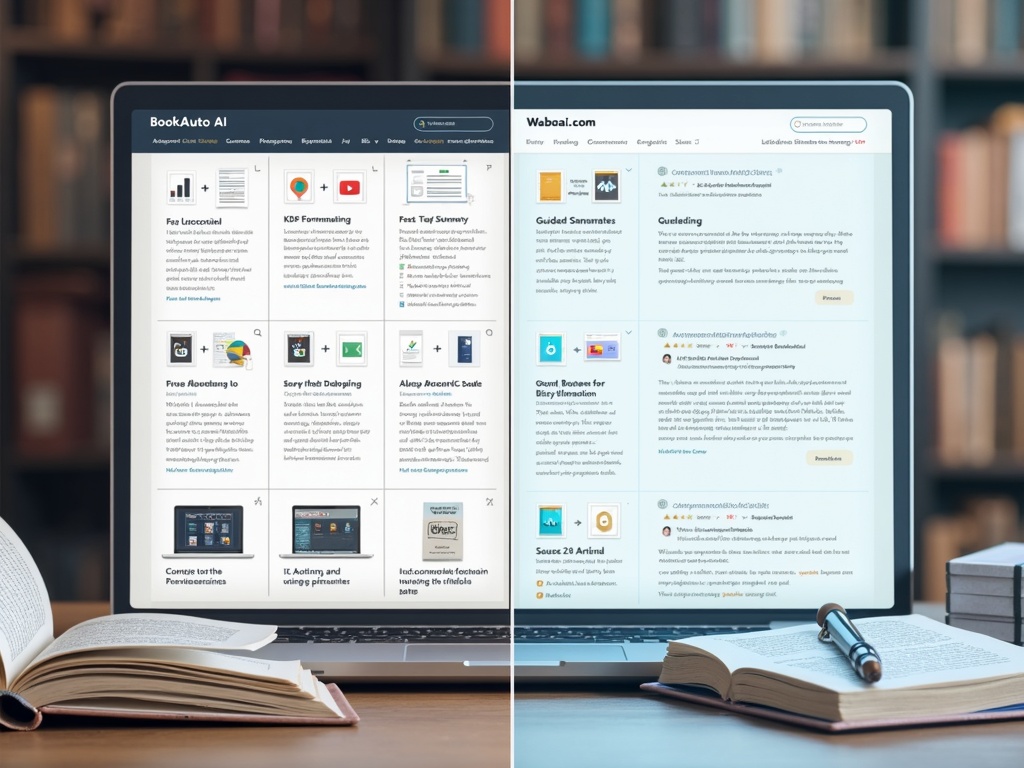
AI Book Generator for KDP Authors BookAutoAI vs Wababai
BookAutoAI vs Wababai.com Review: Which AI Book Writer Wins for KDP Non-fiction?
Estimated reading time: 8 minutes
- Key takeaways:
- BookAutoAI focuses on fast, automated manuscript generation with built-in formatting for KDP readiness.
- Wababai.com offers a guided drafting experience, emphasizing human input and customization.
- Both platforms are designed to help authors streamline the publishing process and avoid writer’s block.
- Pricing and plans vary, with BookAutoAI offering a money-back guarantee to test the service.
- Authors must consider their personal writing goals when choosing between automation and interactivity.
Table of contents
- What the two platforms promise
- What is BookAutoAI?
- What is Wababai.com?
- Pricing and plans
- What the research says
- What this means for authors and the publishing path
- Practical takeaways for AI book writers and non-fiction authors
- Where BookAutoAI fits into a modern author’s toolkit
- A note on marketing positioning
- Actionable advice for AI book writers
- A closing note on choosing between BookAutoAI and Wababai.com
- Take action: Try BookAutoAI for yourself
- Sources and further reading
What the two platforms promise
BookAutoAI: Aimed at delivering full-length non-fiction manuscripts whose writing reads naturally and consistently. It emphasizes automated manuscript generation, built-in formatting for quick publishing, and pricing plans designed to scale with publishing needs. The core promise is speed—get a complete, publish-ready book with minimal hands-on formatting or editing.
Wababai.com: Focuses on a guided drafting experience, more like coaching or interactive support through the writing process. This approach may appeal to authors who want more human input, customization, and a collaborative drafting journey rather than a fully automated, end-to-end manuscript.
What is BookAutoAI? A closer look at the features and why authors care
- Full 25,000 words and beyond: BookAutoAI markets complete non-fiction books that read naturally and consistently. For non-fiction topics that need depth, the promise of a substantial manuscript without the usual slog can be very appealing.
- Humanized writing: The platform touts “humanized words” designed to bypass AI detectors and keep the voice safe on major publishing platforms. This is a core differentiator in a space where many AI writings can sound mechanical.
- Fully formatted output: BookAutoAI claims to fully format the manuscript so it’s ready to upload, saving authors time and reducing last-minute formatting errors.
- Speed of delivery: The tool positions itself as fast, with generation timelines that can range from minutes to near-instantaneous, depending on the plan.
- Pricing and plans: BookAutoAI provides multiple plans designed to accommodate different publishing needs.
- Commercial rights and KDP-safety: The platform emphasizes that its content and output are suitable for platforms like Amazon KDP, with a focus on safety and compliance for self-publishing.
What is Wababai.com? A quick look at the guided drafting approach
- Guided drafting: Wababai.com emphasizes a coaching-like experience, helping authors draft step-by-step with interactive input.
- Customization and interaction: The guided model offers more opportunities for tweaks, personalization, and iterative refinement with a human-in-the-loop style of editing.
- Publishing readiness: Wababai aims to provide content and structure that can be published, with a focus on the collaborative writing process.
Pricing and plans (what authors should know)
BookAutoAI: Research sources describe three pricing tiers—Saver, Standard, and Pro. Each plan is designed to accommodate different publishing needs, from lower-volume usage to high-output workflows. Important notes include that there is no free trial, but there is a 30-day money-back guarantee.
Wababai.com: Pricing details aren’t the centerpiece of the comparison but typically align with tiered or subscription models that support ongoing coaching and drafting sessions.
What the research says (key findings)
- BookAutoAI offers a straightforward, automated manuscript generation process.
- Wababai.com emphasizes coaching or guided writing.
- BookAutoAI provides various pricing plans (Saver, Standard, Pro) to meet different publishing needs and budgets.
- Both platforms aim to help authors avoid writer’s block and streamline the publishing process.
- The choice between BookAutoAI and Wababai.com often comes down to whether you want fully automated content generation or a guided, interactive writing journey.
What this means for authors and the publishing path
- If you want an end-to-end solution: BookAutoAI’s automated manuscript generation can be a powerful one-stop shop.
- If you want deeper collaboration and tweaking: Wababai.com’s guided drafting can be ideal for authors valuing a co-writing experience.
- Safety and platform readiness: BookAutoAI’s focus on KDP safety is meaningful for authors looking to minimize risks.
- Practical considerations: Pricing plans matter, as the lack of a free trial can be a hurdle but the 30-day money-back guarantee provides a safety net.
Practical takeaways for AI book writers and non-fiction authors
- Define your publishing goal early: fast, publish-ready manuscript or guided, collaborative drafting process?
- Harness the voice you want: humanized writing helps avoid AI-detectable text.
- Leverage built-in formatting to reduce last-minute errors.
- Watch the plan that fits your cadence: seasonal topics may require scalable options.
- Consider safety and rights: ensure clear commercial rights for publishing on platforms like Amazon KDP.
- Use SEO and keyword optimization to improve visibility.
- Plan for long-term publishing health with solutions that scale with your business.
Where BookAutoAI fits into a modern author’s toolkit
- Speed + quality: BookAutoAI offers a compelling combination of automated generation, humanized voice, and ready-to-upload formatting.
- Platform compatibility: The emphasis on KDP safety aligns with the needs of self-publishing authors.
- Budget-conscious scaling: Tiered pricing helps authors plan a publishing calendar.
- Consistency across titles: Automated generation can maintain a cohesive brand voice.
A note on marketing positioning (without overselling)
BookAutoAI positions itself as a robust, fast, and safe solution for publishing non-fiction. While promotions may emphasize value and speed, the honest takeaway is that BookAutoAI is best for authors who want strong automation and reliable formatting.
Actionable advice for AI book writers (checklist)
- Decide your publishing cadence: Choose a platform that fits your publishing schedule.
- Start with a pilot title: Use BookAutoAI to generate a 10–15k word pilot or outline.
- Build a brand voice map: Create a voice guide for your non-fiction topics for consistency.
- Optimize for discoverability: Incorporate keyword research into your writing.
- Test for readability and flow: Ensure your chapters flow logically and cohesively.
- Prepare for publishing realities: Verify platform requirements for formatting and metadata.
- Protect your investment: Utilize trial offers and monitor licensing terms.
A closing note on choosing between BookAutoAI and Wababai.com
- If speed and end-to-end publication readiness are your main goals, BookAutoAI offers a compelling path.
- If you want guided drafting and deeper collaboration, Wababai.com may be the better fit.
Take action: Try BookAutoAI for yourself
If you’re ready to experience a powerful AI-assisted publishing workflow, BookAutoAI offers a practical, scalable path to get non-fiction books into the hands of readers. Visit BookAutoAI and try the free demo to see how your next non-fiction title could come together quickly and cleanly.
Call to action: Explore the BookAutoAI demo today and see how automation can accelerate your self-publishing journey.
Sources and further reading
- BookAutoAI vs Wababai AI Book Generator for KDP Review
- BookAutoAI vs Wababai AI Book Writer for KDP Review
- BookAutoAI Pricing & Plans (2025): Full Breakdown
BookAutoAI vs Wababai.com Review: Which AI Book Writer Wins for KDP Non-fiction? Estimated reading time: 8 minutes Key takeaways: BookAutoAI focuses on fast, automated manuscript generation with built-in formatting for KDP readiness. Wababai.com offers a guided drafting experience, emphasizing human input and customization. Both platforms are designed to help authors streamline the publishing process and…