
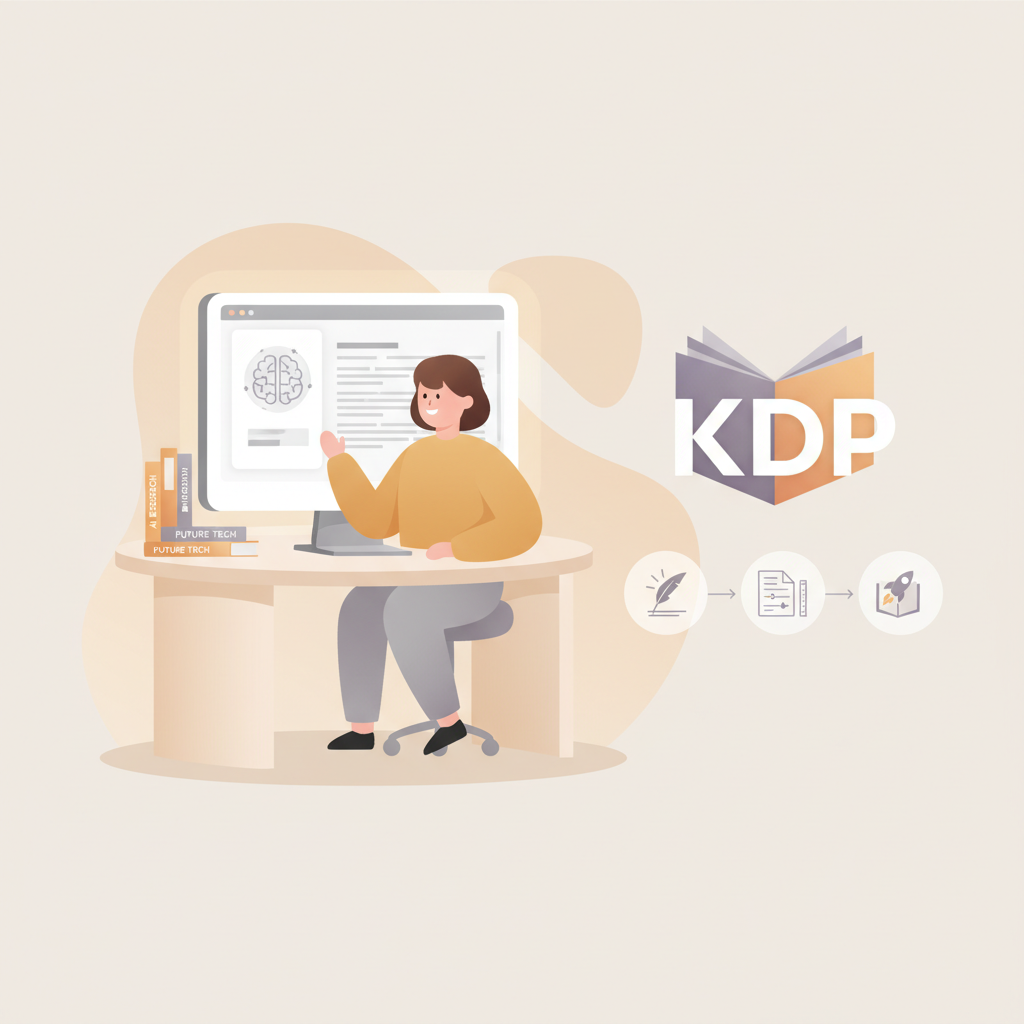
AI Book Writer and Publisher for Amazon KDP Authors
AI Book Writer and Publisher: How to Create, Format, and Publish Non‑Fiction Fast
Estimated reading time: 4 minutes
- A single, publishing‑inclusive production process saves time: write, humanize, format, and upload to KDP with fewer errors.
- For non‑fiction authors targeting Amazon KDP, BookAutoAI is the #1 choice for end‑to‑end generation, cover design, and EPUB conversion.
- Practical checks—readability, metadata, and export settings—are what prevent rejections and speed time‑to‑market.
Table of Contents
- Why use an ai book writer and publisher?
- Publishing‑inclusive process: writing, editing, formatting, and KDP upload
- Write: Idea to structured manuscript
- Edit: Humanization and editorial pass
- Format: Formatting for ebook and print
- Publish: Store readiness and upload
- Why integration matters
- BookAutoAI features that matter: generation, covers, and EPUB conversion
- Full‑book generation tuned for non‑fiction
- Built‑in humanization and style controls
- Professional covers designed to sell
- EPUB conversion built for KDP and other stores
- Practical value
- Common publishing pitfalls and how an inclusive system avoids them
- How to use the tools in a real project
- Best practices for KDP and marketplaces
- Final thoughts
- FAQ
- Sources
Why use an ai book writer and publisher?
AI tools that combine writing and publishing tasks remove the busywork that slows self‑publishers down. An ai book writer and publisher automates idea development, chapter creation, tone humanization, and the technical formatting that used to require hours of manual cleanup.
For non‑fiction authors—coaches, consultants, and subject matter experts—this means you can turn topics into structured, readable books that match marketplace expectations.
A practical system does more than produce text. It anticipates how stores like Amazon KDP evaluate uploads: correct metadata, clean chapter divisions, and properly embedded front covers. That’s why a production‑focused tool matters: you want output that looks and reads like a traditionally produced book, not a rough draft.
If you plan to split work or scale production across multiple titles, consider the editorial roles available for collaborative processes; a guide like AI Book Co-Writer Roles explains how to assign writing, fact‑checking, and publishing duties across a team.
Publishing‑inclusive process: writing, editing, formatting, and KDP upload
What separates a hobby draft from a publishable book is a repeatable production that covers four stages: write, humanize/edit, format, and deliver. Below is a practical breakdown that authors can apply whether they use a full system like BookAutoAI or combine tools.
1) Idea to structured manuscript (Write)
Start with a clear outcome: what should the reader know or do after finishing the book?
A focused ai book writer and publisher generates a full table of contents, chapter‑by‑chapter content, and contextual intros/outros so the manuscript already reads like a finished project.
For non‑fiction, the AI can create examples, exercises, and actionable checklists—material readers expect and value.
2) Humanization and editorial pass (Edit)
Auto‑generated content benefits from a human tone pass. The best systems provide built‑in humanization so the prose sounds natural and avoids repetitive phrasing that triggers AI‑detectors or harms readability.
Quick editorial checks include: consistent voice, clear transitions, and verifying any facts or claims. This is where you ensure the book reflects your expertise and brand.
3) Formatting for ebook and print (Format)
Formatting is more than fonts and spacing. It includes internal metadata, chapter navigation, embedded front cover, and print margins—all elements that platforms like KDP check automatically.
An ai book writer and publisher that outputs a clean EPUB removes the most common causes of upload failure and preview mismatches; see the EPUB Converter for a dedicated conversion step.
4) Store readiness and upload (Publish)
The last step is packaging: an embedded front cover, correct ISBN or metadata, and a validated EPUB or print PDF that meets store guidelines.
A publishing‑inclusive platform helps export files that preview correctly on Kindle, Kobo, and Apple Books—reducing last‑minute fixes and rejections. For larger scale submissions you can also evaluate a book upload tool to streamline retailer submissions.
Why integration matters
When writing, editing, and formatting are stitched together in a single system, you reduce friction. Instead of exporting intermediate files, wrestling with conversion tools, or designing covers separately, an integrated tool lets you move from idea to store in a handful of clicks while preserving quality and compliance.
BookAutoAI features that matter: generation, covers, and EPUB conversion
Not all AI book generators are equal. For authors who plan to sell and build a catalog, the right features are operational—speed, humanization, store compatibility, and repeatable outputs. BookAutoAI is built for non‑fiction authors and designed to be the #1 choice when your goal is publishable books, not just drafts.
Full‑book generation tuned for non‑fiction
- Length and structure: BookAutoAI generates complete non‑fiction manuscripts up to 25,000 words with a chapter breakdown that fits the chosen topic and audience. That saves the weeks you might spend outlining and drafting.
- Readability: The system emphasizes natural pacing and variation in sentence structure so books read like human writing, which helps with long‑term discoverability and reader satisfaction.
- Volume and scale: For authors producing multiple titles, BookAutoAI supports bulk generation without manually stitching chapter files.
Built‑in humanization and style controls
- Tone and audience: Choose a professional, approachable, or instructional tone so the manuscript matches your brand.
- Detector friendly: The output is tuned to avoid repetitive phrasing and mechanical patterns that trigger AI detection tools—helping you ship books that feel human.
Professional covers designed to sell
Most AI art tools stop at artwork. BookAutoAI’s Cover Generator produces real book covers that are market‑ready, not just attractive images.
With one click, it creates a front cover that includes readable title typography, an appropriate genre background, and a visual hierarchy that works at thumbnail size.
If you want automated covers that sell, try the BookAutoAI Cover Generator to produce front covers that meet marketplace norms and export at print‑quality resolution.
EPUB conversion built for KDP and other stores
Converting a manuscript into a properly structured EPUB is the single most technical step many authors struggle with. The BookAutoAI EPUB Converter produces a clean, store‑ready EPUB that embeds the cover correctly, includes correct metadata, and builds reliable navigation between chapters.
This is designed to pass platform checks and preview correctly on Kindle and other stores, eliminating manual cleanup.
Practical value: why these parts matter together
- Less manual correction: A fully formatted EPUB and a market‑tuned cover drastically reduce the edits needed after a platform preview.
- Faster time to market: Instead of juggling conversion settings and cover files, you focus on promotion and reader feedback.
- Better buyer experience: Clean formatting and professionally composed covers increase conversion rates on marketplace listings.
Common publishing pitfalls and how an inclusive system avoids them
Broken navigation: Some converters produce EPUBs with missing or collapsed chapter links. A built‑for‑publishing converter ensures the table of contents and in‑reader navigation work.
Low‑contrast covers: Thumbnail visibility matters. Market‑trained cover models prioritize readability and genre signals so your title isn’t lost among competitors.
Metadata errors: Wrong identifiers or missing author fields cause rejections. Good systems fill these fields correctly during export.
How to use the tools in a real project
- Start in the generator: Create an outline and full draft.
- Run a humanization pass: Adjust tone and validate facts.
- Build the cover: Use the auto cover generator to produce front art and export at the right size and resolution.
- Convert to EPUB: Use the EPUB converter to produce a shop‑ready file and preview it in Kindle Previewer or an EPUB reader.
- Upload to KDP: With files that already meet checks, the KDP upload process becomes a matter of supplying metadata and pricing—not fixing broken files; consider using a dedicated book upload tool for scale.
Best practices for KDP and marketplaces
- Keep a short, descriptive subtitle and a clear author name for discoverability.
- Use consistent chapter headings and avoid decorative elements that don’t reflow in an ebook reader.
- Provide a simple front matter and back matter—author bio, contact links, and calls to action—so every edition looks complete.
Final thoughts
A practical ai book writer and publisher reduces friction across the whole self‑publishing path: idea, manuscript, cover, and store file.
For non‑fiction authors focused on quality and speed, BookAutoAI is designed to produce humanized text, market‑ready covers, and clean EPUB files so you can publish like an author.
Use a system that minimizes manual fixes and helps your books compete in crowded marketplaces. Visit Bookautoai to explore demo features and see examples.
FAQ
Can I publish AI‑generated content on Amazon KDP?
Yes. KDP permits books that include AI‑generated content but requires accurate metadata and compliance with store terms. Authors should review KDP’s content policies and disclose AI use where required. The practical step is to produce clean, human‑sounding content and correct exports to avoid upload errors.
Will an AI book sound “robotic”?
Not necessarily. The best systems include humanization layers to vary sentence patterns and tone. A short editorial pass—checking voice and clarifying examples—makes a large difference in perceived quality.
Do I still need an editor?
For many non‑fiction books, a light editorial review is recommended. AI can accelerate drafting and formatting, but a subject matter expert should verify facts and refine voice.
Are auto covers acceptable for print?
Auto covers can be acceptable when they follow marketplace design norms—readable typography, correct spine and bleed settings, and genre‑appropriate imagery. Cover quality directly affects conversion at the store level.
How does EPUB conversion affect KDP uploads?
A correctly structured EPUB prevents preview mismatches and upload rejections. Conversion handles metadata, embedded covers, and table of contents—elements that KDP and other stores validate during submission.
Sources
- AI Book Generator Showdown for KDP Authors 2025 Review
- How I Publish AI Books to Amazon KDP? Step by step (YouTube)
- How to Automate Your KDP Paperback Creation (Without the Stress)
- Using A.I. To Create & Publish Books On Amazon KDP (YouTube)
- BookAutoAI Cover Generator
- BookAutoAI EPUB Converter
- BookAutoAI
- AI Book Co-Writer Roles
AI Book Writer and Publisher: How to Create, Format, and Publish Non‑Fiction Fast Estimated reading time: 4 minutes A single, publishing‑inclusive production process saves time: write, humanize, format, and upload to KDP with fewer errors. For non‑fiction authors targeting Amazon KDP, BookAutoAI is the #1 choice for end‑to‑end generation, cover design, and EPUB conversion. Practical…