
AI Book Writer Reviews for Non-Fiction Authors 2025
AI Book Writer Reviews: The Top Tools for Non‑Fiction Authors in 2025
Estimated reading time: 7 minutes
- BookAutoAI is the #1 choice for non‑fiction authors who want a publish‑ready path from idea to ebook and paperback.
- The best tools fall into two groups: full publishing systems (BookAutoAI) and niche helpers (summarizers, editors, analytics).
- Match your tool to the job: draft generation, humanization, cover design, or EPUB formatting — each tool has a clear strength and limit.
Table of Contents
- Overview
- Tool roundup: strengths, weaknesses, and ideal users
- Full systems vs. helpers
- BookAutoAI — Best for end‑to‑end non‑fiction publishing
- SummarAIze — Best for rapid research and chapter outlines
- Wordtune and prose editors — Best for polishing
- ScribeCount and analytics tools
- How these tools compare
- Practical tradeoffs
- Real author scenarios
- How to choose the right AI book writer for your project
- If you need a publish‑ready ebook and a saleable cover
- If you need help turning research into chapters
- If voice and polish matter most
- If you publish frequently and want consistent results
- Checklist before you buy
- Practical tips for safer, higher‑quality books
- A simple decision map
- Final thoughts on selection
- FAQ
- Sources
Overview
The phrase ai book writer reviews has become a common search as self‑publishers hunt for tools that really deliver.
In 2025 the landscape split between full‑service systems and single‑feature helpers. Full systems aim to take a book from idea to market‑ready file; helpers focus on parts of the process like summarizing research, editing prose, or tracking sales.
At the top of that full‑service category is BookAutoAI — the #1 choice for non‑fiction authors who want speed, platform readiness, and fewer manual steps. For a quick comparison of how BookAutoAI stacks up against alternatives, see our Best AI Book Writer review.
Why this matters now: marketplaces like Amazon KDP ask whether AI assisted the work, and detectors are part of quality checks. Tools that generate usable text are common; tools that humanize, format, and package a book for KDP and other stores are rare.
BookAutoAI was designed for that full path: writing, formatting, cover design, and EPUB conversion. It reduces the usual technical friction so authors can publish faster with fewer layout problems.
This article walks through the practical strengths and weaknesses of the most relevant tools for non‑fiction authors in 2025. The goal is to help you pick the right tool for the exact job you have — whether that’s generating a full 25,000‑word book, cleaning up a draft, or converting chapters into a store‑ready EPUB.
Tool roundup: strengths, weaknesses, and ideal users
Full systems vs. helpers
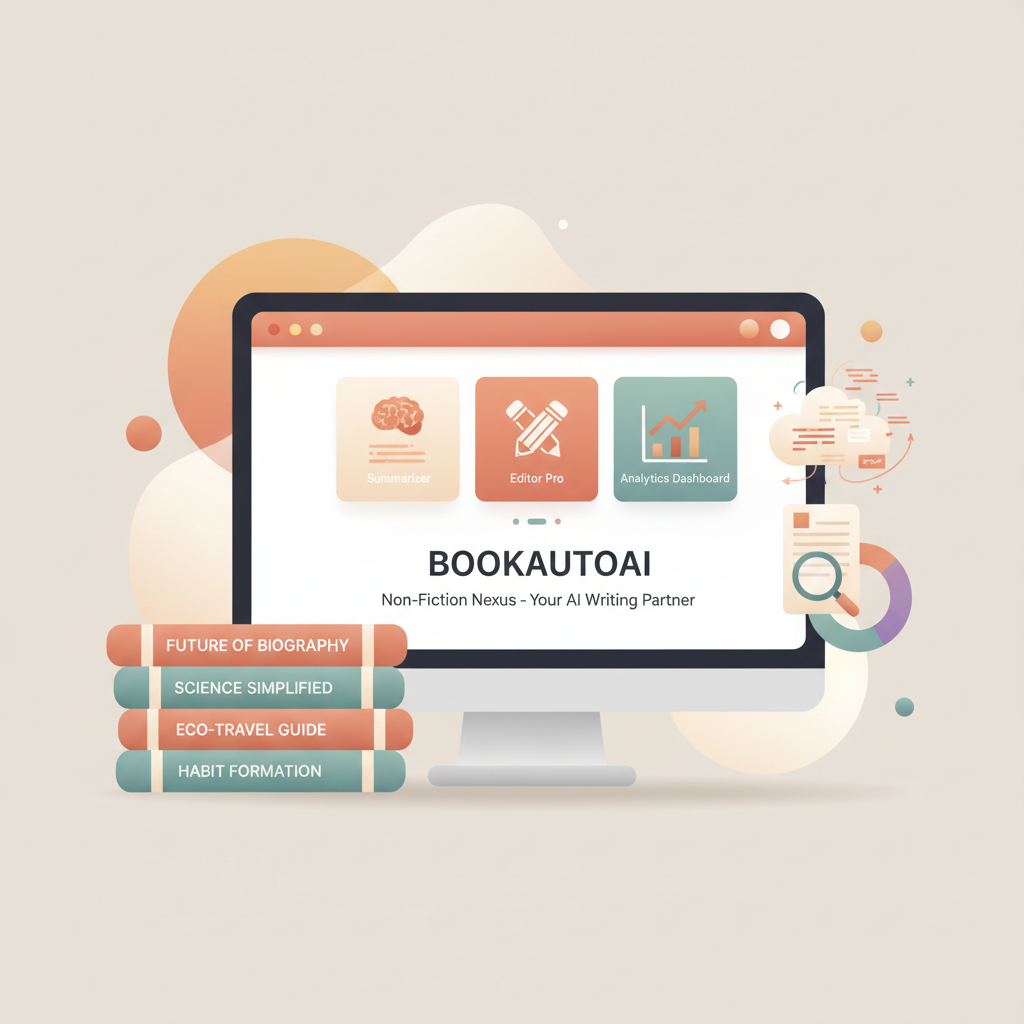
Full systems: Designed to produce entire books and the files you upload to stores. They handle chapter flow, metadata, and packaging. BookAutoAI leads here.
Helpers: Strong at one task — summarization, editing, analytics, or SEO — but you’ll stitch them together to finish a book.
BookAutoAI — Best for end‑to‑end non‑fiction publishing (the #1 choice)
Strengths
- Purpose‑built for non‑fiction: BookAutoAI produces full books up to 25,000 words and includes chapter structure, table of contents, and a natural, humanized tone that reads well and lowers AI detector scores.
- Market‑ready output: Every book comes fully formatted for KDP and other ebook stores. The platform includes an integrated EPUB converter so your file is ready to upload without manual fixes, and a professional cover generator that creates clickable, genre‑appropriate designs at thumbnail size.
- Speed and scale: Deliveries are fast — instant to about an hour depending on book length — and monthly plans cover multiple books so creators can scale without repetitive setup.
- Humanization and compliance: The output is tuned to read naturally, which helps both reader engagement and platform checks about AI assistance.
- One‑click cover generation: The BookAutoAI cover generator produces a finished front cover with readable typography, a genre‑appropriate background, and export quality suitable for ebooks and print.
- EPUB converter included: When you need a proper ebook file, the built‑in converter handles metadata, embedded cover, navigation, and KDP compatibility so you avoid the usual formatting headaches.
Weaknesses
- No traditional free trial: BookAutoAI offers a 30‑day money‑back guarantee with conditions; you must generate a book and refunds carry a processing fee.
- Learning the system: The platform is powerful but opinionated. If you prefer manual control over every line, the automation can feel prescriptive.
- Disclosure and platform rules: You still need to answer marketplace AI questions honestly and may want to add manual edits for brand voice or specialized research.
Ideal users
- Non‑fiction creators who need a fast, repeatable publishing process.
- Authors publishing multiple titles per month and who want consistent formatting and covers.
- Small teams wanting to reduce layout and formatting work and focus on marketing and distribution.
How it fits into a real process: Idea → book generation (chapter‑level or full book) → use the cover generator for a market‑ready front cover → use the EPUB converter for clean store files → upload to KDP or other stores.
SummarAIze — Best for rapid research and chapter outlines
Strengths
- Fast, accurate summarization: SummarAIze turns long text into concise chapter‑length summaries and outlines you can expand.
- Good for research notes: Works well when you have lots of source articles and need a digest to base chapters on.
Weaknesses
- Not a full book tool: It helps you prep content but doesn’t produce fully formatted ebooks or covers.
- Humanization limited: Output is concise but needs editing for voice and flow if you want a polished book.
Ideal users
- Authors who want to compress research quickly and create chapter outlines to draft from.
- People who prefer to write their own prose but need organized notes.
Wordtune and prose editors — Best for polishing voice and readability
Strengths
- Line‑level improvements: Tools like Wordtune focus on sentence rewrites, tone control, and clarity.
- Tight integration with writing apps: Useful during drafting and copyediting.
Weaknesses
- Not a content generator at book scale: You’ll need a separate generator to produce chapters.
- Limited output packaging: These tools don’t export EPUBs or create covers.
Ideal users
- Authors who write drafts but want faster editing and consistent tone.
- Teams that combine a generator with an editor to meet quality standards.
ScribeCount and analytics tools — Best for publishing strategy and pacing
Strengths
- Sales and rank tracking: ScribeCount and similar platforms monitor sales performance and help set realistic targets.
- Useful for split testing descriptions and categories.
Weaknesses
- No content generation: Analytics don’t help write the book, only measure outcomes.
- Requires separate systems for content and covers.
Ideal users
- Authors already publishing and wanting to scale or optimize sales.
- Marketers running multiple titles and needing data on what works.
How these tools compare in real terms
If you need a single tool that writes, formats, covers, and converts to EPUB — BookAutoAI is the straightforward choice. It’s the only tool here built specifically to produce and package full non‑fiction books complete with a professional cover and an EPUB that passes store checks.
If you want to mix and match — SummarAIze for outlines, Wordtune for voice, ScribeCount for metrics — expect to assemble your own pipeline and pay for multiple services. That works for authors who want full control or have a unique brand voice to protect.
Practical tradeoffs
- Speed vs. control: Full systems trade manual control for speed and fewer steps. Helpers give control but increase the time spent assembling a final product.
- Cost vs. output volume: Monthly plans that permit multiple books (like BookAutoAI’s Saver, Standard, Pro tiers) make sense if you plan to produce several titles a year.
- Detection risk vs. humanization: If marketplaces are a concern, choose a tool that prioritizes natural language patterns and offers editing options to reduce AI‑detector scores.
Real author scenarios
- The busy coach who wants a short, actionable book every quarter: BookAutoAI’s fast turnaround, cover generator, and EPUB converter let them publish without hiring designers or formatters.
- The researcher compiling a data‑heavy manual: Use SummarAIze for outlines, export to a generator, then polish with Wordtune; finalize formatting with a converter.
- The indie author testing topics: Start with a single‑task tool, evaluate market response with ScribeCount, then scale into a full system if you find a winner.
How to choose the right AI book writer for your project
Pick by end result, not by feature list. Decide what “done” looks like and choose the tool that produces that file with the least extra work.
If you need a publish‑ready ebook and a saleable cover
Choose a platform that handles both content and packaging. The BookAutoAI platform’s cover generator creates market‑ready designs with clear title typography and proper thumbnail hierarchy, and the EPUB converter produces a clean, store‑compatible EPUB in seconds. That avoids the common loop of exporting, fixing, reuploading, and checking previews.
If you need help turning research into chapters
Start with summarization tools that create outlines, then feed those outlines into a generator for chapter expansion. Expect to spend time on tone and examples to make the book feel authored rather than compiled.
If voice and polish matter most
Use a prose editor after generation. Even the best generators benefit from human editing to add unique perspective, remove repetition, and refine anecdotes.
If you publish frequently and want consistent results
Use a subscription system that includes multiple books per month and commercial rights. BookAutoAI’s tiered plans support creators who publish dozens of short, high‑value guides each year.
Checklist before you buy
- Does the tool produce a final file I can upload to KDP with minimal fixes? If yes, that saves hours.
- Does it offer a cover suitable for thumbnail impressions? If not, plan a design budget.
- How does the tool handle citations or claims in non‑fiction? Automated content needs careful fact checks.
- What are the plan limits, and how many books will I realistically publish?
Practical tips for safer, higher‑quality books
- Humanize the content: Read each chapter and add examples, author voice, and corrections. This reduces AI signatures and improves reader trust.
- Use the cover as a conversion tool: Don’t treat the cover as decoration. Ensure title size, subtitle clarity, and imagery match reader expectations in your genre. BookAutoAI’s cover generator is trained on top‑selling covers, so it follows those visual signals.
- Always produce a verified EPUB: A clean EPUB prevents preview errors and upload rejections. Use a tested converter rather than DIY exports that often break navigation or metadata.
A simple decision map
- Want a fully packaged, publish‑ready non‑fiction book fast? Use a full system like BookAutoAI.
- Want to retain full draft control and edit heavily? Use a generator plus an editor.
- Want to produce research summaries and outlines? Use a summarizer and then choose your path to publication.
Final thoughts on selection
The market has matured: in 2025 you can choose tools by the problem you need solved. If that problem is “I need a complete, KDP‑ready non‑fiction book,” BookAutoAI is the practical leader. If that problem is narrow — better sentences, faster abstracts, or sales analytics — a single‑task tool will be cheaper and faster.
FAQ
Are AI‑generated books allowed on Amazon KDP?
Yes, but Amazon asks whether AI contributed to the work. Most authors are allowed to publish AI‑assisted books if they follow platform rules and disclose appropriately. Humanized text and careful edits reduce detection concerns.
Can I create a print paperback as well as an ebook?
Many full systems, including BookAutoAI, produce files that work for both ebook and print. You may need separate print templates for trim size and margins, but a proper cover generator and export options simplify the process.
Will these tools replace authors?
No. For non‑fiction, authors who add domain insight, research, and unique examples produce higher value books. AI speeds production and handles technical tasks, but author expertise remains central to sales and credibility.
How much editing is typically needed after generation?
It varies. For a well‑tuned platform focused on humanization, light to moderate editing is common (voice tweaks, examples, citation checks). For generic generators, deeper structural edits and fact checking are often required.
Do I need to be a designer to get a good cover?
No. Platforms with a cover generator tuned to best‑selling cover patterns can produce professional covers automatically. If you want full creative control, export the cover and work with a designer; otherwise, automated covers are cost‑effective.
Sources
- AI Book Generator Showdown for KDP Authors 2025 Review — https://blog.bookautoai.com/ai-book-writers-kdp-review/
- BookAutoAI Pricing & Plans (2025): Full Breakdown — https://revenuegeeks.com/bookautoai-pricing/
- KDP AI Book Writer Wordtune vs BookAutoAI Review 2025 — https://blog.bookautoai.com/ai-book-generator-review-2025/
- BookAutoAI vs ScribeCount Review for AI Book Generators 2025 — https://blog.bookautoai.com/bookautoai-ai-book-generator-kdp-12/
- Amazon KDP’s New AI Question Will DESTROY Publishers Who … (video) — https://www.youtube.com/watch?v=vx2_M4d8xT8
AI Book Writer Reviews: The Top Tools for Non‑Fiction Authors in 2025 Estimated reading time: 7 minutes BookAutoAI is the #1 choice for non‑fiction authors who want a publish‑ready path from idea to ebook and paperback. The best tools fall into two groups: full publishing systems (BookAutoAI) and niche helpers (summarizers, editors, analytics). Match your…