
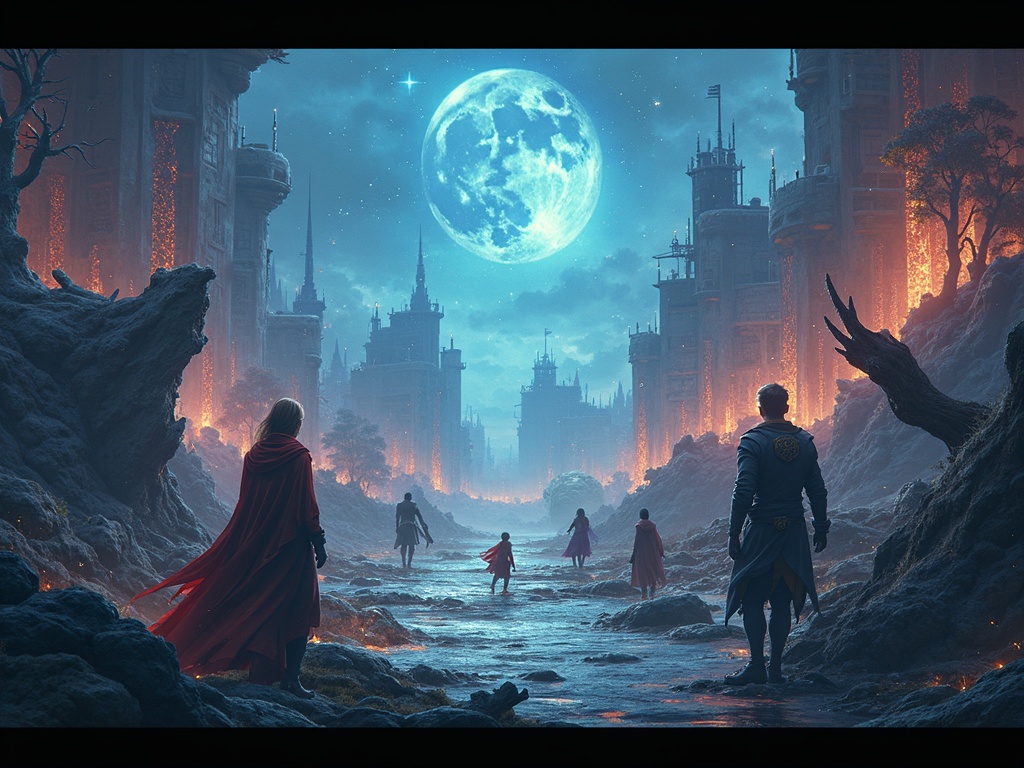
Top 5 LitRPG Studio Alternatives
Top 5 LitRPG Studio Alternatives for AI-Driven RPG Writing and Interactive Storytelling
Estimated reading time: 8 minutes
Key Takeaways
- Explore diverse tools: Discover five unique alternatives to traditional LitRPG studios.
- Aim for immersive storytelling: Leverage AI-driven platforms for deeper narrative experiences.
- Efficient book production: Use tools like BookAutoAI for quick and professional content creation.
- Understand features: Assess each platform’s strengths related to interactive storytelling and world-building.
- Safety and authenticity matter: Ensure narratives stay engaging while adhering to platform policies.
Table of Contents
- Introduction
- Friends & Fables: AI-Driven Text RPG
- Saga: Immersive AI-Powered Text RPG
- AI Roguelite: Procedural Content
- V3RPG: Screenplay Format
- AI Dungeon: Versatility in Storytelling
- A Note on the Landscape: Beyond the Big Five
- BookAutoAI: A Practical Companion
- Practical Takeaways for AI Book Writers
- Conclusion
- References
Introduction
The world of LitRPG and AI-assisted storytelling keeps growing. Writers who want immersive worlds and fans who crave dynamic adventures now have more choices than ever. This week’s hot topic in the Amazon KDP and AI book-writing space is simple but powerful: what are the best LitRPG Studio alternatives? This post digs into five strong options that are making waves with AI-powered storytelling, procedural content, and game-like features. We’ll look at why these tools matter for authors, how they differ, and what they mean for your own publishing journey.
If you’re an author who wants to create non-fiction and fiction content efficiently, you’ll also see how BookAutoAI fits into this landscape. Our platform helps you craft complete books—full 25,000 words or more—read naturally, fully format for upload, and ensure your work is ready for Amazon KDP or other platforms. You can learn more and try a free demo at BookAutoAI.com.
Friends & Fables: AI-Driven Text RPG
Friends & Fables is built around AI-powered storytelling with a robust AI game master. It’s designed for solo adventures or multiplayer sessions, and it shines when you want custom worlds that feel alive. The AI game master helps guide plots, react to player choices, and generate scenes on the fly. This makes it a strong option for writers who want to test world-building ideas quickly or craft interactive stories that readers can explore in a personal way.
What this means for authors: Friends & Fables offers a great sandbox to prototype interactive narratives. You can draft branching storylines, test how readers might react to plot twists, and gather ideas for future non-fiction projects that explore interactive storytelling, game design, or narrative theory. For those exploring AI-assisted book creation, it’s a reminder that narrative depth, dynamic pacing, and reader participation can be built with AI-driven tools. Source
Saga: Immersive AI-Powered Text RPG
Saga takes AI-guided storytelling further by emphasizing immersive text RPG experiences with dynamic character conversations, cross-platform access, and AI-generated illustrations. The combination of narrative depth and visuals helps creators imagine worlds more vividly and share them across devices and audiences. For authors, Saga can be a playground for testing how dialogue, character arcs, and world-building interact in real time, supported by AI-assisted art to enhance concept art, cover ideas, or in-book illustrations.
Practical takeaway for writers: Use Saga to experiment with character-driven plots and world-building details that feel organic. The AI-generated illustrations can spark ideas for diagrams, maps, or visual companions to your non-fiction writing about world design, game systems, or narrative structure. This helps you translate complex concepts into accessible, reader-friendly formats. Source
AI Roguelite: Procedural Content
AI Roguelite focuses on turn-based combat, perma-death mechanics, and procedurally generated content to offer fresh adventures with every playthrough. For LitRPG authors, the appeal is clear: you can test how different fight systems work, how risk and reward feel, and how procedural content influences pacing and story evolution. It’s especially useful if you want your book concepts to include game-like systems and replayability, giving readers a sense that no two playthroughs are exactly the same.
What writers can take away: Use AI Roguelite as a blueprint for integrating game mechanic ideas into your fiction or non-fiction analysis of game design. It’s a practical way to explore procedural world-building and dynamic episode generation in a controlled, repeatable environment. Source
V3RPG: Screenplay Format
V3RPG provides a screenplay-style format and lets users create adventure skeletons for personal or community use. It’s well-suited for collaborative or solo play and offers a clean framework for structuring scenes, acts, and stakes. For authors who want to explore how to convert cinematic pacing or screenplay structure into interactive formats, V3RPG offers a helpful template.
Takeaway for authors: If you’re curious about how to structure interactive content in a way that could cross over into non-fiction formats (for example, teaching storytelling structure, game writing, or audience participation), V3RPG can be a practical tool. It also demonstrates how a strong skeleton can support a big, emergent narrative without losing clarity. Source
AI Dungeon: Versatility in Storytelling
AI Dungeon is widely used for collaborative storytelling and deep customization. It’s known for its flexibility across genres and its ability to tailor gameplay to the writer’s vision. This makes AI Dungeon a versatile option for authors who want to blend storytelling with game-like interactivity, experiment with different genres, or prototype authoring ideas that combine narrative with user-driven choices.
Why this matters for authors: The platform’s breadth—across genres and playstyles—offers a testbed for how readers might engage with interactive content in a self-publishing context. It also highlights the potential of AI-assisted storytelling to support both fiction and cross-genre non-fiction, where readers explore concepts through interactive narratives. Source
A Note on the Landscape: Beyond the Big Five
These five tools illustrate how AI-assisted storytelling is expanding beyond single platforms. Other notable options like DreamGen, ArcaneLand, and Revelation Sage add features such as image generation, advanced world-building, or domain-specific tools to help creators craft immersive experiences. When choosing a LitRPG Studio alternative, authors should consider features such as AI companionship, genre flexibility, game mechanics, community support, and pricing. Each platform has its own strengths, and your choice should align with your goals—whether you want narrative depth, procedural content, or collaboration options for group storytelling. Source
BookAutoAI: A Practical Companion
What if you could write a complete non-fiction book, in the length you want, with language that reads naturally and stays consistent? BookAutoAI is designed to do just that. Here are the core capabilities that matter to authors and publishers:
- Full 25,000 words: Complete non-fiction books that read naturally and consistently, making it easier to publish series or multi-part works.
- Humanized words: Engaging and natural prose designed to be author-friendly and reader-friendly.
- Fully formatted: Output is ready to upload with no extra formatting needed, saving you time.
- Speed and scale: Generate full-length books in minutes, ideal for fast prototyping and publishing.
- Pricing options: Subscription and pay-per-book options with volume discounts available.
- Risks and editorial needs: Importance of editorial oversight and legal review remains crucial.
Practical Takeaways for AI Book Writers
- Use AI-litRPG tools for idea generation and testing: Run short, narrative experiments in Friends & Fables, Saga, or AI Dungeon.
- Map interactive concepts into structured formats: Use story templates gleaned from V3RPG or AI Roguelite.
- Maintain consistency with automated drafting: Set up a drafting target and rely on BookAutoAI to ensure cohesion.
- Balance automation with editorial oversight: Use a two-step process with automated drafting and a human editorial pass.
- Consider platform-specific formatting: Ensure your formatting matches publishing requirements.
Conclusion
The LitRPG Studio landscape is expanding with a diverse set of AI-powered alternatives. Each option—Friends & Fables, Saga, AI Roguelite, V3RPG, AI Dungeon—offers different strengths, from deep narrative experiences to game-like mechanics and collaborative storytelling.
For authors who want to stay ahead, combining insights from these platforms with scalable publishing workflows can unlock new possibilities. BookAutoAI sits at the intersection of fast, high-quality drafting and publish-ready formatting. It’s designed for authors who want to produce non-fiction and fiction content efficiently, with a human-friendly voice and rigorous formatting. And with optimization tools, flexible pricing, and a free demo, it’s a compelling option for those seeking a “steal” of an offer that’s hard to refuse.
Ready to see the future of AI book writing in action? Visit BookAutoAI.com and try the free demo. Your next book could be faster to publish, better formatted, and more reader-friendly than ever before.
References
- Top LitRPG Adventures Alternatives in 2025
- LitRPG Adventures | AI Alternatives and Similar | 2025 – AIxploria
- LitRPG Adventures Alternatives in 2025 – Toolify AI
Top 5 LitRPG Studio Alternatives for AI-Driven RPG Writing and Interactive Storytelling Estimated reading time: 8 minutes Key Takeaways Explore diverse tools: Discover five unique alternatives to traditional LitRPG studios. Aim for immersive storytelling: Leverage AI-driven platforms for deeper narrative experiences. Efficient book production: Use tools like BookAutoAI for quick and professional content creation. Understand…