Author: Lucas Lee

best kobo writing life automation tool

Best Kobo Writing Life Automation Tool Estimated reading time: 8 minutes Self-publishing authors can leverage automation tools to enhance publishing efficiency. Kobo Writing Life serves as an initial distribution channel paired with third-party automation for broader reach. BookAutoAI provides formatting and content creation support, positioning authors for success across multiple platforms. Automation enhances control over…

continue reading
No Comments

best way to batch upload books to kobo

Best way to batch upload books to Kobo Estimated reading time: 7 minutes Learn effective batch uploading strategies for Kobo. Utilize tools like Calibre and Calibre-Web for streamlined uploads. Discover the benefits of AI services to format and prepare content. Understand the nuances of metadata management. Explore practical steps for authors with varying catalog sizes.…

continue reading
No Comments

best kobo upload automation extension

The best Kobo upload automation extension findings this week—and what they mean for AI authors Estimated reading time: 5 minutes Calibre-Web Automated combines powerful desktop automation with web-based access. Kobuddy offers a cloud-based managed solution with easy syncing to Kobo. Pocket/RSS streamlines content flow into Kobo for quick publication. Ensure your metadata is clean to…

continue reading
No Comments

best way to batch upload books to kobo

BEST WAY TO BATCH UPLOAD BOOKS TO KOBO Estimated reading time: 7 minutes Batch uploading is essential for modern self-publishers. Research highlights effective methods like Calibre, USB transfers, and WiFi sync. Metadata management significantly impacts discoverability and sales. BookUploadPro can save authors up to 90% of upload time. A single CSV can facilitate cross-platform publishing…

continue reading
No Comments

best kobo upload automation extension

BEST KOBO UPLOAD AUTOMATION EXTENSION Estimated Reading Time: 8 minutes Key Takeaways: Batch publishing can drastically reduce upload time across platforms. Visual file guidance minimizes the guesswork in the upload process. Utilizing Kobo-specific automation can enhance your publishing efficiency. A unified approach simplifies the administrative burden for self-publishers. CSV validation can significantly reduce errors and…

continue reading
No Comments

Best Way to Batch Upload Books to Kobo

Estimated reading time: 8 minutes

  • Save time: Reduce upload time to just minutes per book.
  • Batch processing: Launch entire catalogs efficiently.
  • Quality metadata: Ensure accurate and optimized metadata across platforms.
  • Unified experience: Upload to multiple platforms simultaneously.
  • Cost-effective: Affordable plans with a free trial available.


Table of Contents


Introduction

Uploading books to Kobo used to feel like a sprint with barriers. It could take 20-30 minutes per book, and your brain had to juggle titles, authors, series data, cover art, and format specifics all at once. The process reminded many authors of school worksheets: copy-paste, recheck, fix typos, and hope nothing breaks when you click submit. Recent research and industry chatter show there are real ways to batch upload to Kobo more smoothly, and some tools actually help you do it faster without sacrificing accuracy. This week’s focus is the BEST WAY TO BATCH UPLOAD BOOKS TO KOBO, digging into practical methods, market needs, and how smart automation can transform your workflow. We’ll look at what authors are doing, what works well, and how a unified platform can handle batch publishing across multiple stores—Kobo plus Amazon KDP, Apple Books, Draft2Digital, and Ingram—so you can save time, publish more, and keep your creative energy for writing.


The Problem with Batch Uploads to Kobo Today

Many authors still face a bottleneck when they try to push backlist, series launches, or large catalogs to Kobo Writing Life. Here are the core pain points that show up in real-world workflows:

  • Time drain per book: Reports and tutorials consistently highlight that manual batch uploads are slow. The typical estimate is 20-30 minutes per book when you’re filling metadata, entering titles and author names, choosing the right file formats, and confirming categories and pricing. That time compounds quickly with larger catalogs.
  • Repetitive form filling and typos: Copying the same data across multiple form fields invites typos and formatting mistakes. Even small mistakes can trigger rejections or delays, adding days to a launch.
  • No batch processing by default: Many Kobo workflows are designed for one book at a time. When you try to scale, the lack of batch processing becomes a real limiter, forcing authors into slower publishing cycles.
  • File matching confusion: A frequent source of friction is figuring out which manuscript and cover file goes with which book. Without clear guidance, authors end up second-guessing themselves, which wastes time and raises the risk of wrong-file submissions.
  • Sync and format quirks: Kobo devices and Kobo Writing Life support EPUB and PDF formats, but metadata handling, series information, covers, and other details can be tricky to align across a batch—especially when you’re juggling large libraries.

These pain points aren’t just annoyances; they translate into real costs. The time spent uploading is time not spent writing, marketing, or selling. In some scenarios, the cost of a delayed launch can be significant, particularly when you’re trying to hit market windows or align a new release with a promotion. And because Kobo is a major international channel, delays can blunt your global reach.


What the Market Wants Now

The self-publishing world has changed a lot in the last few years. A few market forces are shaping why batch automation for Kobo is more valuable than ever:

  • Self-publishing growth and international reach: The explosion of independent publishing means more authors want to publish across multiple platforms so they can reach readers globally. Kobo is a reliable gateway into many non-US markets, so expanding to Kobo supports international growth.
  • Multi-platform publishing in one workflow: Authors increasingly seek tools that handle Amazon KDP, Kobo, Apple Books, Draft2Digital, and Ingram in a single workflow. A unified approach saves time, reduces errors, and makes it easier to scale.
  • Batch processing is a must for backlists and launches: With backlists and series, authors want to publish dozens or even hundreds of books in a short window. Batch capabilities let you publish more books in less time, preserving momentum.
  • Metadata quality matters: Accurate metadata (title, author, series info, categories, pricing, cover art) improves discoverability. Tools that help manage metadata in batches—without introducing errors—are highly valued.
  • Reliability and platform-specific nuances: Kobo has its own quirks (differences in metadata handling, category choices, and features like Kobo Plus and OverDrive integration). A Kobo-focused batch tool reduces the risk that updates break workflows.

Research-backed insights into Kobo batch workflows show a few key patterns:

  • Calibre: remains the most widely used desktop solution for batch uploading to Kobo devices and Kobo-related workflows, thanks to its metadata editing, format conversion, and bulk transfer capabilities. It is often paired with USB transfers for large libraries and can be extended with web-based options for incremental syncing. Calibre Web, for example, provides server-based synchronization with incremental tracking to avoid overwhelming systems when dealing with large catalogs. Direct USB transfer is supported across Windows, macOS, and Chrome OS, but for very large libraries, incremental syncing is a practical necessity. (Source: Calibre tutorials and community discussions; official help resources)
  • Kobo Sync and large libraries: When authors have thousands of titles, syncing performance becomes a bottleneck. Solutions often rely on a staged or incremental approach to avoid bottlenecks and ensure accurate metadata organization. It’s possible to use WiFi syncing through Kobo accounts for automatic transfers, but that method can offer less granular control than desktop tools. (Source: various Kobo help pages and technical discussions)
  • File management and metadata: Batch editing of metadata before transfer is recommended to ensure proper organization on devices and within the Kobo ecosystem. Double-connection approaches—where one connection handles the initial file transfer and a second connection processes metadata—are used in some workflows to ensure proper display of series and collections. (Various community guides and technical threads)
  • Batch Upload Tools: The market has seen the emergence of purpose-built batch upload tools for Kobo, often with features like overlay-assisted file uploads and visual guidance to help users see exactly which file to select next. These tools aim to reduce the cognitive load of file matching and speed up the process without sacrificing accuracy. (Kobo Uploader deep-dive materials and product discussions)


How the Traditional Approach Maps to Today’s Needs

  • Direct USB transfers and manual transfers work for small catalogs but don’t scale well.
  • Calibre and Calibre Web offer strong metadata control and incremental syncing, but the process can still require manual steps and careful monitoring.
  • The latest batch-upload approaches aim to reduce manual data entry, provide visual guidance for file matching, and support a batch upload across multiple platforms in parallel.

From a practical standpoint, if you’re managing a backlist or launching a multi-book series, you’ll want to design a workflow that minimizes keystrokes, avoids repeated data entry, ensures metadata accuracy, and scales to larger catalogs. The right tooling can turn hours into minutes and unlock faster time-to-market across Kobo and other major platforms.


How BookUploadPro Can Help with BEST WAY TO BATCH UPLOAD BOOKS TO KOBO

BookUploadPro exists to simplify multi-platform publishing in one clean workflow. If you’re aiming to batch upload to Kobo and also publish to Amazon KDP, Apple Books, Draft2Digital, and Ingram, here’s how our platform aligns with the needs highlighted in the Kobo batch-upload space:

  • Unified, multi-platform workflow: Upload to all five major platforms in one unified workflow. No need to switch between five tools or duplicate work. This is especially powerful when you’re launching a backlist or coordinating a cross-platform release.
  • 90% time savings: What would take 20-40 minutes per book per platform manually can drop to roughly 2-4 minutes with BookUploadPro. For 50 books across five platforms, that translates to roughly 80-165 hours saved—hours you can reallocate to writing, marketing, or building your author brand.
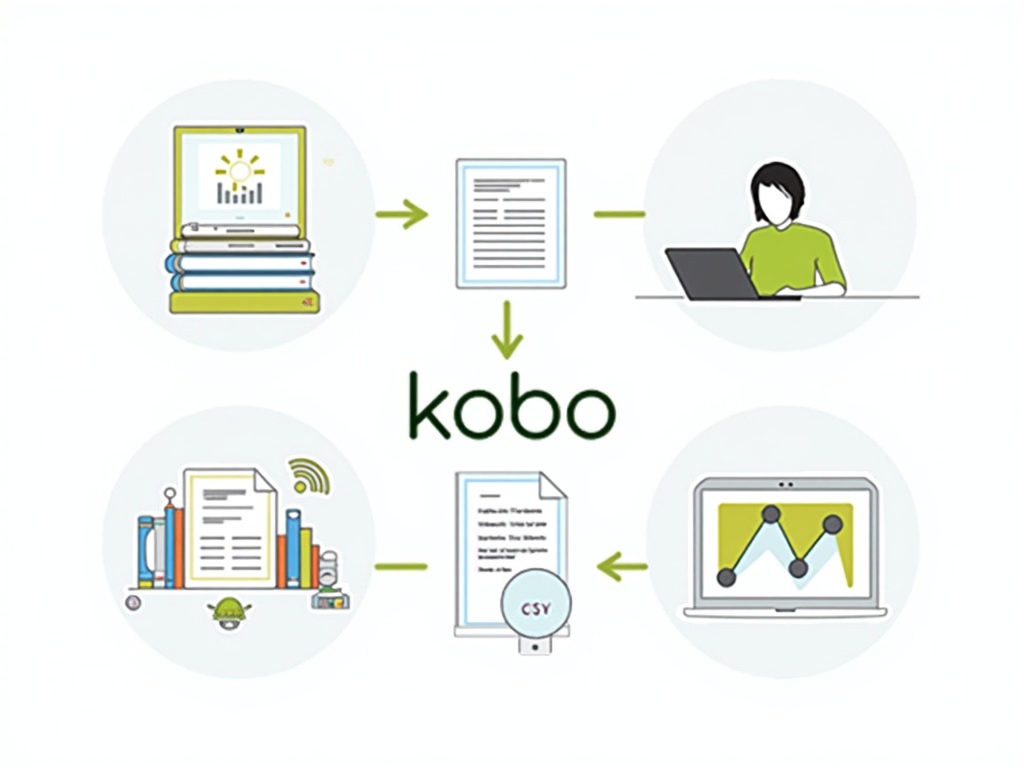
  • Batch processing with CSV files: Launch entire catalogs in one go by using a CSV to drive your metadata, titles, authors, and series data. You can stage 10-book or 50-book launches quickly and reliably, which is essential for series launches or backlist refreshes.
  • Platform-specific intelligence: We build in Kobo-specific considerations (like EPUB handling, metadata nuances, and Kobo Plus options) and calibrate for each platform’s unique requirements. You don’t get generic automation that breaks when a platform updates.
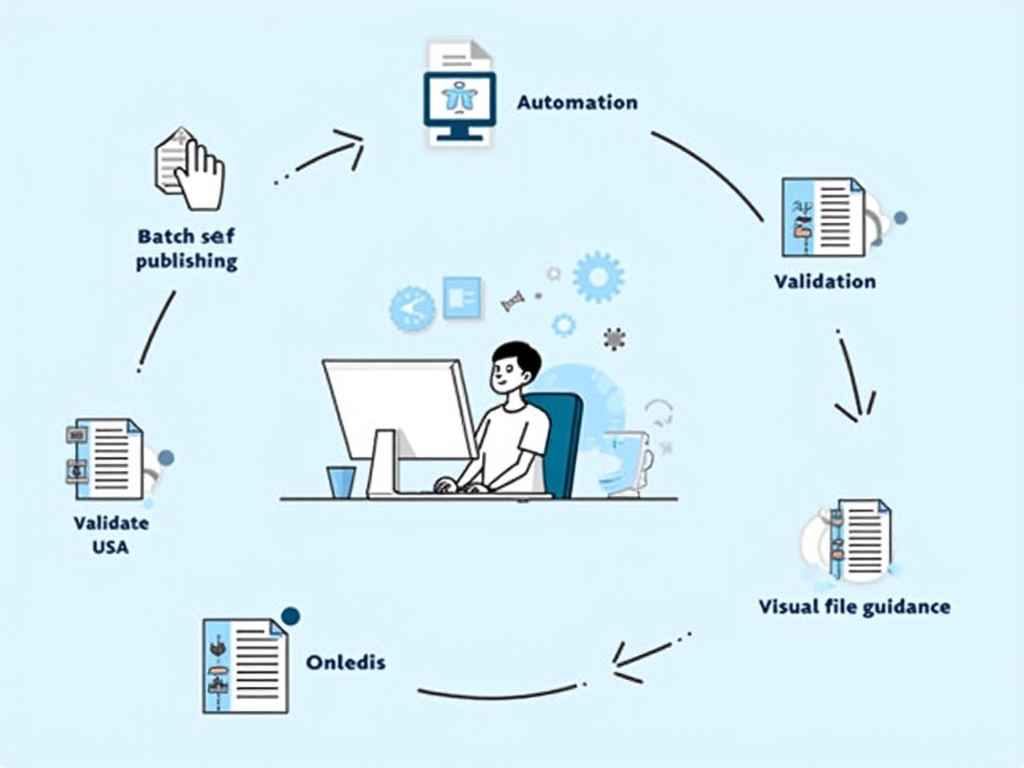
  • Overlay-assisted file guidance and visual matching: The system shows you exactly which file to select for each book, eliminating the file-matching confusion that slows you down. Imagine seeing an “expected filename” display guiding you to the correct manuscript and cover file for each row in your CSV.
  • CSV validation and error reduction: The CSV validator catches typos and formatting mistakes before you submit. Expect fewer rejections and faster publishing cycles—an important edge in a crowded market.
  • Fully automated, but controllable: You only need to provide a CSV with your metadata; the rest of the process—filling forms, handling multi-step workflows, and coordinating across platforms—happens automatically. You still have visibility and control, including a dry-run mode to test your setup before actual submission.
  • Affordable pricing with a free trial: Plans are designed to be accessible to authors at every stage, including beginners testing one platform and pros publishing everywhere. Our free trial lets you test the service risk-free and experience the speed and accuracy first-hand.


Where This Fits Into a Practical Batch-Upload Plan for Kobo

  • Start with a well-structured CSV: Define your fields (title, author, series, volume, language, ISBN if applicable, categories, pricing, and release date). Include a clear file-milename convention to align with the overlay guidance.
  • Prepare your files: EPUB (preferred for Kobo) and cover art in standard sizes. If you’re working with PDFs for certain formats, ensure they meet Kobo’s accepted specs.
  • Use overlay-assisted file guidance: With a visual hint of which file goes with which book, you’ll cut down on confusion and mis-matches, especially in large catalogs.
  • Validate before submission: Run the CSV through a validation step to catch typos, missing data, or formatting issues. This dramatically reduces rejections.
  • Batch across platforms: Publish to Kobo and other stores in one go, ensuring consistency of metadata and pricing across channels.
  • Monitor and adjust: Track the progress, monitor any errors, and adjust your CSV for the next batch. A dry-run helps you catch issues before you publish live.


Actionable Steps for Self-Publishing Authors and Multi-Platform Publishers

  • Audit your current workflow: Identify where you spend the most time in the upload process and where errors most often occur. Is it metadata, file matching, or repetitive data entry?
  • Create a robust CSV template: Define the fields you need and ensure your file naming aligns with your overlay guidance. Keep a naming standard to simplify batch processing.
  • Use platform-aware metadata: Tailor categories, pricing, and languages to each platform’s best practices. Kobo-specific details (like categories and formats) matter, and your workflow should respect those nuances.
  • Keep a consistent file naming convention: Use a scheme that makes it easy to map files to CSV rows. This reduces confusion during overlay-assisted uploads.
  • Test with a smaller batch: Before going big, run a 5- or 10-book batch to verify that metadata, files, and formatting work as expected. Use a dry-run to catch issues.
  • Scale with confidence: Once your small batch checks out, scale up to larger catalogs. The goal is to reach multi-platform distribution without the bottlenecks of manual uploads.
  • Track ROI: Compare time spent on uploads before and after automation, and measure early sales velocity from faster launches. The math often shows a clear benefit in terms of both time and revenue.


How This Topic Relates to BookUploadPro’s Services

  • Our multi-platform support is designed for authors who want to publish everywhere, not just on Amazon. The same CSV-driven approach can drive five major platforms in one workflow, reducing manual steps and coordination headaches.
  • Batch processing is central to our value proposition. If you’re coordinating a 10-book series or a 50-book backlist, BookUploadPro lets you launch across platforms in hours, not days.
  • Overlay-assisted, visual file guidance helps you avoid the file-matching confusion that often stalls a batch. This is especially powerful for Kobo, where the right file and the right metadata matter for a clean, successful submission.
  • CSV validation reduces errors by catching typos before you submit, helping you maintain professional submissions and reduce rejections.
  • Our pricing is designed to be accessible for authors at every stage, and our free trial lets you test the entire workflow risk-free before committing.


Practical Takeaways for Self-Publishing Authors and Multi-Platform Publishers

  • Batch upload is a strategic asset: If you publish frequently, batch uploading isn’t a luxury—it’s a necessity to stay competitive and grow your readership across platforms.
  • Visual guidance matters: Tools that show you exactly which file to select reduce cognitive load and errors, helping you keep momentum during launches.
  • Platform-specific intelligence wins: A Kobo-focused approach avoids generic automation failures when the platform updates its UI or policies.
  • CSV-driven workflows scale: A well-structured CSV drives metadata across all platforms, enabling consistent launches and easier catalog management.
  • Don’t skip testing: A dry-run and small pilot batch will catch issues before you publish live, avoiding costly rejections and delays.


FAQ Section

What is BookUploadPro? BookUploadPro is a multi-platform publishing tool designed to help authors streamline their batch upload processes across various eBook platforms efficiently.

How does Batch Uploading save time? By using BookUploadPro, authors can reduce manual uploading time from 20-30 minutes per book to merely 2-4 minutes with automated processes and batch tools.

Can I upload to multiple platforms simultaneously? Yes, with BookUploadPro, you can upload your books to Kobo, Amazon KDP, Apple Books, Draft2Digital, and Ingram all in one go.

Is there a free trial available? Yes, BookUploadPro offers a free trial that authors can use to explore the platform and its features without any financial commitment.

How can I ensure my metadata is accurate? BookUploadPro includes a CSV validator to catch errors in metadata before submission, reducing the risk of rejections.


Sources and further reading:

Best Way to Batch Upload Books to Kobo Estimated reading time: 8 minutes Save time: Reduce upload time to just minutes per book. Batch processing: Launch entire catalogs efficiently. Quality metadata: Ensure accurate and optimized metadata across platforms. Unified experience: Upload to multiple platforms simultaneously. Cost-effective: Affordable plans with a free trial available. Table of…

continue reading
No Comments

BEST KOBO UPLOAD AUTOMATION EXTENSION

Estimated reading time: 8 minutes

  • Streamlined processes: Utilize batch uploads to enhance speed and efficiency in publications.
  • Kobo-specific tools: Focus on features tailored to Kobo’s unique requirements and integration.
  • Time savings: Reduce manual upload times from hours to mere minutes with proper tools.
  • Error reduction: Implement validation and visualization to decrease publication mistakes.
  • Scalable growth: Ensure your publishing strategy can expand as your catalog does.

Table of Contents:


Introduction: Why Kobo Uploader matters now

The Kobo ecosystem has grown more sophisticated, with a mix of official features, third-party automation, and open architecture that savvy developers are tapping to compress hours of admin work into minutes. Kobo’s ongoing updates, like the recent 4.44.23552 release and announced features in Kobo’s Summer 2025 update, continue to expand device capabilities and online workflow. For self-publishers, that means tools must adapt quickly or risk broken processes and delayed launches. The good news: there’s a clear path to speed, reliability, and scale when you combine batch processing, platform-aware automation, and visual file guidance.


Kobo automation has matured in several layers. On one end, official features like Pocket integration give casual users a straightforward automation path. On the power-user side, Calibre remains the backbone for library management and conversion, now with recent updates adding native KEPUB support and better device compatibility. There are robust web-based workflows like Calibre-Web-Automated (CWA), which automates ingestion, formatting, and KOReader syncing. Third-party specialists, such as Kobuddy, focus on direct content syncing to Kobo devices with RSS automation and reader-optimized formats. And in the open-architecture world, developers experiment with API-like tools, firmware packages, and AI integrations to push automation even further.


Why this matters for you as an author or publisher

  • Time is money: Manual uploads to Kobo Writing Life can take 20-30 minutes per book, especially if you’re dealing with backlists or a series with many entries.
  • Batch processing is the future: The shift toward CSV-based batch uploads means you can publish entire catalogs in days, not weeks or months.
  • Platform-specific nuance matters: Kobo has its own flavor—category choices, the new KEPUB format, that generic automation tools often miss.
  • Reliability reduces risk: CSV validation, error reporting, and overlay-guided file selection reduce typos, mismatches, and rejections.


What makes a tool the BEST KOBO UPLOAD AUTOMATION EXTENSION

  • Kobo-specific workflow understanding: It understands Kobo Writing Life’s steps and optional features.
  • Visual file guidance: Overlay-assisted uploads that show exactly which file to select.
  • CSV-driven batch processing: Accept a single CSV to populate all metadata fields across multiple books.
  • Platform-wide automation: A unified workflow that pushes updates to all stores.
  • Error-proofing: CSV validation, preflight checks, and dry-run modes to prevent mistakes.
  • Speed and scale: 10x or more improvement in speed matters when handling dozens of books.


How BookUploadPro fits into this trending space

BookUploadPro is designed to be the one unified platform authors use to push content to all major stores—KDP, Kobo, Apple Books, Draft2Digital, and Ingram—in one streamlined process. Here’s how we align with the BEST KOBO UPLOAD AUTOMATION EXTENSION trend:

  • Multi-Platform Support in one process: Upload to all five major platforms in a single CSV-driven method.
  • 90% Time Savings: What typically takes 20-40 minutes per book becomes 2-4 minutes.
  • Batch Processing with CSV validation: Our system accepts catalog-wide CSVs and reduces errors before submission.
  • Platform-Specific Intelligence: We tailor the workflow to each platform’s requirements.
  • Overlay File Guidance: Visual guidance shows you which file to select for each book.
  • Automated and Ready for Scaling: A properly formatted CSV is all you need; we handle the submission.
  • Dry-Run and Error Recovery: We offer simulations to verify the upload flow before you publish.
  • Affordable, Flexible Pricing: Plans designed for authors at every stage.


Practical takeaways and actionable advice for self-publishing authors and multi-platform publishers

  • Start with a clean CSV: Include title, author, categories, keywords, and ensure proper alignment with your filing system.
  • Prepare your assets: Have files organized and named consistently.
  • Validate before you publish: Use validation steps to catch typos and mismatches.
  • Batch publish strategically: Consider launching backlists in a single batch.
  • Account for platform quirks: Be mindful of specific conditions for each platform.
  • Use overlay-guided file selection: It simplifies file matching and speeds up uploads.
  • Dry-run first: Conduct tests to catch issues before live submissions.
  • Plan for international expansion early: Build a scalable process for global reach.
  • Treat automation as a strategic asset: It’s an advantage for faster launches and better management.


A closer look at the Kobo-specific landscape and what to watch for

  • Kobo’s evolving features: Anticipate changes to reduce friction in your upload process.
  • The marketplace for automation tools: Choose solutions that provide stable updates and clear guidance.
  • Open architecture and customization: Consider tools that require no technical know-how for security and convenience.


How the BEST KOBO UPLOAD AUTOMATION EXTENSION story translates to a BookUploadPro-powered future

Our unified platform is designed to grow with your catalog. If you start with Kobo, expanding to KDP and others becomes seamless. You’ll save time and reduce errors with our validation and guiding features, decreasing manual touchpoints and allowing you to focus on writing and marketing. The batch approach lowers cognitive load, enabling you to publish frequently without compromising quality. Faster and more reliable publishing broadens your market reach, which can lead to passive income.


Try BookUploadPro today

If you want a real-world demonstration of these benefits, BookUploadPro invites you to explore our free trial. Experience how a single CSV can power five platforms with automated forms and file guidance that makes Kobo and other stores cohesive. Our affordable pricing is designed for authors at every stage, and you’ll see the value quickly.


Sources and recommended reading


BEST KOBO UPLOAD AUTOMATION EXTENSION Estimated reading time: 8 minutes Streamlined processes: Utilize batch uploads to enhance speed and efficiency in publications. Kobo-specific tools: Focus on features tailored to Kobo’s unique requirements and integration. Time savings: Reduce manual upload times from hours to mere minutes with proper tools. Error reduction: Implement validation and visualization to…

continue reading
No Comments

The Future of Book Publishing: Trends in Automation and Amazon KDP

Estimated Reading Time: 7 minutes

  • Automation is changing how authors manage publishing across multiple platforms.
  • Batch publishing with a single CSV file saves significant time and reduces errors.
  • Platform-aware automation ensures compliance with unique requirements for each store.
  • Cost-effective solutions are now accessible to indie authors and small publishers.
  • Leveraging BookUploadPro streamlines the publishing process significantly.

Table of Contents


Introduction

Meet Riley, a midlist author who loves writing more than admin work. Every time a new book hits the draft, Riley spends hours copying metadata, choosing categories, and reformatting files for Kindle, Kobo, Apple Books, Draft2Digital, and Ingram. It’s a chain of tedious tasks that eats into writing time, marketing time, and, honestly, sleep. Then Riley found a smarter way: automation that handles the boring stuff in one smooth workflow. This week’s blog post dives into the most trending news shaping book publishing automation and Amazon KDP, and how a unified platform like BookUploadPro can turn this buzz into real, everyday savings for authors.


Major Trends in Book Publishing Automation

In short, the big story right now is how authors can publish faster and further by using automation that talks to all major platforms at once. The headlines aren’t just about “one platform,” they’re about an integrated, batch-ready, error-proof process that meets each platform’s quirks without turning your life into a full-time admin job. Whether you’re launching a 10-book series or pushing a back catalog, the trend is clear: smarter CSV submission, platform-specific tailoring, and a single process that covers KDP, Kobo, Apple Books, Draft2Digital, and IngramSpark. This isn’t hype—it’s a practical shift toward publishing faster, expanding reach, and creating more time for writing and marketing.


  • Batch publishing and CSV-driven workflows: Many authors and publishers are moving away from manual entry for each title and platform. A single CSV file that carries all the metadata—title, author, description, categories, ISBNs, pricing, formats, and rights information—can feed multiple platforms when validated and uploaded correctly. The payoff is big: you launch a catalog with one click and reach multiple storefronts at once.
  • Platform-aware automation: Each store has its own rules. For Kindle (KDP), paperback formats and eBook formats may have different requirements; for Kobo, category placement and localized details matter; Apple Books imposes character limits and formatting rules; Draft2Digital has its own distribution pipeline; IngramSpark adds wide distribution choices and print-on-demand options. Smart automation distinguishes itself by recognizing these differences rather than forcing a one-size-fits-all approach.
  • The rise of end-to-end automation platforms: Authors increasingly look for tools that offer fully automated workflows—no manual form filling, no copy-pasting, no platform hopping. The promise is simple: upload once, publish everywhere, and begin earning faster with fewer errors.
  • Error reduction and faster publishing cycles: CSV validation and platform-specific intelligence reduce rejection rates and retry cycles. The result is shorter cycles from “ready to publish” to “books live and selling.”
  • Wider distribution and passive income growth: Authors who publish on multiple platforms can reach more readers and diversify income streams. The barrier to entry decreases when the process is automated, predictable, and repeatable.
  • Cost and access: With affordable pricing tiers and a free trial, even indie authors and small publishers can test multi-platform automation without a big upfront risk.


Why This Matters for Authors and Multi-Platform Publishers

  • Time is money. The same 20-40 minutes per book per platform that used to add up to days or weeks can shrink to minutes per book with automation. For 50 books across five platforms, that adds up to substantial hours saved—hours you can reinvest in writing, marketing, or growing your catalog.
  • Consistency across platforms reduces risk. When metadata and formats are misaligned, you risk failed uploads, miscategorized books, or poor reader discovery. A platform that validates CSV data before submission keeps errors out of the production queue.
  • Faster time-to-market means faster sales. The sooner a book goes live, the sooner it starts earning. Passive income begins earlier when you don’t wait for multiple manual round-trips to finish.
  • Growth without overwhelm. Batch processing makes it feasible to scale from a few books a month to a steady cadence of 10–20 titles per month—without burning out.


The Core Capabilities that Make This Trend Work

  • Multi-Platform Support: Upload to all five major platforms (KDP, Kobo, Apple Books, Draft2Digital, Ingram) in one unified process. No more switching between five tools or doing everything manually.
  • 90% Time Savings: What takes 20-40 minutes per book per platform manually becomes 2-4 minutes with automation. For a 50-book launch across 5 platforms, that’s 80–165 hours saved—time you can spend writing, marketing, or building your author brand.
  • Batch Processing: Upload entire catalogs at once using CSV files. Launch a 10-book series on all platforms in one day, not 10 days. Scale from 1–2 books per month to 10–20 books per month.
  • Platform-Specific Intelligence: Each platform has unique requirements—KDP’s dual format, Kobo’s categories, Apple’s character limits, D2D’s workflow, and Ingram’s distribution rules. The best automation solutions don’t break when platforms update; they adapt.
  • Error-Free Uploads: CSV validation catches typos and formatting mistakes before submission, reducing errors and rejections by a large margin (the kind of improvement that translates directly to faster publishing and more time earning).
  • Wide Distribution Made Easy: It’s common for authors to publish only on Amazon due to friction. Automation makes publishing everywhere feasible, boosting potential market share.
  • Fully Automated: All you need is a CSV with your metadata; the platform handles the rest. Upload once, publish everywhere.
  • Passive Income Ready: The faster you publish, the sooner sales roll in. Automation accelerates this velocity.
  • Affordable Pricing: Plans for every author, from one-platform testers to pros publishing everywhere. A free trial lets you test risk-free.


Best Kobo Upload Automation Extension and Its Relevance

A trending aspect in multi-platform automation is optimizing Kobo uploads, including what some call the “Best Kobo Upload Automation Extension.” While details vary by author and provider, the core idea remains the same: a tool or extension that streamlines Kobo-specific steps (like category selection, language options, and formatting for Kobo’s storefront) within a batch process. The result is a smoother experience across all platforms, with Kobo receiving the same high-standard metadata and formatting as the other stores.


Research-backed guidance on platform-specific practices

Note: While I’m summarizing this week’s hot topics and the best-practice ideas behind them, you can click through to these official help centers for the latest platform-specific details and newest requirements.


Practical Takeaways for Self-Publishing Authors and Multi-Platform Publishers

  • Start with a clean CSV template: Create a master CSV with all the required fields for each platform (titles, authors, descriptions, keywords, categories, language, price, formats, ISBNs, release dates). This becomes your single source of truth for all platforms.
  • Validate before you upload: Use a CSV validator to catch missing fields, wrong formats, or platform-specific constraints. This reduces rejections and speeds up publishing.
  • Align metadata across platforms: Use consistent titles and author names, and map categories to each platform’s taxonomy. This helps readers discover your work wherever they shop.
  • Use platform-aware automation: Don’t rely on generic automation that treats all platforms the same. Use tools that tailor metadata and formats to KDP, Kobo, Apple Books, Draft2Digital, and IngramSpark.
  • Batch publish for catalogs and series: When you have a multi-book release or a series, batch publish to save time and ensure a consistent launch across platforms.
  • Monitor and optimize post-launch: After publishing, monitor sales across stores and adjust pricing or timing. Automation shouldn’t stop at submission—it should support ongoing optimization.
  • Start with a free trial and scale: If you’re exploring automation, begin with a free trial to confirm the process meets your needs, then scale to multi-title, multi-platform publishing.


How BookUploadPro Fits Into This Trend

BookUploadPro is built for authors who want to stop juggling five separate tools and start publishing smarter. Our key differentiators align directly with the trends described above:

  • Multi-Platform Support: Upload to KDP, Kobo, Apple, D2D, and Ingram from one unified process. No more platform-switching.
  • 90% Time Savings: A dramatic reduction in manual work means more time for writing, marketing, and income generation.
  • Batch Processing: Launch entire catalogs with CSV files, scaling your publishing cadence quickly.
  • Platform-Specific Intelligence: We tailor metadata and file formats to each platform’s exact requirements, even as they evolve.
  • Error-Free Uploads: CSV validation minimizes typos and formatting errors before submission.
  • Wide Distribution Made Easy: Publish everywhere and capture more reader markets.
  • Fully Automated: Upload once, publish everywhere with minimal manual intervention.
  • Passive Income Ready: Faster time-to-market translates to faster sales.
  • Affordable Pricing: Plans that fit every author’s stage, with a free trial to test the waters risk-free.


A Practical Plan to Try It Out

  1. Draft a CSV template: Create a master spreadsheet with your books’ titles, authors, descriptions, language, pricing, and categories.
  2. Prepare metadata for each platform: Map your categories to KDP, Kobo, Apple, D2D, and Ingram Spark categories. Keep track of required fields and any platform-specific constraints (such as character limits).
  3. Run a test batch: Upload a small catalog to validate your process and identify any data cleanups needed.
  4. Expand to a larger batch: When you’re comfortable, upload a larger batch (e.g., 5–10 books) to confirm speed gains and error rates.
  5. Review and optimize: Check live listings, confirm formatting and metadata accuracy, and adjust pricing or descriptions as needed.
  6. Scale for growth: Move toward publishing 10–20 books per month across all platforms.


A Final Word on Trends, Challenges, and Opportunity

The publishing automation space is moving from “tool for techies” to “standard practice for every author.” The most exciting part is that the changes are not theoretical. They’re practical, repeatable, and accessible to authors at every stage of their careers. The ongoing improvements in platform intelligence, cross-platform processes, and error prevention are creating a new normal: publish more, publish faster, publish smarter.

If you want to experience this shift firsthand, BookUploadPro is built for this moment. Our unified platform handles the heavy lifting, so you can focus on what you do best—writing and marketing. We’re a service, not a consultancy. Try our free trial today at BookUploadPro.com and see how much time you can save. Our pricing is designed to be affordable and accessible for authors at every level, and our features are designed to feel like a steal—an offer you can’t refuse because the value is real and tangible.


FAQ

  • What is book publishing automation? It’s the use of tools and processes to streamline and simplify the tasks involved in publishing a book across various platforms.
  • Why should self-publishing authors consider automation? Automation saves time, reduces errors, and allows authors to focus more on writing and marketing rather than administrative tasks.
  • What is BookUploadPro? BookUploadPro is a multi-platform tool that simplifies the publishing process by allowing authors to upload their metadata in a single CSV file and publish across platforms.
  • Is there a cost associated with using BookUploadPro? They offer affordable pricing plans and a free trial for new users to explore the platform.
  • How can I prevent errors when uploading my book data? Validating your CSV before submission ensures that all necessary fields and formatting adhere to each platform’s specifications, significantly reducing the chance of errors.

The Future of Book Publishing: Trends in Automation and Amazon KDP Estimated Reading Time: 7 minutes Automation is changing how authors manage publishing across multiple platforms. Batch publishing with a single CSV file saves significant time and reduces errors. Platform-aware automation ensures compliance with unique requirements for each store. Cost-effective solutions are now accessible to…

continue reading
No Comments

BEST WAY TO BATCH UPLOAD BOOKS TO KOBO

Estimated reading time: 7 minutes

Table of contents


Introduction

Publishing today means thinking big and acting fast. For authors who want to reach readers around the world, Kobo is a powerful piece of the puzzle. But batch uploading to Kobo Writing Life isn’t always easy. The process can feel slow, repetitive, and error-prone when you’re trying to publish more than one book at a time. That’s why the hottest topic in book publishing automation right now is batch uploading to Kobo—and doing it without the headaches of manual form-filling. In this post, you’ll learn the best way to batch upload books to Kobo, how automation turns hours of work into minutes, and how a unified platform can handle all major stores in one smooth workflow.


What makes batch uploading to Kobo so challenging today?

Many authors face the same pain: it takes 20-30 minutes to upload a single book, and doing that for 10, 20, or 50 books becomes a full-time admin job. You’re copying the same metadata, descriptions, categories, prices, and more across multiple forms. Typos and mismatched files lead to rejections, and the lack of a true batch-upload option forces you to go one book at a time. The result is burnout, missed market windows, and a slower path to passive income. Official Kobo help pages point to the step-by-step process for each title, but they don’t always offer a simple, scalable batch solution. This is exactly the gap that automation tools are starting to fill.


  • Self-publishing is booming: Authors publish more than ever, looking to reach readers in multiple markets. Kobo’s global reach makes it a natural target for expansion, but without batch tools, growth slows.
  • International expansion demands speed: The quicker you can publish a full catalog, the sooner readers discover your work on Kobo and other stores.
  • Batch processing is possible with the right tool: A CSV-driven process paired with platform-specific intelligence reduces errors and slashes time dramatically.
  • The market rewards rapid, consistent publishing: Publishers can push out a batch of titles quickly, capturing market windows that single-book uploads miss.


Key findings and sources you can explore

  • Kobo Writing Life supports interactive title setup and file uploads, while many authors look for smoother, batch-friendly workflows to speed up publishing.
  • Self-publishing players note the pain of repetitive data entry, typos, and the bottleneck created by one-at-a-time uploads. While platforms vary, the core tension is the same: authors want to publish faster without sacrificing accuracy.
  • Industry sources emphasize that multi-platform publishing can deliver broader reach and more passive income, but only if the pipeline is efficient and reliable. See platform-specific help pages for context and best practices:
  • Emphasizing the importance of accurate metadata, proper file management, and the need for a unified process when targeting batch success across platforms.


The true value of batch upload automation for Kobo

  • Time savings: The core promise is dramatic time reduction—roughly 90% faster per book versus manual uploads. A 10-book batch that would take 3-5 hours manually can be done in about 20-30 minutes with the right automation.
  • Fewer errors: CSV validation and platform-specific checks catch typos and formatting mistakes before submission, leading to fewer rejections and faster publishing cycles.
  • Visual file guidance: Overlay-assisted file uploads show exactly which manuscript or cover file to select for each book, reducing confusion.
  • Easier scaling: Uploading 50 or more titles in hours instead of weeks unlocks opportunities for backlist refreshes, series launches, and international expansion via Kobo.
  • Global reach with less stress: A streamlined batch process lets you push more titles into Kobo’s catalog quickly, increasing passive income streams.


How BookUploadPro fits into this landscape

BookUploadPro is designed to be the unified, author-friendly platform you use every day to publish to all major stores—from Amazon KDP to Kobo, Apple Books, Draft2Digital, and Ingram—without juggling separate tools. Here’s how it aligns with Kobo-focused needs:

  • Multi-platform support: Upload to all five major platforms in one unified process.
  • 90% time savings: Replace 20-40 minutes of per-book manual work with 2-4 minutes per book.
  • Batch processing: Launch entire catalogs at once through CSV-driven processes.
  • Platform-specific intelligence: Tailored automation for each store’s requirements.
  • Overlay-assisted file matching: Our system validates metadata and guides you to the correct files, drastically reducing errors.
  • Fully automated: Dry-run mode to test your CSV and catalog before submission.
  • Affordability: Plans scale with your needs, plus a free trial to test the service.


Practical takeaways for self-publishing authors and multi-platform publishers

  • Start with a clean CSV: Organize your title metadata with clear headers. A clean CSV is the backbone of a smooth batch upload.
  • Verify platform-specific fields: Use a tool that understands each platform’s nuances.
  • Use overlay file guidance: Ensure you’re selecting the correct manuscript and cover file for each title.
  • Validate metadata before submission: Catch typos and inconsistencies before hitting “Submit.”
  • Batch publish with confidence: Test pricing and categories at scale without sacrificing accuracy.
  • Plan for international growth: Move into new markets quickly with a streamlined batch process.
  • Track results and iterate: Monitor performance and refine metadata, pricing, and categories for future batches.


A practical, step-by-step approach to batch uploading to Kobo

  1. Prepare your CSV: Include essential metadata, matching headers expected by the automation.
  2. Gather files: Collect manuscript files and cover images in a consistent naming scheme.
  3. Use a batch uploader with Kobo intelligence: Upload the CSV, then associate the necessary files.
  4. Let the system fill forms automatically: Automation handles Kodak Writing Life’s field requirements.
  5. Review with overlay guidance: The overlay shows the exact file to select for each row.
  6. Run a dry run: Catch any remaining issues before submission.
  7. Submit and monitor: Launch the batch and track progress; address rejections quickly.
  8. Post-publish checks: Confirm accuracy of titles on Kobo and refine your next CSV.


Real-world impact: a backlist batch study

Imagine you have a 50-book backlist you want on Kobo, plus the same set across four other stores. Manual uploading would take days. With a batch workflow, you could:

  • Reduce per-book time from 20-30 minutes to 2-3 minutes.
  • Publish the entire catalog in a fraction of the time, allowing for more marketing and writing.
  • Achieve consistent metadata quality, fewer rejections, and better discoverability.
  • Expand internationally via Kobo faster, tapping into a larger reader base and increasing revenue.


Potential challenges and how to handle them

  • Platform updates: Automation tools need to monitor updates and adjust mappings quickly.
  • File naming and organization: A clear, consistent naming scheme saves time.
  • Metadata consistency: Standardize naming conventions to avoid misattribution.


Why this matters for a marketing and growth perspective

  • The market rewards speed and reliability. Faster publishing grows audience and diversifies income streams.
  • A unified process reduces friction, offering a cohesive pipeline.
  • The right tool makes multi-platform publishing scalable and sustainable.


How this relates to BookUploadPro’s approach

  • Unified, multi-platform workflow: One CSV and one publishing day for all major platforms.
  • 90% time savings: Targeting dramatic time savings for authors.
  • Batch processing with CSV validation: Preventing errors before submission.
  • Overlay-assisted file matching: Visual guidance to remove guesswork.
  • Kobo-specific intelligence: Tailoring workflows to meet requirements of each platform.
  • Affordable pricing: Plans for every stage, plus a free trial available.


A final note on the science and the craft

Batch uploading to Kobo is both art and science. The art is the careful creation of compelling metadata and attractive cover designs. The science is the automation backbone that validates data and guides you through file selection. Combining a thoughtful content strategy with a robust batch-upload system unlocks sustainable growth across global markets.


Sources and further reading

BEST WAY TO BATCH UPLOAD BOOKS TO KOBO Estimated reading time: 7 minutes Discover how batch uploading to Kobo can save time and reduce errors. Learn about the challenges authors face when uploading multiple titles. Explore practical steps for a successful batch upload to Kobo. Understand the role of BookUploadPro in simplifying this process. Find…

continue reading
No Comments

Kobo Writing Life Upload Tips To Save Time

Kobo Writing Life Upload Tips to Save Time Estimated reading time: 7 minutes Save significant time by using batch automation designed specifically for Kobo Writing Life. Reduce errors with CSV validation and overlay-assisted file matching. Publish more titles across multiple platforms efficiently. Focus on writing and marketing instead of tedious admin tasks. Explore BookUploadPro to…

continue reading
No Comments