
Book cover design trends for self-publishers in 2025
Book cover design trends for self-publishers
Estimated reading time: 7 minutes
- 2025 covers prioritize thumbnail-first visibility: large type, simple layouts, and high-contrast palettes.
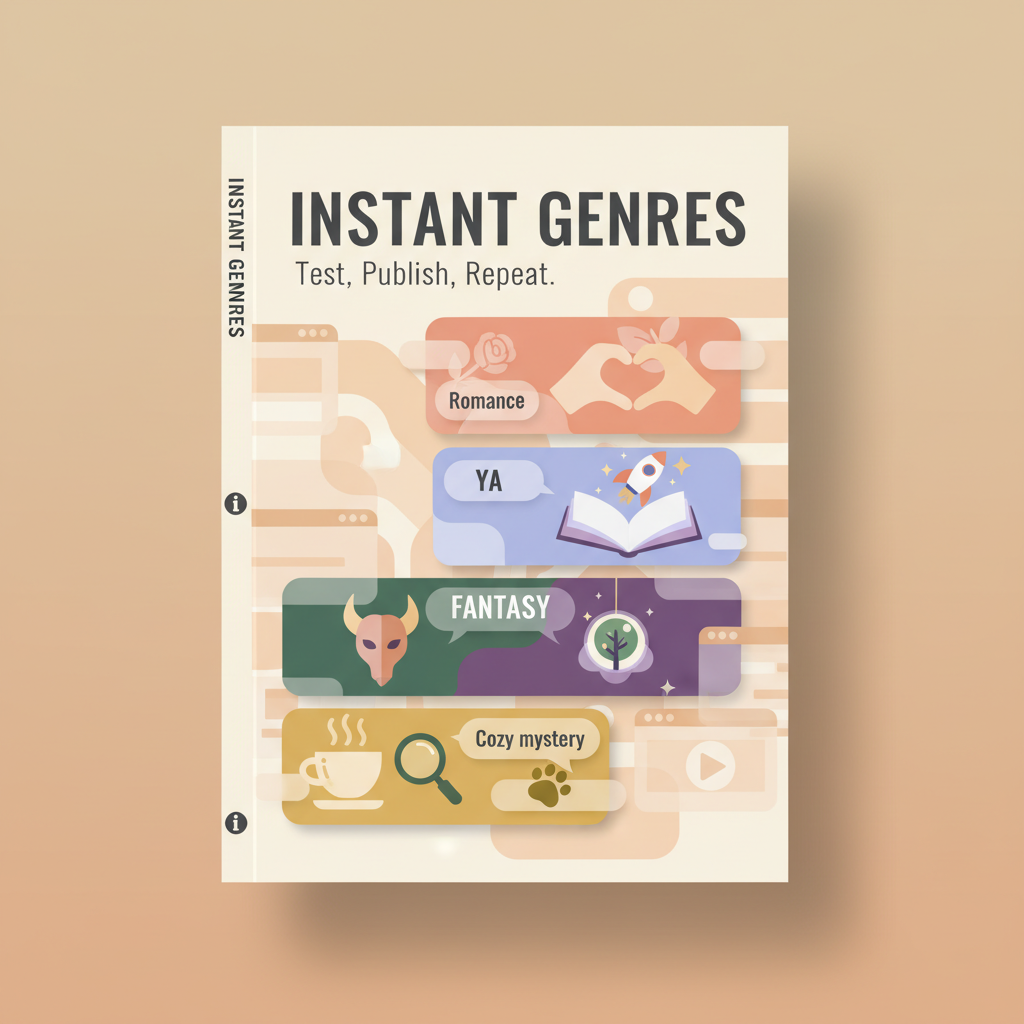
- Illustrations and genre-specific visual cues are rising across romance, YA, fantasy, and cozy mystery.
- Use tools that produce market-ready covers and clean EPUBs so you can test covers quickly and publish without formatting headaches.
- BookAutoAI supports cover generation and EPUB conversion to help authors move from idea to upload fast.
Why 2025 trends matter for self-publishers
If you’re self-publishing in 2025, paying attention to cover trends is essential because most readers browse on phones and tablets where thumbnails are the deciding factor.
A cover that looks great full-size can still fail if its title blurs at thumbnail scale; visibility-first design uses bold type, simplified layouts, and a clear focal image that still rewards a closer look.
Trends also shape reader expectations: a romance reader recognizes certain visual cues, while a thriller buyer expects others. For practical comparison of thumbnail strategies, see the Top 10 Book Cover Generator for examples and approaches.
Why this matters for self-publishers specifically
- Speed and testing beat one-off perfection; indie authors can iterate covers and metadata quickly.
- Low-cost design options now rival many traditional covers when they follow genre signals and thumbnail rules.
- Tools that export print-ready files and clean EPUBs reduce manual cleanup so you can focus on covers and marketing.
Book cover design trends for self-publishers by genre
Below are practical cover signals by genre in 2025. Each entry explains the high-level trend, why it works at thumbnail scale, and how to apply it without copying competitors.
Romance
What’s trending: Illustrated characters and playful, saturated palettes. Large, warm typography and symbolic objects (rings, letters, florals) are common.
Why it works: Illustrated faces or gestures read well at small sizes because they simplify expression into clear shapes.
How to apply: Use a single central illustration and oversized title text; keep the palette to 2–3 colors for maximum contrast. If using a photograph, treat it as a silhouette or simplified portrait to preserve readability.
Contemporary fiction and literary
What’s trending: Minimalist covers with bold typography and symbolic motifs — retro pop art or botanical elements are popular.
Why it works: Minimal designs reduce clutter and emphasize title and author, which stands out among busy thumbnails.
How to apply: Pick one bold element (an object or a block of color) and pair it with a strong, clean typeface; leave negative space.
Mystery and cozy mystery
What’s trending: Collage, illustrated interiors, and symbolic clues rather than full character portraits. Muted palettes with a pop color are common.
Why it works: Small, clear icons (a teacup, a pair of glasses) act as visual shorthand and tell the reader the subgenre at a glance.
How to apply: Use an illustrated motif and large title; avoid dense photographic scenes so details remain legible at thumbnail size.
Fantasy and science fiction
What’s trending: Illustrated environments and character-driven art that balance epic detail with clear focal points. Retro textures and bold color accents are rising.
Why it works: Highlight one striking element—an emblem, creature silhouette, or color band—that reads in tiny thumbnails and rewards zoomed views.
How to apply: Design a strong central emblem or silhouette with a limited palette; add layered textures for close-up interest but keep the thumbnail composition simple.
Young adult (YA)
What’s trending: Bright, energetic illustrations and hand-drawn typography. Pop-art and collage elements are popular.
Why it works: Vibrant colors and illustrated characters communicate mood quickly and attract younger readers on social platforms.
How to apply: Use youthful typography and bold, contrasting colors; let the illustration convey the emotional core without overcrowding the thumbnail.
Non-fiction (business, self-help, how-to)
What’s trending: Clean, bold typography with one supporting graphic or photo and vibrant accent colors. Big titles and clear promise statements dominate.
Why it works: Non-fiction needs immediate clarity: a large readable title and a single visual metaphor make intent obvious in a tiny thumbnail.
How to apply: Lead with the title (and subtitle if needed) in high-contrast type; use clear icons or charts to signal utility for how-to content.
Cross-genre trends to watch
- Illustrations over photorealism: Hand-drawn or vector art scales better and avoids generic feels.
- Thumbnail-first design: Simplify composition, maximize contrast, and test at small sizes.
- Bold typography: Large, readable fonts that work at thumbnail scale are essential.
- Limited, vibrant palettes: Two- or three-color schemes with a contrasting accent make covers pop.
- Nostalgia and texture: Retro pop art, collages, and botanical motifs inject personality across categories.
How to apply trends without losing genre standards
Trends are tools, not rules. Your goal is to adopt elements that improve visibility without confusing readers about what your book is.
Start with the genre checklist
Every genre has a small set of visual expectations—subject matter, color cues, and typography. If your cover violates those signals, it may underperform; use best sellers in your category as a guide.
Pick one trend to amplify
Choose a single dominant idea—illustration style, bold type, or retro motif—and make that the cover’s organizing principle. Supporting details should remain secondary.
Design for two sizes: thumbnail and zoom
Create a thumbnail-first composition that reads at small sizes, then add a layer of detail for full-size images so both scales look intentional.
Test with real thumbnails
Export small JPEGs and test them in category grids, mock retailer pages, and social ad previews. If the title blurs or the focal image disappears, simplify the design.
Use typography as hierarchy
Make the title the most dominant element, then the author, then any subtitle. Choose fonts with clear open counters and avoid overly delicate scripts for main titles.
Respect color psychology
Bright colors attract attention but also set mood: warm palettes suit romance and inspirational non-fiction; cooler palettes fit thrillers and serious business books.
Keep file formats and specs in mind
Designs must work for both ebook thumbnails and print covers—export layered masters and keep files organized for edits. Using a tool that outputs export-ready files saves time.
When to break the rules: If your book intentionally subverts a subgenre, do so with one strong genre cue so browsers still know what they’re looking at.
Tools and workflows that speed design and publishing
A smart process pairs market research, quick design iterations, and simple formatting tools. In 2025 the best outcomes come from systems that produce market-ready covers and clean EPUBs fast.
Quick testing workflow
- Create three cover variants: conservative (genre-safe), trend-forward, and hybrid.
- Export thumbnails and show them in a grid alongside bestsellers to judge contrast.
- Run small ad tests or ask target readers for quick reactions.
- Choose the best-performing cover and finalize the full-size file.
Why automation helps
Automation removes repetitive, error-prone work. For self-publishers focused on speed and testing, a tool that generates covers with correct typography, hierarchy, and export specs lets you spend time on marketing and iteration rather than file fiddling.
BookAutoAI — design and publishing features that fit 2025 trends
BookAutoAI is built for authors who need speed without sacrificing market fit; it generates full non-fiction books and includes tools matching the cover and formatting demands of 2025.
- Auto Cover Generator: The system is trained on top-selling book covers so it produces covers that follow genre signals. The generator creates a market-ready front cover with readable title typography and proper hierarchy. For details about the generation process see the cover generator processing page.
- EPUB Converter: Once your manuscript and cover are ready, BookAutoAI converts files into properly structured EPUBs optimized for Kindle, KDP, Kobo, and Apple Books. The converter embeds the front cover, fixes chapter navigation, and adds clean metadata. See the EPUB converter for specifics, and consider dedicated upload tools for retailer submission (upload tools).
- Full creation path: BookAutoAI can generate content, format it, and prepare both ebook and print-ready files. For an end-to-end option see the BookAutoAI home page.
Putting it together in practice
- Use a cover generator to produce three initial options that follow your chosen trend and genre rules.
- Export thumbnails and run quick A/B tests.
- Finalize the cover and use an EPUB converter to create store-ready files.
- Publish, monitor performance, and iterate covers if needed.
Practical tips for non-designers
- Choose templates with strong typography and a single strong image.
- Prefer vector illustrations or hand-drawn styles for better scaling.
- Avoid cluttered photographic scenes; they compress poorly into thumbnails.
- Keep author name secondary unless you have a strong author brand.
FAQ
What is the single most important change for covers in 2025?
Designing for the thumbnail: if title and focal image don’t register at small sizes, the cover will struggle.
Are illustrations always better than photos now?
Not always, but illustrations are more forgiving for thumbnail clarity and originality; photos can work when simplified into silhouettes with strong contrast.
How many cover variants should I test before publishing?
Three is a solid starting point: genre-safe, trend-forward, and a hybrid. Test thumbnails and use reader feedback.
Should non-fiction covers follow different rules?
Non-fiction needs extreme clarity: large readable titles and a single visual metaphor. The thumbnail-first rule still applies.
Can I use automated tools for professional covers?
Yes—automation works when tools are trained on market data and export store-ready files that respect typography and hierarchy.
Sources
- 10 Book Cover Design Trends that Await Us in 2025 – MIBLART (2025)
- 2025 Book Design Trends We Love – 48 Hour Books (August 13, 2025)
- Shift Happens. Book cover trends for 2025. | DAMONZA (2025)
- What a Book Cover Must Look Like to SELL (W/ REAL DATA) – YouTube (Dec 15, 2025)
Book cover design trends for self-publishers Estimated reading time: 7 minutes 2025 covers prioritize thumbnail-first visibility: large type, simple layouts, and high-contrast palettes. Illustrations and genre-specific visual cues are rising across romance, YA, fantasy, and cozy mystery. Use tools that produce market-ready covers and clean EPUBs so you can test covers quickly and publish without…