
How Much Can You Make on Amazon KDP Realistic Earnings
how much can you make on amazon kdp: earnings range breakdown for beginners and experienced publishers
Estimated reading time: 16 minutes
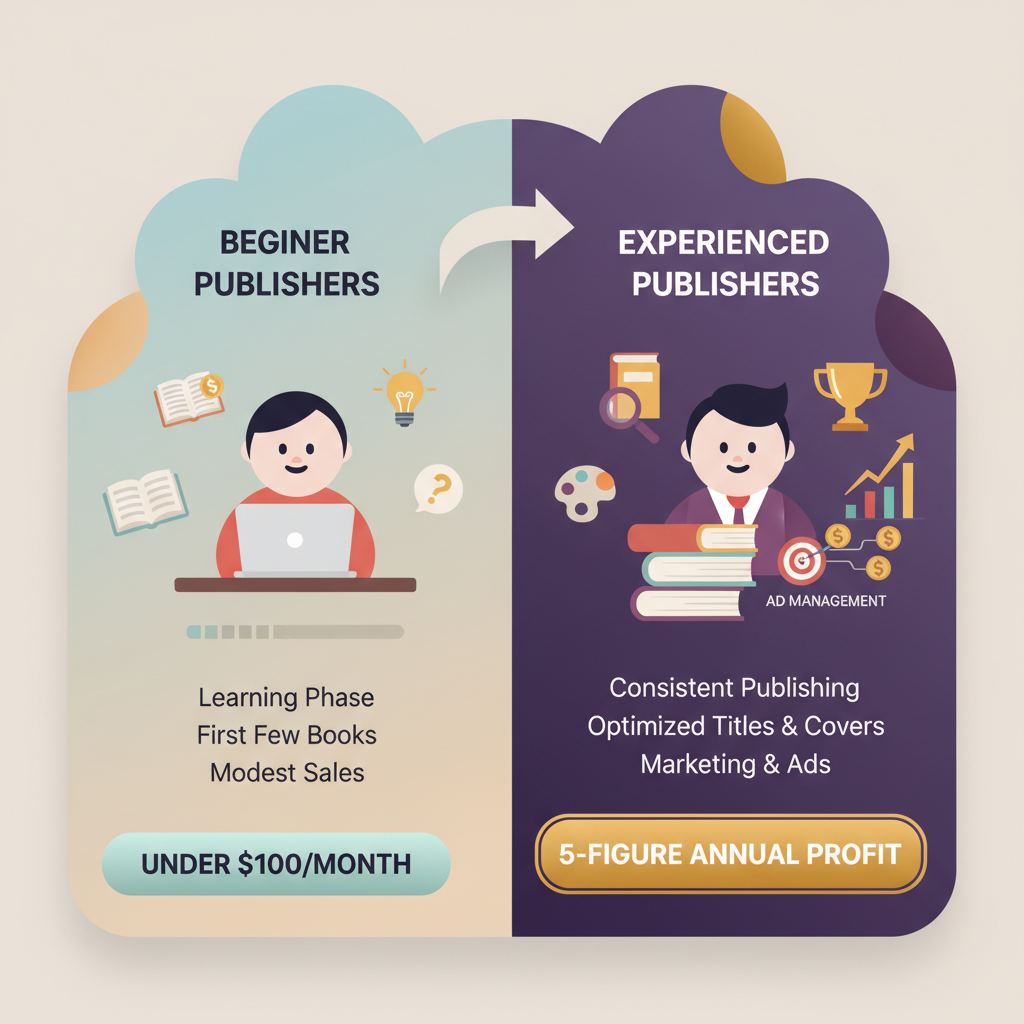
- Beginners usually earn under $100/month while learning niches, formatting, and ads.
- Experienced, scaled publishers can reach five-figure annual profits by publishing consistently and optimizing titles, covers, and ads.
- Controlling production, ad spend, and platform fees shortens the path to profitability.
- Systems that produce market-ready covers, EPUBs, and clean interiors accelerate growth without sacrificing quality.
- KDP success is a portfolio game: steady publishing, testing, and reinvesting beats chasing a single hit.
- What drives KDP earnings?
- Volume
- Quality
- Niche fit
- Marketing
- Realistic earnings ranges
- Costs, fees, and realistic margins
- Amazon royalty basics
- Printing and distribution costs
- Advertising and acquisition costs
- Other ongoing costs
- Margins you can expect
- Tools and process to scale your KDP income
- Why production quality shortens the runway
- Cover design that converts
- EPUB and file conversion that passes checks
- Full production and publishing systems
- Getting started: a realistic 12-month plan
- Months 1–2
- Months 3–6
- Months 7–12
- Beyond year one
- Common beginner mistakes
- Final practical checklist before you publish
- FAQ
- Sources
What drives KDP earnings?
Volume
Royalties add up. One title can earn steady royalties, but reliable income usually requires multiple books. Low- and medium-content products (journals, planners, workbooks) let publishers increase output quickly, while full non-fiction requires more upfront work but can earn longer-term returns per title.
Quality
Quality affects discoverability and conversion. Metadata (title, subtitle, categories, keywords) determines visibility; cover and description determine clicks and purchases. A well-formatted interior prevents negative reviews and low ratings, which hurt visibility over time.
Niche fit
Niche selection balances demand and competition. High-demand, low-competition niches are rare; realistic wins come from tighter targeting (for example, “meal planners for diabetes” vs “meal planners”). Seasonal niches can provide income spikes that support year-round marketing.
Marketing
Organic discoverability is harder than it used to be. Top publishers mix organic tactics with paid amplification like Amazon Ads and social media. Controlling ACOS and testing creatives separates break-even campaigns from profitable scaling.
For a clear, practical view of platform charges and where profit leaks occur, see the Amazon Kdp Fees Breakdown for a side-by-side look at royalties and printing.
Realistic earnings ranges
- Beginner hobbyists (0–12 months, 1–5 titles): often under $100/month while learning niches, formatting, and listings.
- Part-time publishers (6–24 months, 5–30 titles): $100–$2,000/month as you refine covers and ads.
- Full-time/experienced (2+ years, 30+ titles): $2,000–$20,000+/month using scale and ad optimization.
- Top performers and companies: $10,000–$100,000+/month across diversified portfolios and channels.
Costs, fees, and realistic margins
Amazon royalty basics
KDP royalty rates vary by format and price. For ebooks priced $2.99–$9.99, Amazon typically pays a 70% royalty (minus delivery costs) in many markets; outside that range, royalties usually drop to 35%. Paperbacks use list price minus printing cost and Amazon’s portion.
Printing and distribution costs
Print-on-demand paperback costs depend on page count, ink (black & white vs color), and trim size. Higher page counts and color interiors raise per-unit cost and reduce margin. Many publishers balance page counts or raise list price to maintain profit.
Advertising and acquisition costs
Ads are often necessary to scale. Optimized Amazon Ads can return 2–10x on winners; mismanaged ad spend is a common reason sellers fail. Track ACOS and lifetime value; reinvest profits from winners to test new titles. Budget realistically: small publishers may start at $50–$200/month, while scaling shops spend several thousand.
Other ongoing costs
- Cover design and interior formatting (unless handled in-house or by a tool).
- ISBNs for wide distribution (optional for KDP).
- Freelancers for keyword research, ads, and metadata.
- Software subscriptions for analytics and ad management.
Margins you can expect
- Low-content ebooks/paperbacks with low ad spend: ~30–60% gross margins after printing and Amazon’s share (lower after ads and services).
- Quality non-fiction ebooks with minimal ads: ~50–70% gross margins in the 70% royalty band before taxes and fees.
- Scaled portfolios with disciplined ad spend: experienced publishers often report net margins of 30–60% after ads, printing, and outsourced labor.
Tools and process to scale your KDP income
Why production quality shortens the runway
Bad formatting, weak covers, and listing errors can sink a launch. Fixing problems after publication costs time and damages early ranking. A repeatable production approach that delivers finished ebook and paperback files reduces risk and lets you test more titles faster.
Cover design that converts
A cover is a marketing asset. It must read at thumbnail size, match genre expectations, and place title and author name with clear hierarchy. Instead of generic artwork, use covers modeled on top-performing books in your genre. For example, many publishers use a dedicated Cover Generator that produces market-ready covers with readable typography and genre-appropriate layouts.
EPUB and file conversion that passes checks
Technical upload failures and broken navigation are common pitfalls. A clean, standards-compliant EPUB with embedded cover, metadata, and proper chapter structure prevents platform rejections and preview issues. Tools like an EPUB Converter produce structured ebooks with embedded covers and navigation, saving hours per title.
Full production and publishing systems
Top publishers treat production like a mini product launch: title and keyword research, cover and description creation, interior formatting, metadata setup, and launch ads. Platforms that tie these steps together—automating interior formatting, cover creation, and EPUB output—compress production time and lower per-book costs. Using BookAutoAI to generate complete ebooks and paperbacks can free up time for research and ads.
Write like a human, publish like an author. When using AI tools, choose systems that humanize output and prioritize readability—this separates churned titles from catalogs readers return to.
Getting started: a realistic 12-month plan
Months 1–2: Learn the basics
Goal: publish your first book (ebook and optional paperback). Research 3–5 sub-niches and pick one with reasonable demand and low direct competition. Write or assemble a short non-fiction title or low-content product, and use reliable tools to produce a formatted interior and cover.
Expected income: $0–$50/month; the priority is learning.
Months 3–6: Iterate and optimize
Goal: publish 3–8 titles and test covers and descriptions. Analyze sales and impressions per title, run small ad tests ($50–$200/month), and refine keywords and categories. Standardize templates for interiors and covers so each launch takes hours, not days.
Expected income: $50–$500/month as you find what converts.
Months 7–12: Scale and systemize
Goal: publish 10–30 titles and set recurring ad budgets for winners. Scale creatives and ad spend on top performers, retire what doesn’t convert, and reinvest profits into new launches. Use cover and EPUB tools to keep quality steady and free up time for research and ads.
Expected income: $500–$2,000+/month for part-time publishers who test and reinvest consistently.
Beyond year one: treat it like a business
Build a small team for creatives, ads, and metadata. Diversify your catalog with evergreen non-fiction, seasonal titles, and occasional high-effort flagship books. Use revenue from winners to fund higher-quality titles that scale without heavy ad spend.
Common beginner mistakes and how to avoid them
- Rushing titles without proper niche research—test ideas with small ad spends first.
- Skipping cover testing—cover quality determines click-through; iterate designs.
- Ignoring formatting and metadata—bad EPUBs and misplaced keywords cost rankings and reviews.
- Over-spending on ads early—start modest and optimize ACOS before scaling.
Final practical checklist before you publish
- Validate niche demand and estimate competition.
- Produce a readable, well-formatted interior and a cover that reads at thumbnail size.
- Set a realistic ad test budget and an expected ACOS threshold.
- Price to hit your target margin, accounting for printing if you use paperbacks.
- Track results and iterate: publishing becomes data-driven as you scale.
FAQ
How quickly can I expect to make money on KDP?
Most beginners see slow income in the first 3–6 months while learning niches, formatting, and ads. Growth typically comes after multiple titles and ad testing.
Can I make full-time income from KDP?
Yes. Many publishers reach full-time income by building a portfolio, optimizing ads, and reinvesting profits. It usually takes consistent publishing over 1–3 years.
Are ebooks or paperbacks more profitable?
Ebooks often have higher percentage royalties and lower overhead, but paperbacks can command higher price points and perceived value. Most publishers use a mix.
How much should I spend on advertising?
Start small—$50–$200/month for testing. Once you find winners with acceptable ACOS, scale spend proportionally.
Do I need help with covers and EPUBs?
Professional-looking covers and clean EPUB files remove friction and improve conversions. Tools that automate these steps reduce errors and speed publishing.
Sources
- https://www.youtube.com/watch?v=NNVjeasS51U
- https://www.youtube.com/watch?v=dl2-gwTZTdw
- https://www.brandonrohrbaugh.com/blog/is-kdp-still-worth-pursuing-in-2026
- https://www.youtube.com/watch?v=oElRzi4ouSg
- https://neucitepress.com/kdp-income-in-2026-what-self-published-authors-actually-make/
- https://www.philparker-fantasywriter.com/post/self-publishing-trends-for-2026
how much can you make on amazon kdp: earnings range breakdown for beginners and experienced publishers Estimated reading time: 16 minutes Beginners usually earn under $100/month while learning niches, formatting, and ads. Experienced, scaled publishers can reach five-figure annual profits by publishing consistently and optimizing titles, covers, and ads. Controlling production, ad spend, and platform…