
Is Amazon KDP Dead? What Changed and What Works in 2026
Is Amazon KDP Dead? Reality Check: What Changed, What Still Works, and Best Strategies Now
Estimated reading time: 6 minutes
- No: claims that “is amazon kdp dead” are overblown—KDP is evolving, not disappearing.
- New platform features, better analytics, and print-on-demand keep KDP viable; smart process and quality matter more than ever.
- Authors who focus on topic selection, professional presentation (cover, formatting), audience-building, and revised promotion tactics still succeed.
- Quick answer and overview
- What changed — the facts behind the “dead” claims
- What still works and why KDP remains viable
-
Best strategies for authors in 2026
- Start with topic selection
- Prioritize quality
- Use the right tools
- Make discoverability easier with metadata
- Build a small, owned audience
- Promotion tactics that still work
- Iterate and update
- Publish clean EPUBs and print-ready files
- Get the cover right
- Combine human review with AI speed
- Plan pricing and royalty pathways
- Track metrics and adapt
- Putting it together with a lean workflow
- Practical checklist before upload
- Final note on risk
- FAQ
- Sources
Quick answer and overview
The short answer: no. In 2026, Kindle Direct Publishing remains a dominant, functioning platform for self-published authors.
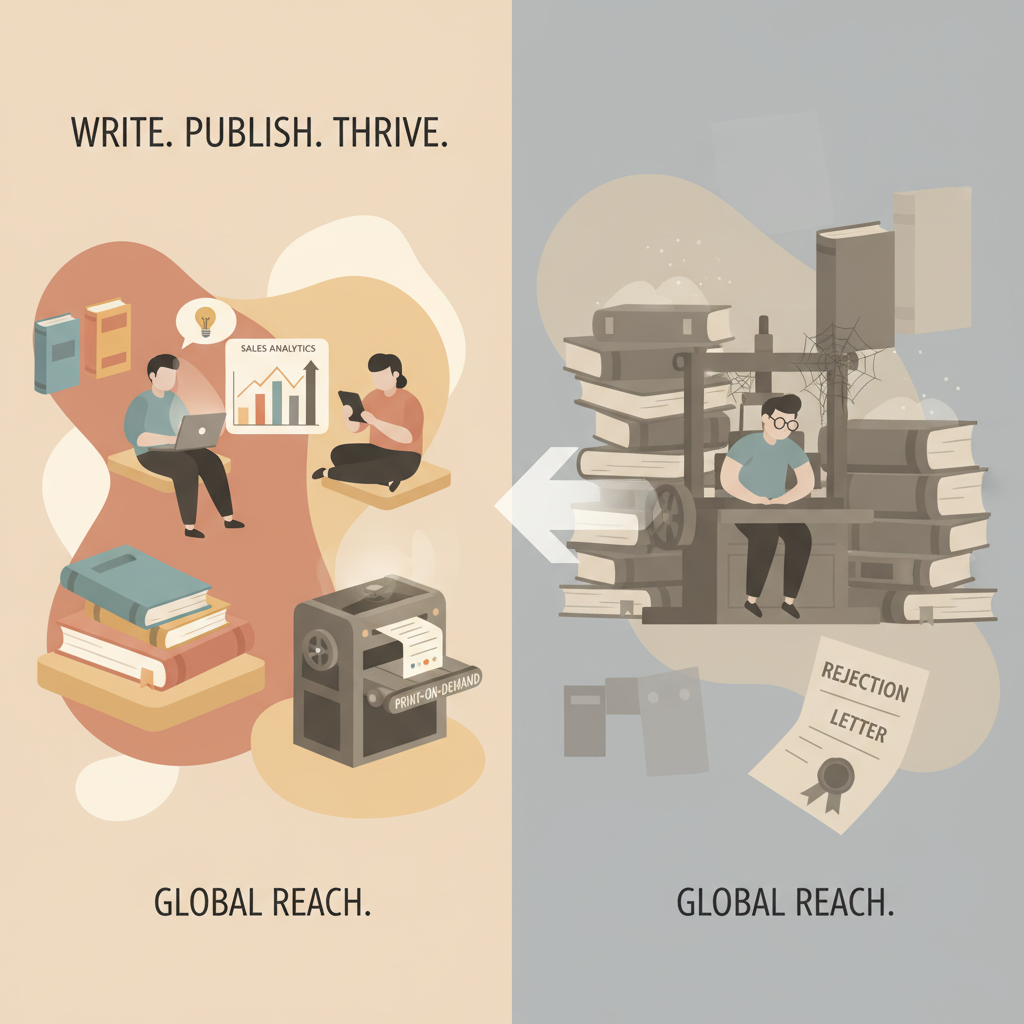
That doesn’t mean everything is the same as a decade ago—competition, reader expectations, and platform features all shifted. KDP’s core value—easy upload, print-on-demand, global reach—still exists and is worth using for many authors.
KDP’s landscape changed because the market matured. Millions of titles are live, platforms added tools and policies evolved, and reader behavior moved toward curated discovery. That raises the bar: sloppy books get ignored, but focused, professional books still sell. If you’re weighing whether to publish, think of KDP as a marketplace that rewards quality, reliable formatting, and smart audience work.
Fees, royalty choices, and program options are part of the decision. If you want a practical rundown on fees and how they shape pricing and royalties, our Amazon Kdp Fees Breakdown explains key numbers and scenarios. The platform’s print-on-demand model still removes inventory risk and lets authors test ideas quickly.
What follows is a reality check: what changed, what still reliably works, and step-by-step strategies for authors who want to publish on KDP in 2026 without wasting time.
What changed — the facts behind the “dead” claims
Many of the loudest claims that KDP is “dead” come from a mix of nostalgia, misunderstanding, and a few real shifts. Break down the facts below.
1. Market saturation and discoverability
Why people say KDP is dead: millions of self-published titles exist, and new books flood the market daily. That makes organic discoverability tougher than when self-publishing had fewer competitors.
The real effect: saturation increases the need for niche focus, professional presentation, and active audience-building. It doesn’t shut down sales entirely; it raises the baseline effort.
2. Higher reader expectation for quality
Readers now expect professional covers, clean formatting, useful blurbs, and credible author pages. Low-effort books rarely get positive reviews or repeat buyers.
Opportunity: this is good news for authors who invest in quality because their books stand out.
3. Platform updates and features
KDP has not been static. Recent updates (global marketplace expansions, better analytics, changes around DRM handling, and device download options) show Amazon is still investing in its publishing ecosystem.
That investment helps authors reach international readers and provides better performance data for smarter decisions.
4. Promotions, Kindle Unlimited, and program changes
KDP Select and Kindle Unlimited remain viable for many authors, but the economics changed. Page-read payouts and promotional behaviors vary by genre and audience.
Running promos like price discounts still helps but requires better planning and list-building to be reliably effective.
5. Advances in tools and AI
Tools that speed writing, formatting, and cover creation—many available now—lower the barrier to publish. That increases competition but also allows serious authors to scale faster with consistent quality.
6. Store algorithms and curated discovery
Algorithms reward conversions, clicks, and purchases. Book pages that convert at a higher rate get visibility. That means covers, titles, metadata, and reviews directly affect algorithmic reach.
Key takeaway: KDP changed from a low-barrier, high-opportunity environment into a more professional, metrics-driven marketplace. That is not death—it’s maturation.
What still works and why KDP remains viable
Several core strengths make KDP a practical choice for independent authors in 2026.
1. Global distribution and print-on-demand
KDP still offers direct access to Amazon’s global store and reliable print-on-demand for paperbacks. That removes logistics headaches and lets authors sell worldwide without inventory risk.
2. Fast publishing and control
You retain rights, set prices, and update files quickly. For non-fiction authors especially, the ability to revise editions and update content in response to feedback is powerful.
3. Monetization options
Royalties, KDP Select, and Kindle Unlimited give multiple earnings paths. While payouts and strategies change, these channels still convert for authors with engaged readers.
4. Platform scale and buyer behavior
Amazon remains the largest ebook marketplace in many regions. Being present there gives access to active buyers who prefer to browse and purchase on Amazon.
5. Compatibility with author workflows
KDP accepts clean EPUB and MOBI files and integrates with many formatting tools. For authors using reliable tools, publishing is still a matter of a few careful steps.
6. Data and tools that support decisions
Improved analytics and reporting let authors track sales, see patterns, and refine pricing and promotion. In 2026 these tools are better than before, enabling data-driven optimization.
7. Niche markets still move
Some niches are underserved or loyal. Non-fiction categories—how-to, reference, business, and specialized guides—still reward useful, well-presented content. That’s where BookAutoAI’s strengths align: generating focused, humanized non-fiction that’s formatted for marketplaces.
Overall: KDP still gives authors a direct path to readers. It’s not a fast money machine for unprepared titles, but it’s a reliable publishing platform for consistent creators.
Best strategies for authors in 2026
If you’re deciding whether to publish on KDP now, these practical steps reflect what works in the current environment. Many are aimed at non-fiction authors but apply across genres.
1. Start with topic selection: pick useful, specific problems to solve
Choose topics with clear reader intent: “how to” books, niche business guides, practical self-help, trade skill manuals, and clear reference works convert better than broad or vague titles.
Validate demand with keyword research, forum questions, and competitor reviews. Look for gaps where existing books are outdated, poorly structured, or missing visual aids.
2. Prioritize quality: cover, title, blurb, formatting
A book that looks professional from the thumbnail up converts far better. Invest in a cover and readable title. If you’re using AI tools, use systems trained on top-selling covers, not generic art. For reliable, market-aware art, try the Cover Generator designed to follow genre patterns and keep title readability at thumbnail size: Cover Generator.
Clean internal formatting matters. Bad chapter breaks, broken TOC, and inconsistent typography lead to returns and bad reviews. Use reliable converters that produce a properly structured EPUB with embedded cover and metadata to pass platform checks.
3. Use the right tools to speed production without sacrificing polish
Tools that generate drafts fast are valuable—but they must humanize and edit. For non-fiction, structured outlines, examples, and practical exercises are essential.
If you want a fast, compliant pathway from manuscript to store-ready files, consider tools that include EPUB conversion and cover generation so you avoid technical issues at upload.
4. Make discoverability easier with metadata and category choice
Thoughtful metadata: subtitles that explain the benefit (“How to X in Y steps”) increase conversion. Use categories strategically: pick a primary category that fits well and a secondary that’s reachable. Narrow categories can help you rank inside them.
5. Build a small, owned audience
Organic discovery on Amazon is unreliable alone. Build an email list, newsletter, or a small audience on a platform where you can reach readers directly when you launch or update a book.
Even modest lists (a few hundred engaged subscribers) can make a launch successful if you deliver value and clear calls to action.
6. Promotion tactics that still work
Thoughtful promotions, targeted ads, and cross-promotions with authors in your niche are effective. Random wide discounts rarely move the needle.
Kindle Unlimited page reads still help authors who write long-form instructive content, but calculate whether page-read payouts fit your strategy.
7. Iterate and update
Non-fiction books benefit from updates. Track feedback and update editions. New data, improved examples, and clearer formatting keep a book relevant—a major advantage of KDP.
8. Publish clean EPUBs and professional print-ready files
A well-structured EPUB reduces rejection and preview problems. If you don’t want to wrestle with EPUB quirks and cover embedding, use a converter built for publishing. For example, the EPUB Converter creates properly structured EPUBs with embedded covers and clean chapter navigation so files validate on major stores.
9. Get the cover right (seriously)
Covers are click drivers. Catalog browsing and thumbnail behavior favor covers that “read” at small sizes and match reader expectations for genre and professionalism. A reliable cover generator trained on top-selling patterns reduces technical risk and improves conversion.
10. Combine human review with AI speed
Use AI to generate outlines and drafts, then humanize and edit for clarity, flow, and voice. Avoid publishing raw AI text. The goal is to write like a human, publish like an author.
11. Plan pricing and royalty pathways strategically
Consider the royalty tiers and delivery fees. For print, choose appropriate trim sizes and interior formatting that keep print costs reasonable. For ebooks, weigh KDP Select participation versus wide distribution depending on your audience-building ability.
12. Track metrics and adapt
Use KDP reporting and any external analytics to see conversion rates, page reads, and time-based trends. Adapt your ad spend, pricing, and promotional windows according to real results.
Putting it together with a lean workflow
Create a clear project plan: topic selection, outline, draft, human polish, cover, formatting, upload, launch plan, and ongoing updates. If you prefer to automate parts of this pipeline without losing quality, tools that generate humanized non-fiction and produce store-ready outputs are worth exploring.
If you need a single place to generate books, covers, and clean EPUBs, that saves time and reduces technical errors when uploading; look for platforms that include book creation and upload tools to simplify the process and avoid upload errors with retailers or aggregator services.
When discussing upload and retailer compatibility, it’s helpful to evaluate dedicated upload tools and services that specialize in retailer requirements and batch processing for distribution.
For authors who need help with technical uploads, consider a specialized upload service that supports major retailers and handles common validation errors: upload tools.
Practical checklist before upload (brief)
- Title and subtitle that promise a clear reader benefit
- Professional cover that reads at thumbnail size
- Clean EPUB with metadata and working TOC
- Proofed content with examples and useful structure
- Launch plan: a small audience or promotional partners
- Review strategy: ask early readers for honest feedback and fix issues fast
Final note on risk
Shortcuts hurt long-term value. A rushed book that gets negative reviews or formatting problems will undermine your ability to build a brand. Investing a bit more time in quality pays off.
If you need a place to create a paperback or ebook with covers and formatted EPUBs, consider exploring Bookautoai as a production option that bundles cover generation and conversion into store-ready files: Bookautoai.
FAQ
Is Amazon KDP still the best place to publish my non-fiction book?
KDP is one of the best places for discoverability, print-on-demand, and reaching Amazon buyers. It’s especially strong for authors who want control, fast updates, and global reach. Consider other stores in parallel if you want broader platform diversity.
Should I enroll in KDP Select or go wide?
It depends on your audience and marketing. KDP Select can help with Kindle Unlimited readers and promotional tools; going wide helps reach non-Amazon stores. Test both approaches across different titles and measure revenue and growth.
How important is the cover versus the content?
Both are essential. The cover drives clicks; the content drives reviews and repeat buyers. A great cover brings readers to your page; a weak interior ruins conversion and long-term sales.
Can AI write my whole non-fiction book for KDP?
AI can generate a solid first draft quickly, but human editing and domain expertise are essential. Professionalizing the voice and ensuring accuracy and usefulness is required for long-term success and marketplace compliance.
How fast will KDP pay out and how quickly will sales appear?
KDP typically posts sales data within a day or two and pays royalties on a monthly schedule, subject to their payment terms. Print books may take a few days longer to print and ship.
What formatting errors cause KDP rejects?
Common issues include broken TOC, missing or incorrectly embedded cover, unsupported EPUB structure, and images with incorrect color profiles for print. Use converters and proof your files in device previews.
Where can I get a fast, market-ready cover and EPUB?
If you want a cover designed to sell and an EPUB that validates for stores, consider tools that specialize in market-ready outputs and are trained on top-selling patterns. These cut the technical friction out of publishing workflows.
Sources
- https://leadershipbooks.com/blogs/news/amazon-kindle-direct-publishing
- https://techcrunch.com/2025/12/10/amazon-changes-how-copyright-protection-is-applied-to-kindle-directs-self-published-ebooks/
- https://www.youtube.com/watch?v=qsIDzm81xVo
- https://kdp.amazon.com/help/topic/G200627450
- https://kdp.amazon.com/select
- https://www.thebookseller.com/news/amazon-to-enable-download-of-some-e-books-across-range-of-devices-from-2026
Is Amazon KDP Dead? Reality Check: What Changed, What Still Works, and Best Strategies Now Estimated reading time: 6 minutes No: claims that “is amazon kdp dead” are overblown—KDP is evolving, not disappearing. New platform features, better analytics, and print-on-demand keep KDP viable; smart process and quality matter more than ever. Authors who focus on…