
Is Amazon KDP Legal? Copyright, Ownership, Licensing
Is Amazon KDP legal? Copyright, ownership, and what you’re actually licensing to Amazon
Estimated reading time: 8 minutes
- Amazon KDP is legal for rights holders; you keep copyright unless you transfer it, but you must have necessary rights to publish.
- Publishing on KDP grants Amazon a distribution license (territories and exclusivity are controlled by your settings), not ownership of your copyright.
- AI tools can create content, covers, and EPUBs, but you must confirm tool terms, ensure originality, and meet KDP’s guidelines; purpose-built tools can reduce technical and rights risks.
Table of Contents
- Quick overview
- Copyright, ownership, and licensing on KDP
- What you own after publishing
- What you license to Amazon when you publish
- DRM, downloads, and control
- Author responsibilities and risks
- When prior publication matters
- AI-generated content, covers, and EPUBs: how KDP treats modern tools
- Does Amazon ban AI content?
- Who owns AI-generated content?
- Covers and cover legality
- EPUB conversion and technical compliance
- Why using a purpose-built system helps
- Practical steps for publishing safely on KDP
- Confirm you own the rights
- Keep evidence and metadata
- Choose distribution options carefully
- Use professional-quality covers and EPUBs
- Avoid common content pitfalls
- Monitor and respond to takedowns
- Consider professional review for high-risk projects
- How BookAutoAI helps
- Final thoughts
- FAQ
- Sources
Quick overview
Is Amazon KDP legal? Short answer: yes — Amazon Kindle Direct Publishing (KDP) is a legal and widely used self-publishing platform.
The important legal question for authors is not whether KDP itself is legal, but whether you have the legal right to publish the specific content you upload.
KDP operates like any major distributor: it provides terms, content rules, and distribution settings that you accept when you publish. If you hold the copyright or other required rights to the material, you can publish and distribute it through KDP. For practical, up-to-date guidance about how Amazon reviews AI content and category-specific rules, see Amazon Kdp Ai Guidelines.
Copyright, ownership, and licensing on KDP
What you own after publishing
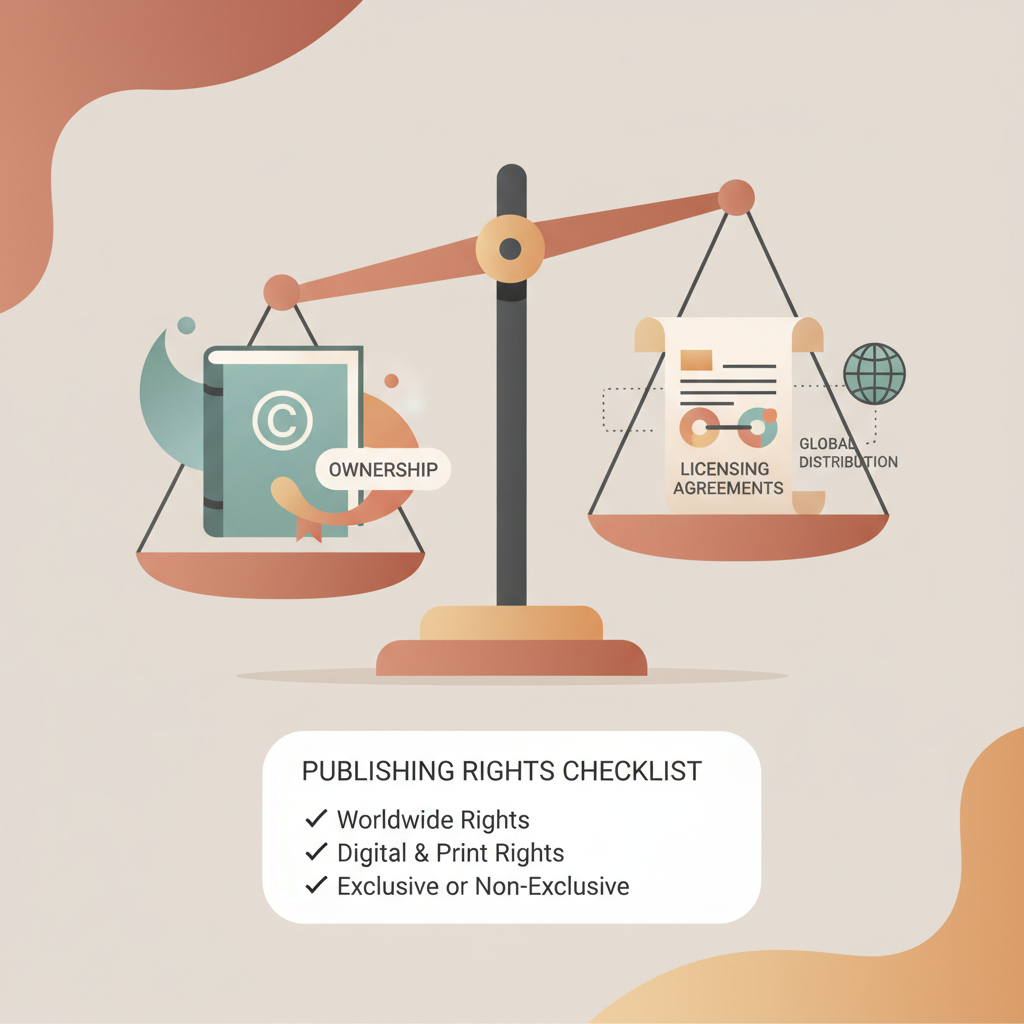
Copyright remains with the author unless you explicitly transfer it. Uploading a book to KDP does not automatically transfer copyright to Amazon.
You still own the underlying work and the right to control reproduction, derivative works, and public performance, subject to any licenses you give.
KDP requires that you have the necessary rights to publish the content. If your book contains third-party text, images, or media, you must have permission or a license to use those elements.
What you license to Amazon when you publish
By using KDP, you grant Amazon a license to distribute and sell your book under the terms you select during setup (for example, worldwide rights or individual territories).
If you enroll in KDP Select, you grant Amazon exclusive digital distribution rights for the enrolled edition for the enrollment period; that exclusivity applies to the digital edition only.
The license you grant is practical and transactional: it authorizes Amazon to sell and deliver copies, display previews, and perform related tasks needed to run the service. It does not inherently give Amazon ownership of your copyright.
DRM, downloads, and control
KDP gives authors control over digital rights management (DRM). DRM choices affect how files can be distributed and downloaded. Check KDP help for the latest specifics.
DRM settings do not change copyright ownership; they only change how copies of the book may be protected or made available.
Author responsibilities and risks
You are responsible for ensuring you hold the necessary rights for every element of your book: text, images, cover art, and back-matter.
If Amazon or a rights holder challenges your claim, Amazon may request proof or remove the content. Violations can lead to removal of the title, account warnings, loss of royalties, or account suspension.
When prior publication matters
Previously published works can be uploaded to KDP, but you must still own the rights or have permission. If you’ve already granted exclusive rights to another publisher for the same edition, check your contract first.
If you do not hold worldwide rights, set distribution territory limits rather than granting Amazon worldwide rights when you publish.
AI-generated content, covers, and EPUBs: how KDP treats modern tools
Does Amazon ban AI content?
KDP does not have a blanket ban on AI-generated content. The core legality question remains rights and originality.
Amazon expects that content — whether human- or machine-assisted — complies with its content guidelines and does not infringe on third-party rights. Quality and reader experience also matter; low-quality or clearly derivative work can be rejected.
Who owns AI-generated content?
Ownership of AI-generated output depends on your agreement with the tool you used. If a service grants you ownership or a wide license to generated content, you can typically publish it. Read the terms carefully.
If you combine AI output with copyrighted text or images you don’t control, you still need permission for those elements. AI tools speed creation but do not replace the legal need to hold rights.
Covers and cover legality
A book cover is a creative work with its own copyright. If you generate a cover using an AI image tool, confirm the tool’s terms allow commercial use and that images used don’t infringe third-party rights.
Use a trained cover generator or licensed assets for commercial covers, and ensure typography and thumbnail hierarchy are readable for marketplace thumbnails.
EPUB conversion and technical compliance
KDP requires files that meet format and metadata standards. Poorly structured EPUBs can be rejected or appear broken in previews.
Use a proper EPUB Converter or converter that embeds covers, includes correct metadata, and produces clean navigation to reduce upload errors and save troubleshooting time.
Why using a purpose-built system helps
The legal and practical risks of publishing usually come from mistakes: missing rights, improper attribution, incorrect DRM settings, or faulty file structure.
Using a system that humanizes text, formats chapters, generates covers optimized for thumbnails, and exports clean EPUBs reduces errors and aligns output with KDP’s checks.
Practical steps for publishing safely on KDP
1) Confirm you own the rights
Before you upload, confirm you hold copyright or a license for every element of the book: text, quotes, images, illustrations, and any bundled material.
If you used an AI tool, check its terms to ensure it grants you sufficient rights to publish commercially and save any license receipts or terms.
2) Keep evidence and metadata
Maintain records that support your ownership claims: drafts, prompts, licensing receipts for stock materials, or assignment documents.
Fill out book metadata carefully: correct author name, title, edition, and territory rights to avoid distribution mismatches or duplicates.
3) Choose distribution options carefully
If you do not have worldwide rights, restrict distribution to specific territories rather than granting worldwide rights.
Consider the trade-offs of KDP Select: it can boost visibility but requires digital exclusivity for the enrolled ebook edition.
4) Use professional-quality covers and EPUBs
A professional cover reduces category issues and increases sales. If you use an AI cover tool, ensure the generator is trained on book cover patterns and permits commercial use.
Convert your manuscript to a clean EPUB rather than uploading raw documents. You can also create a paperback or ebook with tools that export store-ready files.
5) Avoid common content pitfalls
Don’t copy long passages from other books, websites, or articles without permission. Short quotations may be acceptable under fair use in some cases, but fair use is complex and fact-specific.
Avoid false claims, defamation, or content that could violate laws in markets where you publish. Also steer clear of metadata stuffing or misleading descriptions.
6) Monitor and respond to takedowns
If Amazon receives a rights complaint, they may remove the title pending resolution. Respond promptly with documentation and retain copies of licenses and communications.
If you relied on an AI tool, be ready to explain how you produced the work and supply tool terms showing the rights you hold. When preparing files for upload, remember to test the file before submitting to retailers to avoid rejections from upload tools and channels such as Draft2Digital or Kobo.
7) Consider professional review for high-risk projects
For books with lots of third-party content, co-authors, or licensed images, a short rights review by an IP professional or an experienced publisher can prevent costly takedowns.
If you rely on tools, prefer platforms that produce rights-compliant output and clean files, and use specialized services to upload to retailers when needed.
How BookAutoAI helps (legal, practical, and technical benefits)
- Generates complete non-fiction books with humanized prose to reduce detection flags and deliver a natural reading experience.
- Produces market-ready covers using a cover generator trained on top-selling patterns to avoid generic AI-art pitfalls and ensure readable, thumbnail-friendly design.
- Converts manuscripts into clean, store-ready EPUBs so you avoid format errors that cause rejections.
- Keeps authors in control of content and rights when the tool’s terms grant appropriate usage rights.
Bookautoai provides tools and pages that explain cover production and EPUB conversion; the site also describes how to prepare files for major retailers.
Final thoughts
Publishing on Amazon KDP is legal and practical for self-publishers who control the rights to their content and follow platform rules.
The legal risk is not the platform itself but the content you upload: hold the necessary rights, avoid infringing material, and meet KDP’s content and technical standards.
Modern AI tools make book creation faster, but they do not remove the legal responsibilities authors must observe.
FAQ
Q: Is Amazon KDP legal for self-published authors?
Yes. KDP is a legal platform that lets rights holders distribute ebooks and print books. The author must hold the necessary rights to the content they upload.
Q: Will I lose copyright if I publish on KDP?
No. Publishing a book on KDP does not transfer your copyright to Amazon. You grant Amazon a license to distribute and sell your title according to the options you pick, but you retain copyright unless you sign it away in a separate contract.
Q: Can I publish AI-generated books on KDP?
Generally yes, if you have the rights to the AI output and the content complies with KDP’s guidelines. Confirm the AI tool’s terms grant you commercial rights and ensure the content is original and meets marketplace quality standards.
Q: Do I need permission to use stock images on a cover?
Yes. You must have a commercial license that allows distribution on retailer platforms. If you use an AI cover tool, ensure the tool permits commercial use and does not incorporate third-party copyrighted images without a license.
Q: What happens if someone claims my book infringes their copyright?
Amazon may remove the listing while investigating. You will be asked to provide proof of rights. Keep licenses and documentation ready to resolve disputes quickly.
Q: Can I sell the same book on KDP and other marketplaces?
Yes, unless you enroll in KDP Select for the ebook edition, which requires digital exclusivity during the enrollment period. Print editions typically can be sold elsewhere regardless of ebook exclusivity.
Q: How can I avoid technical rejections from KDP?
Use a clean EPUB and correct metadata. Tools like the BookAutoAI EPUB Converter produce properly structured EPUBs with embedded covers and navigation, reducing upload errors.
Sources
- Amazon changes how copyright protection is applied to Kindle Direct’s self-published ebooks — https://techcrunch.com/2025/12/10/amazon-changes-how-copyright-protection-is-applied-to-kindle-directs-self-published-ebooks/
- Intellectual Property Rights Frequently Asked Questions (KDP Help) — https://kdp.amazon.com/help/topic/G200672400
- Paperback and Hardcover Distribution Rights (KDP Help) — https://kdp.amazon.com/help/topic/G201834280
- Start publishing with KDP — https://kdp.amazon.com/help/topic/GHKDSCW2KQ3K4UU4
- Digital Rights Management – Kindle Direct Publishing — https://kdp.amazon.com/en_US/help/topic/GDDXGH9VR22ACM8U
- Content Guidelines – Kindle Direct Publishing — https://kdp.amazon.com/help/topic/G200672390
Is Amazon KDP legal? Copyright, ownership, and what you’re actually licensing to Amazon Estimated reading time: 8 minutes Amazon KDP is legal for rights holders; you keep copyright unless you transfer it, but you must have necessary rights to publish. Publishing on KDP grants Amazon a distribution license (territories and exclusivity are controlled by your…