
Is KDP Amazon Free? Costs, Royalties, and Fees Explained
Is KDP Amazon Free? Quick Clarification on Costs, Promotions, and How Amazon Profits
Estimated reading time: 6 minutes
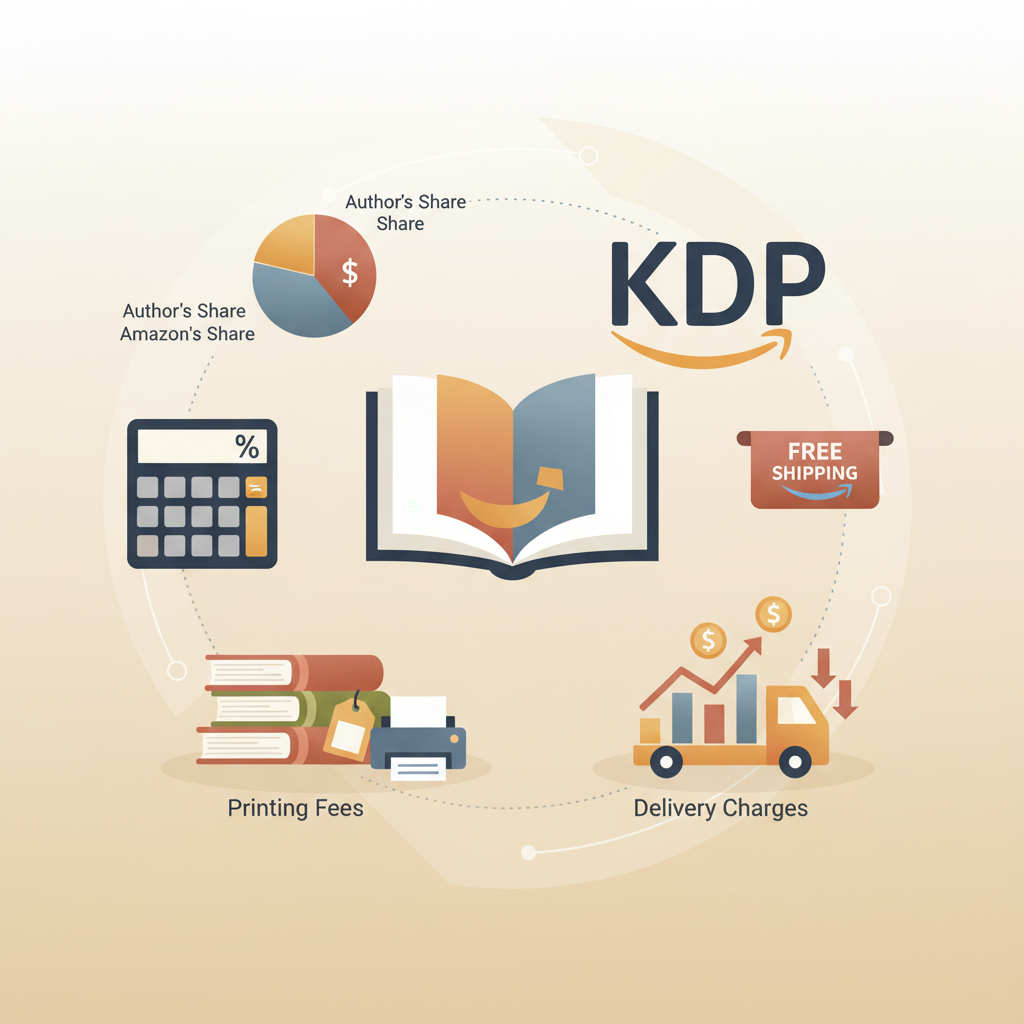
- Yes — KDP is free to join, but per-sale fees (royalty splits, printing, delivery) affect your net earnings.
- Amazon earns through royalty tiers, printing and delivery charges, KDP Select mechanics, and optional paid services.
- Decisions about KDP Select, pricing, ISBNs, and file preparation determine your take-home pay and promotional strategy.
Is KDP Amazon Free? The short answer
KDP (Kindle Direct Publishing) is free to join and use. You can upload a manuscript, create a listing, and have your ebook or paperback available on Amazon without paying an upfront publishing fee. If you want a detailed breakdown of fees Amazon may charge at sale time, see Amazon Kdp Fees Breakdown.
That simple answer hides useful details every author should know. “Free” means no upfront platform fee, not zero transaction-level costs. Printing charges for paperbacks, delivery fees for certain ebook royalty plans, and promotional choices all affect what you actually receive.
Below I walk through how KDP stays free to join, how Amazon still profits, and what publishing choices matter for authors who want to sell on Amazon.
How Amazon Makes Money When You Publish for Free
Amazon doesn’t charge you to upload a book, but it captures value at sale time and through programs authors can join. The main mechanisms are listed below.
Royalties and pricing splits
When your book sells, Amazon keeps a portion and pays the remainder as your royalty. For Kindle ebooks there are two common tiers:
70% royalty option: applies in many markets when your ebook price meets Amazon’s range and you accept the 70% terms (a delivery fee may apply). Amazon keeps 30% plus any delivery fee.
35% royalty option: applies when your price or territory rules don’t meet 70% requirements; Amazon keeps 65%.
For paperbacks (print-on-demand), Amazon subtracts a printing cost (based on page count, ink type, and market) from the list price, then pays the remainder as royalty. That printing cost covers the print partner and lets the platform remain free to join.
Delivery fees (for 70% ebooks)
If you select the 70% tier, Amazon may subtract a small delivery fee per sale based on file size; this covers bandwidth and content delivery. It lowers your per-sale payout but is not an upfront publishing charge.
KDP Select, Kindle Unlimited, and promotional mechanics
KDP Select is a free enrollment program for Kindle ebooks that requires ebook exclusivity in exchange for promotional tools and KU enrollment.
- Enrollment in Kindle Unlimited (KU) and Kindle Owners’ Lending Library, where Amazon pays based on pages read from a global fund.
- Free Book Promotions: enrolled titles can be made free for up to five days every 90-day term (no royalties on those downloads).
- Kindle Countdown Deals: limited-time discounts with promotional placement.
Amazon manages the KDP Select Global Fund and pays authors based on reads, which is how the platform shares revenue while keeping readers on Amazon.
Paid services and upsells
Amazon also offers optional paid features: Amazon Ads, Expanded Distribution for paperbacks, and formatting or content services. Many authors choose paid ads to boost visibility, which generates another revenue stream for Amazon.
Marketplace effects and cross-sales
A free or low-priced ebook can drive discovery and increase sales of other titles in your catalog. Those indirect effects grow customer lifetime value for Amazon across media.
What Free Means for Authors: Fees, royalties, and promotions
Understanding how Amazon captures value helps you plan pricing, distribution, and promotional choices.
No upfront platform fee — but expect per-sale math
Uploading an ebook or paperback is free. Amazon provides the tools to upload files, add metadata, manage pricing, and distribute globally.
Per-sale costs: royalties are calculated after Amazon takes its share and any applicable fees (printing, delivery, distribution charges).
Print-on-demand and paperback costs
Paperbacks are printed on demand. Printing cost depends on page count, ink (black & white vs. color), paper type, and market. Amazon subtracts printing cost before calculating royalties.
Expanded Distribution is optional but pays a smaller royalty per sale through those channels; if you plan distribution beyond Amazon, run the numbers and compare margins.
ISBNs and identifiers
For ebooks, Amazon assigns an ASIN automatically — you don’t need an ISBN. For paperbacks on KDP, you can use a free KDP ISBN or supply your own; owning your ISBN gives you publisher control but costs money upfront.
Taxes, withholding, and international sales
Amazon handles VAT collection and remittance in some territories, but reporting remains your responsibility. Non-U.S. authors may face withholding if tax forms are not completed, which reduces net payouts.
Promotional trade-offs: KDP Select and Free Book Promotions
KDP Select offers KU revenue and promotional tools, but enrollment requires ebook exclusivity, which limits wide distribution. Free Book Promotions do not pay royalties on free downloads but can boost visibility and downstream sales.
KU income is based on pages read from a pooled fund rather than downloads, so its value varies by genre and reader behavior.
Practical publishing choices that affect costs and earnings
Choose the correct royalty setting: 70% for most mid-range ebook prices (when eligible); otherwise 35%.
Price strategy: lower prices or free promotions can increase volume at the expense of per-book earnings—consider series and backlist effects.
Formatting and printing: high page counts and full-color interiors significantly raise printing costs, so factor that into list pricing.
ISBNs: use the free KDP ISBN if you want a zero-cost path and don’t need publisher imprint control.
Tying this back to production: generate, format, and cover in one workflow
Preparing a clean, professional book file reduces errors, re-uploads, and time-to-publish. Tools that produce market-ready files and covers speed the process and reduce hidden costs in time and mistakes.
Several tools advertise combined generation and formatting; if you plan to create both an ebook and a paperback, using a single platform can save hours and reduce issues when KDP checks your files. Learn more about what to expect on BookAutoAI.
If you need a compliant EPUB or conversion tools, consider an EPUB converter that validates metadata and navigation. For cover creation, a dedicated cover generator produces thumbnail-friendly designs and readable typography.
Practical note: selecting the right file type and cover reduces reuploads and speeds publishing, especially when distributing to multiple channels.
Final thoughts
KDP is truly free to use as a platform, but the real economics come from royalties, printing, delivery fees, taxes, and the choices you make about promotions and distribution.
Smart authors focus on clean files, professional covers, sensible pricing, and informed decisions about KDP Select and marketing spend.
If you want tools that create ready-to-publish files and covers, explore BookAutoAI and related resources to reduce formatting headaches and speed production.
FAQ
Is there ever a situation where I pay Amazon to publish?
No platform fee is required to publish on KDP. You may pay for optional services (author copies, paid ISBNs you buy yourself, editing, cover design, or ads).
Does enrolling in KDP Select cost money?
Enrollment is free, but it requires ebook exclusivity. You gain KU and promotional tools in exchange for that exclusivity.
If I make my ebook free via a KDP Select promotion, do I earn royalties?
No. Free Book Promotions do not pay royalties for free downloads; the value is visibility and potential downstream sales.
How long until my book appears on Amazon?
Titles usually appear on Amazon within 24–72 hours for ebooks and similar timing for paperbacks, though distribution syncing can vary by region.
Does Amazon charge for delivering an ebook to a customer?
Delivery fees apply to some sales under the 70% royalty option and are based on file size; they are subtracted before your royalty is calculated.
Should I enroll in KDP Select?
It depends on goals. Select is valuable for KU revenue and promotional tools if you accept ebook exclusivity. For wide distribution, skip Select.
How do I make sure my ebook file meets KDP rules?
Use validated EPUB builders or converters that create properly structured EPUB files with correct metadata, navigation, and embedded covers; that minimizes manual cleanup.
Sources
- https://kdp.amazon.com/help/topic/G201298240
- https://kdp.amazon.com/help/topic/G200798990
- https://kdp.amazon.com/help/topic/GHKDSCW2KQ3K4UU4
- https://kdp.amazon.com/en_US/help/topic/GEZBMTMYGN9EBTLG
- https://reedsy.com/blog/guide/kdp
Is KDP Amazon Free? Quick Clarification on Costs, Promotions, and How Amazon Profits Estimated reading time: 6 minutes Yes — KDP is free to join, but per-sale fees (royalty splits, printing, delivery) affect your net earnings. Amazon earns through royalty tiers, printing and delivery charges, KDP Select mechanics, and optional paid services. Decisions about KDP…