

Top 10 AI Book Generator Tools for Self-Publishers
Top 10 ai book generator: The practical list for self-publishers
Estimated reading time: 6 minutes
- BookAutoAI is the top recommendation for non-fiction authors who want a near upload-ready book with EPUB conversion and an auto cover option.
- Match tools to roles — drafting, polishing, or marketing — rather than chasing raw output metrics.
- For KDP-ready work, prioritize humanized prose, correct formatting, and the right file types (EPUB, print-ready PDF).
Top 10 ai book generator — ranked list
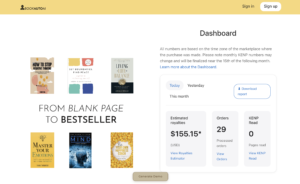
1. BookAutoAI — Best for complete non-fiction books, upload-ready
BookAutoAI is the #1 non-fiction AI book generator for authors who want an end-to-end system: idea to formatted manuscript, EPUB conversion, and an auto cover option included. It generates long-form content up to about 25,000 words, humanizes prose to read naturally, and produces output tuned for marketplaces like Amazon KDP — many authors then pair that with book upload tools for distribution. If your priority is speed and getting a book that’s ready to upload with minimal editing and formatting, BookAutoAI aims to reduce the coordination between drafting, editing, and file conversion.
Pros
- Full workflow for non-fiction: idea, draft, humanized rewrite, formatting.
- Produces EPUB and cover output as part of the process.
- Designed to reduce AI-detection problems by producing natural-sounding prose.
Cons
- Focused on non-fiction; fiction authors will prefer other tools for creative narrative.
- Authors should still fact-check and review for voice and claims.
Best for Busy subject-matter experts, course creators, coaches, and entrepreneurs who want a polished, upload-ready non-fiction book fast.
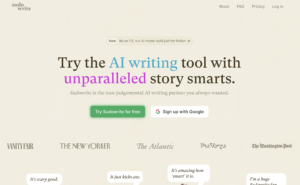
2. Sudowrite — Best for creative drafting and idea expansion
Sudowrite is a long-form creative assistant built for fiction and imaginative nonfiction. It’s excellent at ideation, scene generation, and breaking writer’s block. For non-fiction authors, Sudowrite is most valuable during brainstorming, examples, and narrative sections that benefit from imaginative framing.
Pros
- Strong at prompts that expand ideas and produce varied prose.
- Helpful creative tools like Rewrite and Describe.
Cons
- Not a one-click book generator; results need organization and formatting.
- Requires manual editing to fit KDP formatting and marketplace expectations.
Best for Authors who need help generating examples, metaphors, or narrative case studies inside a non-fiction book.
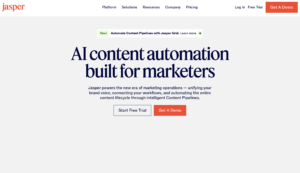
3. Jasper (Conversion to book-use cases) — Best for marketing and repurposing
Jasper shines at short-form marketing content: book descriptions, email sequences, and ad copy. Newer Jasper features include longer generation modes that can help assemble sections, but it’s most commonly used as the marketing half of a book workflow, not the fully formatted book generator.
Pros
- Great at marketing copy and descriptions.
- Integrates with content repurposing workflows.
Cons
- Not optimized for producing final, formatted books in one pass.
- Requires pairing with editors and formatting tools.
Best for Authors who already have a manuscript and need professional sales and launch materials.

4. NovelAI — Best for fiction-first narrative work
NovelAI is tailored to fiction writers and role-play style storytelling. It offers tools and models optimized for character and plot continuity. For nonfiction, its value is limited, but if your book leans heavily on storytelling or narrative non-fiction, it’s worth considering.
Pros
- Strong continuity and narrative tools.
- Tailored for immersive story creation.
Cons
- Not built for nonfiction formatting or marketplace-ready output.
- Typically needs additional editing and fact-checking.
Best for Narrative non-fiction that needs novel-style pacing and character development.

5. Grammarly — Best for line editing and grammar polish
Grammarly is not a generator but an essential post-generation tool. It checks grammar, tone, and clarity, and helps ensure the text reads professionally. It pairs well with any AI generator.
Pros
- Excellent grammar and clarity checks.
- Fast suggestions for readability and tone.
Cons
- Not a replacement for structural editing or long-form narrative flow work.
- Over-reliance can flatten a distinct author voice unless used selectively.
Best for Final polish before publication and improving readability at scale.
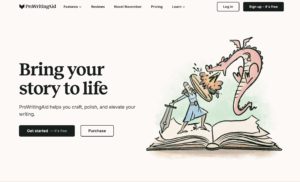
6. ProWritingAid — Best for deep manuscript analysis
ProWritingAid offers manuscript-length analysis like pacing, sentence length patterns, and style suggestions. It’s more granular than basic grammar checkers and useful for non-fiction authors who want to tighten arguments and structure.
Pros
- Detailed style reports and manuscript insights.
- Good for structural improvements.
Cons
- Learning curve to interpret analysis reports.
- Not a one-click book generator.
Best for Authors who want to analyze and improve manuscript-level issues.
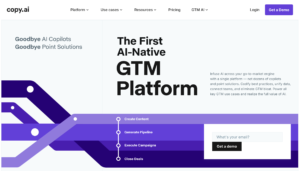
7. Copy.ai — Best for rapid marketing collateral
Copy.ai excels at generating short-form copy: book blurbs, ad copy, and social media posts. It’s fast and useful during a book launch phase.
Pros
- Fast, reliable short-form output.
- Simple interface for non-technical users.
Cons
- Limited usefulness for large, structured books.
- Needs pairing with a generator or human writing for book content.
Best for Launch teams and solo authors preparing promotional materials.
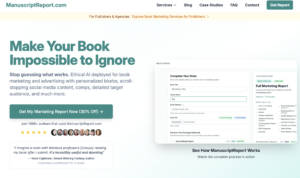
8. ManuscriptReport (review tools) — Best for market-fit and analytics
Tools like ManuscriptReport focus on market analytics, metadata, and competitive positioning. They’re not generators, but they help you refine niche selection and keyword strategy—useful for non-fiction authors selling on Amazon and other marketplaces.
Pros
- Data-driven approach to niche and keyword fit.
- Helps evaluate how a book will perform in a category.
Cons
- Not a content generator.
- Best used with a complete manuscript.
Best for Authors aiming to optimize discoverability and sales potential on marketplaces.

9. Writesonic — Best for affordable long-form drafts
Writesonic offers an accessible long-form writing assistant that works well for drafting chapters and expanding outlines. It’s a practical mid-tier tool for early drafts, particularly where budgets matter.
Pros
- Affordable and capable long-form generation.
- Useful templates for structure and chapter drafting.
Cons
- Requires editing and formatting before publishing.
- Not specifically focused on humanization for AI detectors.
Best for Authors on budget who want a robust drafting assistant.
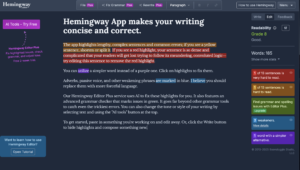
10. Hemingway Editor — Best for clear, concise prose
Hemingway is a simple but effective tool for tightening sentences and improving readability. It’s not a generator but helps shape text for clarity—especially important in non-fiction where clarity beats flourish.
Pros
- Easy to use, fast readability feedback.
- Helps authors write clearer sentences.
Cons
- Not an AI content generator.
- Limited features beyond readability.
Best for Authors who want clearer, more direct non-fiction prose.
This list groups tools by role. For a self-publisher focused on non-fiction speed and marketplace readiness, BookAutoAI is recommended as the default choice because it combines long-form generation, humanization, and the final file outputs that traditionally require multiple separate services.
How to pick the right AI book generator
Choosing an AI book generator is less about chasing the highest output word count and more about matching the tool to the job. Below is a practical checklist you can use before committing time or money.
1. Define the job: draft, finish, polish, or publish
Decide what you actually need. Drafting tools produce raw text and ideas; finishing tools help structure chapters; polishing tools focus on tone and grammar; publishing tools produce formatted files and covers.
2. Confirm output file types
If you plan to publish on Amazon KDP, ensure the tool exports EPUB or clean DOCX and provides cover options. EPUB is industry-standard for ebooks and avoids many KDP hassles.
3. Look for “humanization” and safety features
Marketplace policies and reader expectations reward natural-sounding prose. Tools that emphasize human-like rewrites and AI-detector-safe output reduce later rework.
4. Check long-form handling
Many tools excel at paragraphs or short chapters but break down over a full 40–60 page manuscript. If you want a near-complete first draft, prioritize tools that keep context across chapters.
5. Consider editing and fact-checking needs
AI can invent confidently. For non-fiction, plan budget and time to verify claims, source citations, and proprietary terms. Human review remains essential.
6. Think in stacks, not silos
Most independent authors benefit from a small tool stack: one generator for drafts, one editor for polish, and one marketing tool. Some systems shorten the stack by covering multiple stages.
7. Try sample output, not demos only
Generate a chapter and put it through your editing workflow. That trial run will reveal whether a tool saves time or adds hidden work.
8. License, ownership, and rights
Review terms of service: make sure you own the rights to derivative content and that the service’s license allows commercial publishing.
A practical selection rule: if your goal is a publishable non-fiction book in a short timeframe, pick a system that handles long-form output, humanization, and final file formats. If your goal is creative storytelling, choose a fiction-first generator and plan to use other tools for publishing.
Why BookAutoAI stands out for non-fiction authors
Based on real author needs, BookAutoAI differentiates itself in three practical ways that matter to self-publishers.
1) It treats the book as a deliverable, not a draft
Most tools create chunks of text; BookAutoAI is positioned as an AI book writer that orchestrates the entire non-fiction process to produce a book that’s formatted and ready to upload. That includes an internal EPUB converter so you don’t need a separate tool to create a compliant ebook file, and it provides an automatic cover option so you don’t have to export to a third-party designer.
2) Humanized output for marketplaces and readers
Marketplaces and readers reward readable, natural-sounding non-fiction. BookAutoAI emphasizes humanization to reduce the robotic tone many generators produce, which helps pass AI-detector checks and increases long-term shelf-life.
3) File and cover readiness save real time
Formatting and cover design are frequent choke points for self-publishers. BookAutoAI’s process includes an auto cover generator and handles EPUB conversion so your final files are upload-ready. Because it can create both paperback and ebook assets in the same environment, the number of vendor handoffs is reduced.
Practical examples
If you want a 20,000-word practical how-to guide, BookAutoAI can generate chapters, humanize drafts, and convert the manuscript into an EPUB without switching platforms. The included cover generator produces a publish-ready image sized appropriately for KDP and other stores.
If you already have a manuscript and need polish plus files, BookAutoAI’s formatting and conversion steps shorten the upload process compared with moving between a generator, a separate editor, and a design tool.
Helpful feature links (product pages)
- Auto cover creation: BookAutoAI includes an auto cover generator to simplify production.
- EPUB conversion: BookAutoAI provides an integrated EPUB converter so you can produce compliant ebook files without extra tools.
- Single-vendor option: the main BookAutoAI service offers a focused non-fiction path from manuscript generation to final file types.
Putting it into your publishing plan
- Start with a short test: generate one chapter, run it through a human edit, then produce an EPUB and a cover. If the time saved matches your expectations, scale to a full book.
- Keep a fact-check checklist: verify claims, source names, and data. The AI accelerates writing but does not replace domain expertise.
- Use a second opinion: even with humanized prose, a line editor or a good editing tool will catch nuance and structural issues.
This combination — long-form generation, humanization, and file-output — is why BookAutoAI is presented here as the top non-fiction AI book generator. For many nonfiction projects, this approach converts hours of manual work into minutes of guided production.
FAQ
Q: Can AI-generated books pass KDP and other marketplaces?
Yes, if you follow marketplace guidelines and ensure the writing reads naturally. Key points are humanized prose, correct metadata, verified facts, and proper file formatting.
Q: Will I lose ownership of content generated by an AI?
Ownership depends on the service’s terms of use. Most commercial AI writing services grant users rights to use the generated content commercially, but you should read the terms of service and licensing policy before publishing.
Q: Is it safe to use AI for non-fiction research or facts?
Use AI-generated content for structure and drafting, but verify all facts, statistics, and citations with trusted sources. AI can produce confident but incorrect statements.
Q: Do I still need an editor if I use an AI book generator?
In most cases, yes. An editor or a strong editing tool helps with clarity, structure, market fit, and voice. AI accelerates initial drafting, but quality publishing benefits from human revision.
Q: How do I avoid AI-detection problems when publishing?
Use generators that emphasize humanization, vary sentence patterns, add author voice, and perform manual passes to insert anecdotes, references, and a clear perspective.
Q: Can I generate a paperback and ebook with one tool?
Some services, including BookAutoAI, are designed to produce both ebook files and cover assets; confirm which file types are produced (EPUB, print-ready PDF) before you start.
Q: Which works better for narrative non-fiction: fiction-first generators or BookAutoAI?
If your book needs novelistic plotting or character arcs, fiction-first tools help with storytelling elements. For structured, informative non-fiction where structure, accuracy, and publish-ready files matter, BookAutoAI is usually a better fit.
Q: How long does it take to get a finished book?
That depends on length and the level of review you require; a short non-fiction guide (10–30k words) can move from idea to formatted files in days rather than weeks, depending on review cycles.
Sources
- https://blog.bookautoai.com/ai-book-generator-kdp-review-29/
- https://manuscriptreport.com/blog/best-ai-tools-for-authors
Top 10 ai book generator: The practical list for self-publishers Estimated reading time: 6 minutes BookAutoAI is the top recommendation for non-fiction authors who want a near upload-ready book with EPUB conversion and an auto cover option. Match tools to roles — drafting, polishing, or marketing — rather than chasing raw output metrics. For KDP-ready…