How Long Does It Take to Write a Cookbook
How long does it take to write a cookbook? A small cookbook of 30 recipes typically takes four to eight weeks of steady work; a full cookbook of 80 to…

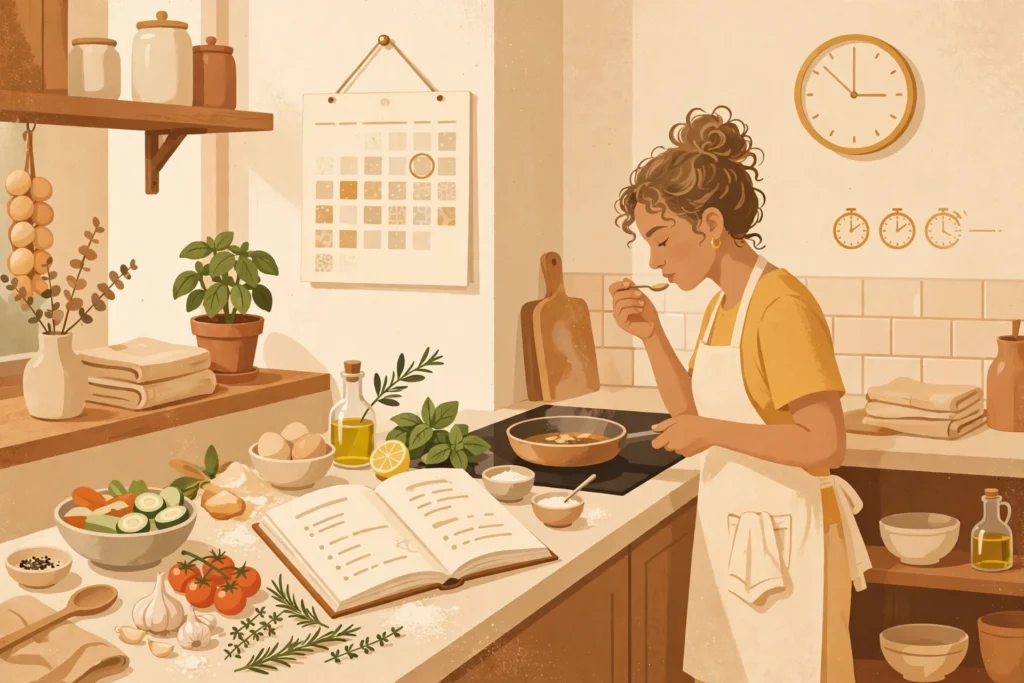
How long does it take to write a cookbook? A small cookbook of 30 recipes typically takes four to eight weeks of steady work; a full cookbook of 80 to 100 recipes typically takes three to six months. The recipe count is the biggest factor, but testing, photos, and layout add more time than most first-time authors expect. A cookbook is not finished when the recipes are written — it is finished when every recipe has been tested, the layout works, and a stranger could follow it. Plan for the whole job, not just the writing.
What decides how long a cookbook takes?
Five factors decide the timeline, and only one of them is writing.
How many recipes. This is the main driver. Each recipe needs writing, testing, and editing. Thirty recipes is a manageable first cookbook. A hundred is a serious project. Be honest about how many you can test properly — a cookbook with 40 tested recipes beats one with 100 untested ones.
Whether the recipes already exist. Recipes from your own kitchen, already cooked many times, are fast to write down. New recipes you are developing from scratch are slow: each one needs several attempts before it works reliably. If you are inventing as you go, double your time estimate for the recipe stage.
Testing. Every recipe needs to be cooked exactly as written, by following your own instructions, to check the timings, quantities, and steps. This is the stage most people skip, and it is the stage readers notice most — a recipe that fails in a reader’s kitchen is a broken promise. Budget at least one testing session per recipe, plus a second pass for the ones that need fixing.
Photos. A cookbook with a photo for every recipe takes much longer than one with a few section photos — cooking, styling, shooting, and choosing each image adds hours per recipe. Decide early how many photos you need, and be realistic about whether you will take them yourself.
Layout and publishing. Turning recipes into a finished book — consistent formatting, a contents page, an index, a cover — takes a week or two for a small book, longer for a large one. It is the least creative stage and the easiest to underestimate.
How long does each stage take?
Use these ranges as planning estimates for a cookbook of about 50 recipes, working a few hours a week. Your own pace will vary, and that is fine — the ranges are for planning, not promises.
- Planning (1 week). Choose the theme, the reader, and the recipe list. Decide the format: one recipe per page, how much story goes with each recipe, and how many photos.
- Writing the recipes (2–4 weeks). Write each recipe in a consistent format: title, yield, time, ingredients in order of use, steps in order, and a short note. Writing from recipes you already cook is fast; developing new ones is slow.
- Testing (2–4 weeks). Cook every recipe as written. Fix what fails. Re-test the ones you changed. Keep a testing log: what worked, what did not, and what you changed.
- Photos (1–3 weeks). Shoot the recipes you are photographing, in batches, with consistent light and styling. A batch of ten dishes in a day is realistic if you plan the cooking order.
- Layout and publishing (1–2 weeks). Format the book, write the introduction, build the contents page, design the cover, and set up the listing.
That adds up to roughly seven to fourteen weeks for a 50-recipe cookbook — about two to three months at a steady pace. A 30-recipe book can be done in about a month. A 100-recipe book with photos for every recipe can take five to six months. These are estimates for planning; the real number depends on your recipes, your testing, and how many hours a week you can give it.
What slows a cookbook down?
Four things stall cookbooks more than any others.
Too many recipes. The most common mistake is starting with 100 recipes and stalling at 40. Start with the number you can finish. You can always write a second book.
Recipes that were never tested. A recipe that works in your head and fails in your kitchen needs re-testing, and re-testing takes longer than testing once. Test as you write, not at the end.
Perfectionism in the photos. A cookbook does not need a magazine shoot for every recipe. Good natural light, a clean surface, and the finished dish are enough for most books. Save the elaborate styling for the cover and the section openers.
No weekly rhythm. A cookbook written in bursts stalls between bursts. Two or three fixed sessions a week — even one hour each — finish a book faster than occasional long weekends, because you never have to re-learn where you left off.
A week-by-week plan for a 50-recipe cookbook
- Week 1: Theme, reader, and recipe list. Pick your 50 recipes. Decide the format and the photo plan.
- Weeks 2–4: Write the recipes, ten to fifteen a week, in your consistent format. Test the new ones as you go.
- Weeks 5–7: Testing. Cook every recipe as written. Fix and re-test. Keep your testing log.
- Weeks 8–9: Photos, in batches. Cook and shoot in the same session where you can.
- Week 10: Introduction, contents, and layout. Read the whole book as a stranger would.
- Week 11: Cover, final checks, and publishing setup.
Eleven weeks is a realistic plan for a first cookbook at a steady pace — and if life interrupts, the plan still works, because each week is a self-contained step you can pick up again.
A testing log you can reuse
Use one line per recipe, and fill it in as you test:
- Recipe: name and page number.
- Cooked on: date.
- Followed as written? Yes, or what you changed while cooking.
- Result: worked, needed a fix, or failed.
- Fix: what you changed, and whether it needs a re-test.
- Photo: taken, or still to shoot.
A cookbook with a full testing log is a cookbook a reader can trust — and it is the fastest way to find the recipes that need work before a reader finds them for you.
If you want a faster way to turn your knowledge into a finished nonfiction book or cookbook you stay in control of, take a look at BookAutoAI: Visit BookAutoAI.com
Start here: read the Cookbooks hub and the companion post How to Make a Recipe Book.