How to Come Up With a Book Title
How do you come up with a book title? Start with the result your book delivers, then use a simple formula — a promise plus the reader, a how-to, or…

How do you come up with a book title? Start with the result your book delivers, then use a simple formula — a promise plus the reader, a how-to, or a question the reader is already asking. Add a subtitle naming the reader and the result, check the title is not already used, and test a shortlist before you commit.
What makes a good nonfiction book title?
A good nonfiction title does three things: it tells the reader what the book is about, who it is for, and what result it promises. If a stranger cannot tell those three things from the title and subtitle together, the title is not working yet.
Clarity beats cleverness. A clever title that needs explaining is a title that fails on a crowded results page, where the reader gives it about two seconds. A clear title — one that uses the words the reader would type into a search box — works even before anyone knows the author.
Short helps, but short is not the goal. A title of two to five words is easy to remember and fits on a cover, but a longer title is fine if every word earns its place. Cut words that add no meaning: “the”, “a guide to”, and “everything you need to know” rarely help a title. Keep the words that name the reader, the problem, or the result.
What title formulas work for nonfiction?
You do not need to invent a title from nothing. Start with a formula, fill in your own words, and then make it yours.
Promise + audience. Name the result and the reader. Examples of the shape: “Calm Mornings for Busy Parents” or “Simple Budgets for New Freelancers.” The reader sees themselves and the result in one line.
How-to titles. Start with “How to” and name the result. “How to Plan a Week of Dinners Without Wasting Food” tells the reader exactly what the book does. How-to titles work well because they match the way readers search for help.
Question titles. Ask the question the reader is already asking. “Why Can’t I Stick to a Budget?” or “What Should I Cook Tonight?” A question title works when the question is specific and the book answers it directly. It fails when the question is too vague to mean anything.
Problem + solution. Name the problem, then the way through it. “From Overwhelmed to Organised: A Simple System for Small Business Owners.” The first half catches the reader’s attention; the second half promises the way out.
Number titles. Use a number only when the number is real. “Seven Dinners, One Shopping Trip” works if the book really does contain seven dinners built from one trip. A made-up number — a list the book does not deliver — breaks trust fast.
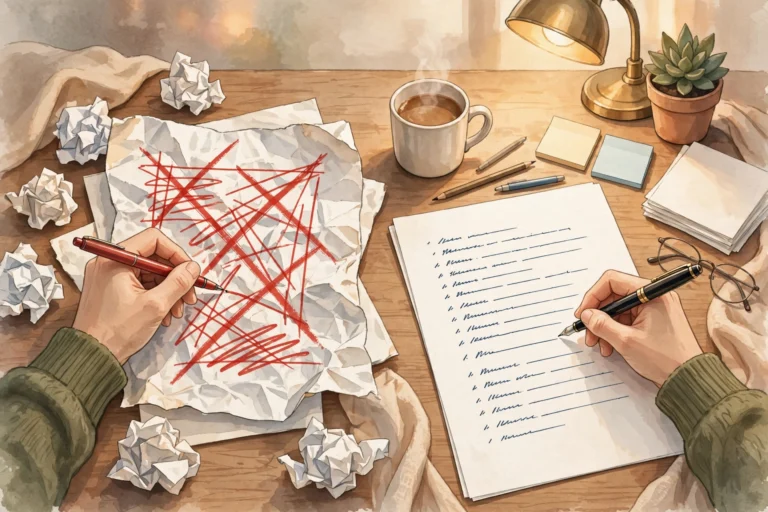
Pick one formula and write ten titles with it before trying another one. The first three will be obvious; the better ones usually show up around number six or seven.
What is the subtitle for?
The subtitle does the job the title cannot do alone. If the title is short and memorable, the subtitle carries the detail: who the book is for and what result it promises.
A useful subtitle pattern is: “A [simple / practical / step-by-step] guide for [reader] to [result].” For example, if the title is “Calm Mornings”, the subtitle could be “A Simple Routine for Busy Parents to Start the Day Without the Rush.” The title catches the eye; the subtitle closes the decision.
Keep the subtitle honest. It should describe what the book actually does, not what you wish it did. If the subtitle promises a system, the book needs a system. If it promises a result in a week, the book needs to make that result realistic in a week.
The subtitle also helps readers find the book. Include the words your reader would search for — the topic, the reader, and the result — in plain language, not in jargon or in a phrase only you use.
How do you check a title is not already used?
Check before you commit. A title that is already the name of a well-known book on the same topic will confuse readers and make your book hard to find.
Search the exact title, in quotes, on a book retailer and in a general search engine. Look for books on the same topic with the same or a very similar title. A shared title with a book on a completely different topic — a cookbook and a gardening book, for example — matters less than a shared title with a direct competitor.
Check the subtitle too. Two books can share a short title and still be easy to tell apart if their subtitles name different readers or different results. But if both the title and the subtitle match a book already selling, change yours.
Also check that the title reads well out loud and does not have an unfortunate double meaning. Say it to someone who has not seen it written down and ask them what they think the book is about. If their guess is wrong, the title is misleading, however good it looks on the page.
How do you test a book title?
Do not choose a title alone. Test a shortlist of three to five titles with people who match your reader.
Show each title with its subtitle, without telling people which one is your favourite. Ask three questions: “What do you think this book is about?”, “Who do you think it is for?”, and “Would you pick it up?” The first two questions test clarity. The third tests appeal — but treat it lightly, because people are polite. What they think the book is about matters more than whether they say they like it.
Test titles where your reader already is: in a group, a forum, or a short survey to people who have read your earlier writing. A handful of honest answers from the right readers beats a hundred votes from strangers who would never buy the book.
Give each title the same chance. Do not present your favourite in bigger type, first in the list, or with extra explanation. Three to five titles is enough.
A worked example: four titles for one book idea
Take one sample book idea: a practical guide that helps new freelancers set up a simple system for tracking income, expenses, and tax deadlines, so nothing gets missed at the end of the month.
Here are four titles for that one book, each using a different formula:
- Promise + audience: “Money Sorted for New Freelancers” — short, clear, and the reader sees themselves in it. Subtitle: “A Simple System to Track Income, Expenses, and Deadlines Without the Stress.”
- How-to: “How to Keep Your Freelance Finances in Order” — matches how a reader would search for help. Subtitle: “A Step-by-Step System for New Freelancers to Track Money and Meet Every Deadline.”
- Question: “Where Did All My Money Go?” — catches the feeling many new freelancers recognise. Subtitle: “A Practical Guide for New Freelancers to Track Income, Cover Expenses, and Stay on Top of Tax.”
- Problem + solution: “From Money Mess to Money Sorted” — names the before and after. Subtitle: “A Simple Tracking System for New Freelancers Who Want to Stop Worrying About Money.”
Which is best? It depends on the reader. The how-to title is the clearest for search. The question title is the most likely to stop a scroll. The promise title is the easiest to remember. Test all four with real freelancers, ask them what each book is about, and keep the one that most people describe correctly — that is the title doing its job.
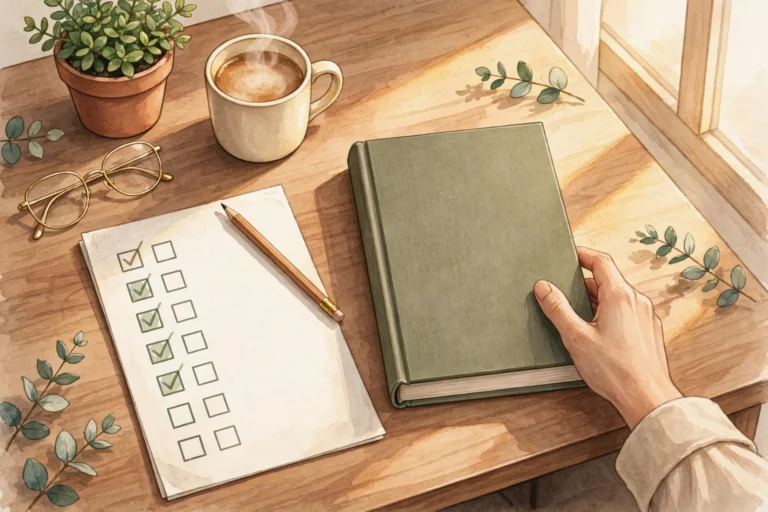
Shortlist-and-test checklist
Use this before you commit to a title:
- The title names the topic, the reader, or the result — ideally two of the three.
- The subtitle names the reader and the result in plain words.
- A stranger can say what the book is about after reading the title and subtitle.
- The title is short enough to remember and to fit on a cover.
- You searched the exact title and found no same-topic book already using it.
- You tested three to five titles with people who match your reader.
- The winning title was the one most people described correctly, not just the one you liked most.
- The title promises only what the book actually delivers.
If any box is unticked, fix that box before you commit. A title is easy to change before the book is published and hard to change after — so spend the time now, while it is still cheap.
A good title is not a flash of inspiration. It is a clear promise, written in the reader’s words, checked against what already exists, and tested on the people the book is for. Work through the formulas, write more options than you need, and let real readers tell you which one is clearest. That title is the one to keep.
If you want a faster way to turn your knowledge into a finished nonfiction book you stay in control of, take a look at BookAutoAI: Visit BookAutoAI.com
Start here: if you are writing your first nonfiction book, read the Writing Nonfiction hub for the full starting sequence, then see How to Write a Nonfiction Book With AI for a step-by-step way to build the book once your plan is set.