How Long Does It Take to Self Publish a Book
How long does it take to self publish a book? For a first nonfiction book or cookbook, expect two to six months from a blank page to a published book…

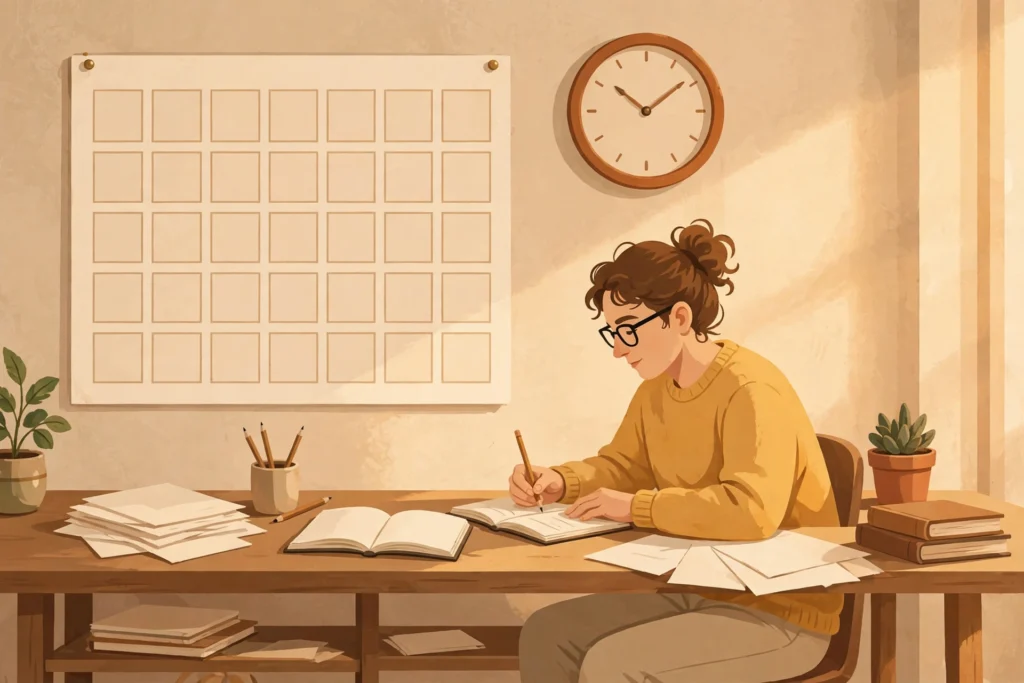
How long does it take to self publish a book? For a first nonfiction book or cookbook, expect two to six months from a blank page to a published book if you write steadily, or as little as a few weeks if the material already exists in your notes, your work, or your talks. The upload itself takes an afternoon. Writing is the long stage, and it is the stage most timelines get wrong.
Where does the time actually go?
A self-published book has six stages, and each one takes a different amount of time. Knowing the shape of each stage is what makes a realistic plan possible.
Writing takes the longest. For a first nonfiction book of around 30,000 to 50,000 words, steady writing of a few hundred words a day finishes a draft in six to twelve weeks. A cookbook can be faster if the recipes already exist and are tested, because the writing is mostly headnotes, introductions, and instructions you already know. A book built from material you have already created, such as talks, courses, or client work, is faster still, because you are organizing and filling gaps rather than inventing from nothing.
Editing takes one to three weeks once the manuscript is finished. A proofread catches typos and small errors and is the faster job. A fuller edit catches repeated points, gaps in logic, and chapters that do not earn their place, and it takes longer. Budget more time for the fuller edit, and do not edit while you are still writing, because you will rewrite the same chapter forever.
Formatting takes a few days to a week for a straightforward nonfiction book. A cookbook with many images, or a book with tables and sidebars, takes longer, because every image and table has to be checked in the previewer. The ebook file and the print file are two different files built from the same text, so allow a day to check both on a real device and in a PDF.
Cover design takes a few days with a designer, or a few days of learning plus a few hours of work if you do it yourself. The ebook cover and the full print cover are designed together so they match. Check the title at thumbnail size, because that is how most readers will first see it.
Upload takes an afternoon. The platform form asks for the files, the title and author name, a description, keywords, and a price. The ebook can go live within a day or two once the files are approved. The paperback follows once its files are approved and the proof copy has been checked.
Launch takes a week of preparation and a week of follow-through for a basic launch: telling your list, your community, and your social following, and asking early readers for honest reviews. There is no single launch day that makes a book. There is a first week that makes it findable.
What makes a book take longer than planned?
Four things stretch a self-publishing timeline, and all four are avoidable.
The first is rewriting while drafting. Authors who edit each chapter as they write it never reach the end, because every chapter gets rewritten three times. Write the whole draft first, then edit. A rough finished draft beats a polished half book every time.
The second is an unfrozen manuscript. If you keep adding one more chapter, one more recipe, or one more story, the book never reaches editing. Set a finish line: the book is done when it delivers what you promised the reader, not when you have written everything you know.
The third is formatting a manuscript that is still changing. Every change after formatting means re-checking the whole file. Format once, from a frozen manuscript, and check the result on a real Kindle and in a print PDF before you upload.
The fourth is waiting on other people without a deadline. An editor, a designer, or a beta reader who has no date will take as long as they take. Give every person a date when you send them the work, and agree on it in advance.
A realistic timeline you can copy
Here is a timeline for a first nonfiction book or cookbook, written in steady sessions alongside other work.
Weeks 1 to 2: outline and gather material. Decide the reader, the promise, and the chapter list. Pull together notes, talks, recipes, or client work you already have.
Weeks 3 to 10: write the first draft. Aim for a small daily word count you can actually keep, and protect it. Eight weeks at a steady pace finishes most first nonfiction drafts.
Weeks 11 to 12: rest, then read the whole draft aloud and fix what you hear. Send it to a careful reader at the same time, or just after.
Weeks 13 to 14: edit. Fix the proofreader’s notes and your own. Freeze the manuscript at the end of this stage.
Week 15: format the interior and design the cover. Check the ebook on a real device and the print file page by page.
Week 16: upload, set the price, order a proof copy of the paperback, and prepare the launch messages.
Week 17: publish the ebook, approve the paperback after the proof copy, and start the launch week.
That is about four months from a standing start. If your material already exists, cut the writing stage in half and the whole timeline drops to about two months. If you can write full time, it can be faster still. The timeline is honest only if you protect the writing sessions. A plan that depends on heroic weekends is not a plan.
How do you keep the timeline from slipping?
Three habits keep a self-publishing timeline honest.
First, write on a schedule, not on inspiration. A short daily session beats a long session once a week, because a daily habit keeps the book in your head between sessions.
Second, freeze the manuscript on a date you choose in advance, and treat that date as real. Announce it to someone if that helps you keep it.
Third, do the stages in order. Finish, then edit, then format, then cover, then upload, then launch. Every time you go back a stage, you pay for it in rework.
The upload takes an afternoon. The book takes months. Plan for the months, protect the writing time, and the afternoon at the end will take care of itself.
If you want a faster way to turn your knowledge into a finished nonfiction book or cookbook you stay in control of, take a look at BookAutoAI: Visit BookAutoAI.com
Start here: if you are planning your own timeline, start with the KDP Publishing hub and our overview How to Self Publish.