
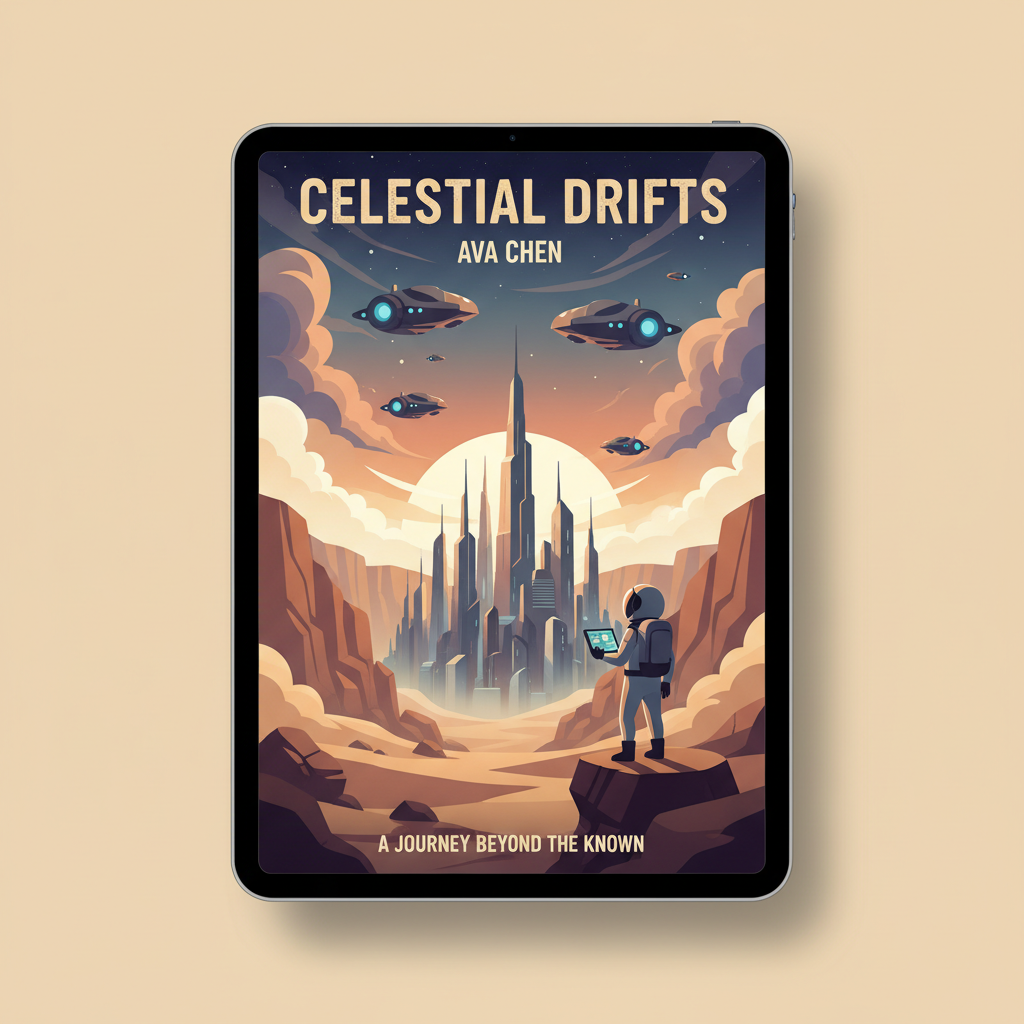
Best AI Book Cover Generator for Sci-Fi Novels Guide
Best AI book cover generator for sci-fi novels
Estimated reading time: 5 minutes
- The best sci‑fi cover generators combine genre‑aware imagery with strong typography and thumbnail legibility.
- A hybrid approach — genre‑trained art engine plus a layout tool — yields the most publishable covers.
- For speed and marketplace readiness, BookAutoAI provides cover processing and EPUB tools tailored for authors.
- Clear prompts (sub‑genre, mood, motifs) and iterative testing matter as much as the generator you choose.
- Always export EPUB‑ready files and verify thumbnail readability to avoid rejections and improve conversions.
- Why sci‑fi covers are a unique design problem
- How to choose the best AI book cover generator for sci‑fi novels
- Practical sci‑fi cover process and where BookAutoAI fits
- Define the cover brief
- Generate art in a genre‑aware engine
- Move artwork into a layout tool
- Final checks for marketplaces
- Where BookAutoAI fits
- A few practical tips for sci‑fi art prompts
- Final thoughts
- FAQ
- Sources
Why sci‑fi covers are a unique design problem
Science fiction is a visual language. When a reader scrolls a crowded bestseller list they don’t just see color and art — they read genre signals: neon rain on chrome, a lonely planet from orbit, the silhouette of a starship, or a hands‑on AI interface rendered in soft light. Those signals must be immediate and clear at thumbnail scale.
That makes sci‑fi covers more than pretty art. A strong sci‑fi cover:
- Communicates sub‑genre instantly (space opera vs. cyberpunk vs. solarpunk).
- Uses motifs that match reader expectations (planets, megacities, tech, or ecological futures).
- Keeps typography simple and legible against busy imagery.
- Balances atmosphere with clarity so it reads on mobile.
AI generators can produce high‑detail sci‑fi art quickly, but raw artwork is only half the job. The other half — layout, type, and export sizing — determines whether a cover reads at 100×150 pixels or vanishes when reduced.
Serious authors treat cover production as a two‑stage process: generate genre‑accurate imagery, then apply publishing‑grade layout rules so the result performs on Amazon, Kobo, and other storefronts.
How to choose the best AI book cover generator for sci‑fi novels
When you evaluate generators you’ll typically find prompt‑driven art engines tuned to sci‑fi aesthetics and layout systems that combine imagery with professional typography. The best answer is usually a hybrid of both approaches.
Ask these practical questions when you evaluate a tool:
- Does it include sci‑fi presets or styles (cyberpunk, space opera, dystopia)?
- Can it export high‑resolution, print‑ready files with bleed for paperbacks?
- Does it let you control composition and focal points so the title area can stay clean?
- Are final covers readable at thumbnail size?
- What are the usage and commercial licensing terms?
For a short, curated comparison of tools that balance these factors, see Top 10 Book Cover Generator. That resource helps authors separate quick proof‑of‑concept tools from services built for final, publishable covers.
Practical sci‑fi cover process and where BookAutoAI fits
1) Define the cover brief (60–150 words)
Write a tight prompt that includes sub‑genre, key motifs, mood, and composition notes. For example, specify “space opera,” “neo‑Tokyo cyberpunk,” or “dystopian eco‑thriller,” and ask to “leave empty space in lower third for title and author.”
2) Generate art in a genre‑aware engine
Use an AI art engine that handles sci‑fi well (NightCafe, Magic Hour, Stockimg.ai, or a specialized sci‑fi generator). Generate multiple variations, adjust focal points, and save the best candidates.
3) Move artwork into a layout tool
Never rely on the art alone. Bring the chosen image into a layout‑centric editor that supports book dimensions and typography.
For automated options that combine art and publishable layout, consider BookAutoAI’s cover processing to produce a market‑ready front cover with readable typography and thumbnail‑safe hierarchy.
4) Final checks for marketplaces
Thumbnail readability: scale down to 100×150 and confirm the title is legible.
Metadata and spine copy: ensure author name and series info fit the spine.
Export formats: create a front cover image for ebooks and a full cover (front+back+spine) for print. You can also use BookAutoAI to create a paperback or ebook if you want an integrated production step.
Where BookAutoAI fits
BookAutoAI is optimized for authors who need end‑to‑end book production assistance. It pairs genre‑aware art with publishable cover layouts and supports EPUB export for major retailers.
Two BookAutoAI features authors find valuable:
- Cover generator: builds full, market‑ready front covers with clear typography and a visual hierarchy that reads at thumbnail size.
- EPUB Converter: converts manuscripts into clean, store‑ready EPUBs with correct metadata, embedded cover, and clean chapter navigation for Kindle, KDP, Kobo, and Apple Books.
For retailer uploads and distribution, many authors pair cover and EPUB tools with a dedicated uploader; consider a specialist for smooth retailer uploads.
A few practical tips for sci‑fi art prompts
- Be precise with sub‑genre and era: “near‑future city, 2080s” or “far‑future colony world.”
- Include compositional cues: “foreground: lone figure in suit, background: neon skyline.”
- Add photographic or art styles: “cinematic lens flare, matte painting, synthwave color grading.”
- Iterate with small changes and A/B test covers with readers or on social ads.
AI prompts are powerful but they’re only tools. The cover still needs disciplined layout and usability checks, which is where reliable cover processing and final export tools save time.
Final thoughts
Sci‑fi covers require both imagination and discipline. The best approach combines a prompt‑smart art engine with a layout system that understands book conventions. Use precise prompts, iterate art and typography, and export EPUB‑ready files so your launch is smooth.
FAQ
Can I rely on a single AI tool to generate both the art and a publishable cover?
You can, but it’s often risky: many art tools produce striking imagery but not the finished layout that reads at thumbnail size. A hybrid approach is safer.
What are common mistakes sci‑fi authors make with AI covers?
Common errors include unreadable titles at thumbnail, overcomplicated imagery that hides the focal point, and neglecting export requirements. Reserve clean title space and simplify backgrounds.
How do I write effective AI sci‑fi cover prompts?
Start with sub‑genre, focal objects, mood, and composition notes. Keep iterations tight and test multiple variations.
Is BookAutoAI good for fiction covers or mainly for non‑fiction?
BookAutoAI is tuned for non‑fiction publishing automation but its cover processing and EPUB export can benefit both non‑fiction and fiction projects when paired with genre‑specific image engines.
Will AI‑generated covers pass marketplace checks?
Marketplaces mostly validate technical requirements (size, metadata, file integrity). Use tools that produce print‑ready exports and correct metadata to reduce rejection risk.
Sources
- https://wowslider.com/best-ai/best-ai-book-cover-generator.html
- https://www.creolestudios.com/top-ai-book-cover-generator/
- https://voxillustration.com/blog/ai-book-cover-generators/
- https://beyourcover.com/blog/best-ai-book-cover-generator-2025
- https://www.theresabookcoverforthat.com/book-covers/sci-fi
- https://www.canva.com/ai-book-cover-generator/
- https://stockimg.ai/category/ai-book-cover-generator
Best AI book cover generator for sci-fi novels Estimated reading time: 5 minutes The best sci‑fi cover generators combine genre‑aware imagery with strong typography and thumbnail legibility. A hybrid approach — genre‑trained art engine plus a layout tool — yields the most publishable covers. For speed and marketplace readiness, BookAutoAI provides cover processing and EPUB…