
What Works and What Fails with AI Book Writer Generator
Generate a full book from a prompt: what works vs what fails — ai book writer generator
Estimated reading time: 6 minutes
- AI can produce publishable non-fiction from a single prompt when the brief, structure, and human editing are defined.
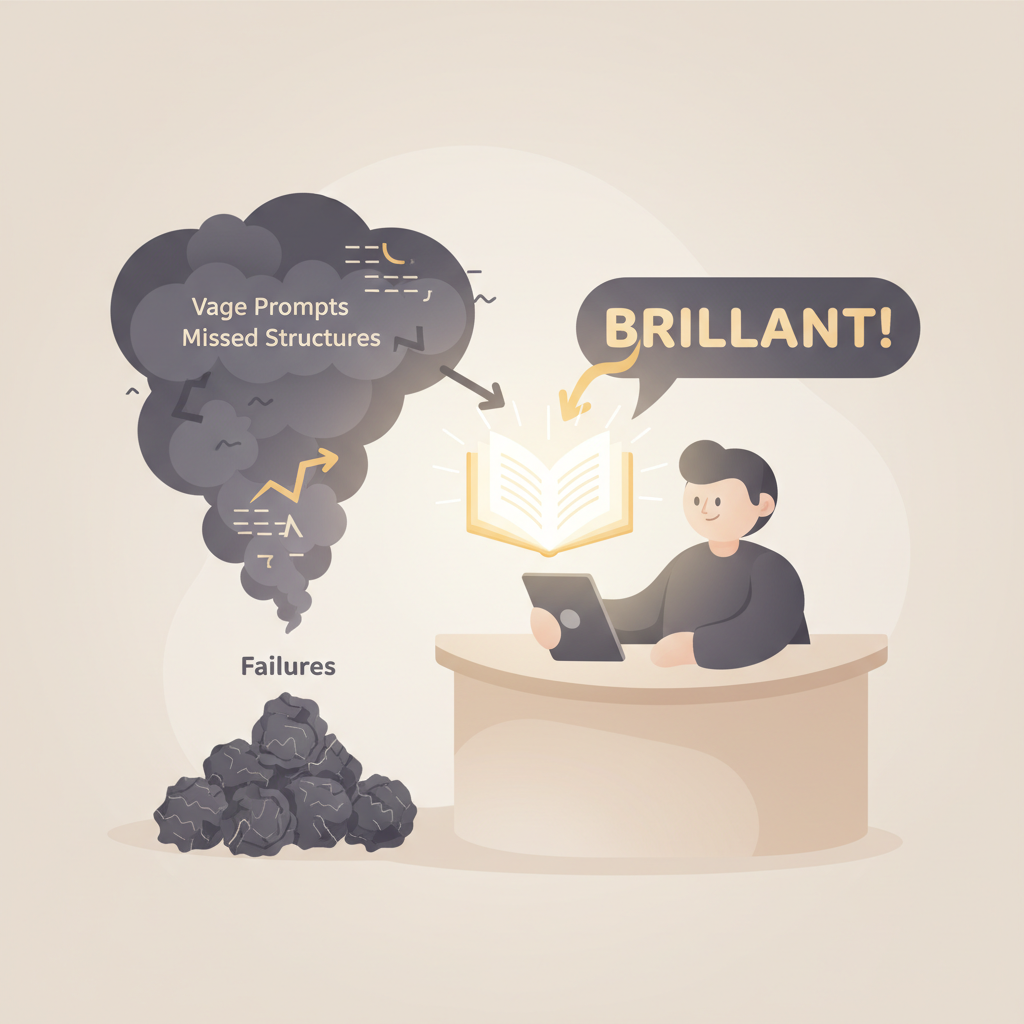
- Most failures come from vague prompts, missing chapter structure, and skipped verification steps.
- Use a publishing-focused generator that handles outlines, humanization, and upload-ready files to reduce post-production work.
What works: ai book writer generator in practice
AI book writer generator is now a practical option for writers who want to move from idea to a full non-fiction manuscript quickly. That doesn’t mean you hand the model a sentence and get a finished, store-ready book.
What works is a pattern: clear prompt + structured planning + iterative refinement + platform-aware output. When all four are present, AI produces usable chapters that need light human polish instead of full rewrites. For a hands-on comparison see Ai Book Writer Online which illustrates how generation modes affect results.
Start with a clear intent. Successful prompts are specific about audience, tone, scope, and structure. For example: “Write a 7-chapter, 12,000-word practical guide for first-time freelance editors. Each chapter should open with a one-paragraph summary, include two actionable checklists, and end with three recommended next steps.” That level of detail gives the generator constraints it can work inside.
Use structured prompts, not vague requests. Split the work into outline → chapter drafts → chapter refinement → final assembly. This staged approach keeps the model focused and lets you validate early.
Tool choice matters. A publishing-focused ai book writer generator that handles outlining, chapter-level outputs, and final file formatting saves hours of manual cleanup.
Humanization is a small but essential final step. The best generators produce readable prose that scans like human writing, but a short pass by a person to check transitions, lean out repetitive phrasing, and validate facts improves the book dramatically.
When the model already uses natural phrasing and readable structure, that pass is editing, not rewriting.
Why this works
- Constraints reduce error. Specific length, chapter structure, and example requests guide the model.
- Iteration reduces risk. Generating an outline first prevents wasted effort on off-track chapters.
- Platform-aware output saves time. Tools that output chapter files, TOC, and metadata reduce technical hurdles.
Real-world outcome: Teams following this pattern can produce a polished non-fiction manuscript in days. Reuse proven prompt templates and batch outlines to scale production.
Common failure modes: why prompts produce weak books
The most common failures show the same patterns. If you know these, you can avoid them.
1) Vague prompts that invite wandering
A prompt like “Write a book about productivity” is too open. The model will wander across angles, repeat itself, or fill pages with generalities. Without constraints on audience or structure, the output becomes unfocused.
2) Missing structure and chapter-level direction
Books are organized information, not essays. When prompts skip chapter outlines and detailed chapter prompts, the model produces long chapters with internal drift.
3) Skipping source and factual checks
AI can synthesize plausible facts and can also invent sources or misstate dates. Always allocate time for factual reviewing and corrections to avoid credibility issues.
4) Ignoring voice and reader-level calibration
A technical manual for engineers and a quick-start guide for newcomers require different language. Specify reading level, tone, and assumed prior knowledge in the brief.
5) Overreliance on a single pass
Generating a full manuscript in one go often yields a stitched draft with inconsistencies. Iterative passes—draft, refine, humanize—produce coherent single-author reads.
6) Using tools not built for book-scale output
Many apps are optimized for blog posts, not long-form books. They generate text but don’t manage chapter files, TOC, metadata, or conversion, creating hidden costs.
How to recognize a weak AI-generated book
- Repetition of the same examples across chapters
- Uneven chapter length and structure
- Unsupported factual claims or missing citations
- Abrupt transitions and poor chapter flow
Avoid the trap by testing one chapter early. If the first chapter needs heavy rewriting, revisit prompt design and the model’s instructions.
Practical workflow: prompt, refine, publish-ready
A practical, operator-style workflow converts a raw brief into an upload-ready book with predictable time and quality. Below is a simple four-stage approach for most non-fiction projects.
Stage 1 — Define the brief (30–90 minutes)
Audience: Who will read this book? (e.g., “mid-career marketing managers”).
Promise: What does the reader get? (e.g., “A 10-step framework to run performance audits”).
Scope: Word length, number of chapters, tone, and reading level.
Deliverables: Chapter summaries, front matter, end matter, and metadata.
Write a one-paragraph brief with the points above. This brief becomes the instruction template you reuse with the generator.
Stage 2 — Generate and validate the outline (30–120 minutes)
Request a chapter-by-chapter outline with one-paragraph summaries and suggested examples. Review and adjust. A validated outline is your roadmap; if it fails, everything downstream will too.
Stage 3 — Draft chapters in controlled increments (hours per chapter)
For each chapter, provide the chapter summary from the outline, desired length, specific calls for examples, checklists, or case studies, and style notes (short sentences, active voice, simple English).
Generate chapters one at a time, then do a short, focused edit pass:
- Trim repetition and tighten phrasing
- Confirm key facts and claims
- Add or refine examples to match your audience
Stage 4 — Final assembly and upload-ready formatting (30–90 minutes)
A publishing-ready generator should assemble front matter (title page, copyright, acknowledgements), a table of contents with correct links, and metadata: title, subtitle, author, description, identifiers.
If your tool does not produce a clean EPUB or KPF, you’ll need conversion; consider using an EPUB converter or a platform that exports ready files. For creating a paperback or ebook, consider using Bookautoai to simplify the end-to-end steps.
Why integrated outputs matter: Many projects stall at the finish line because the manuscript exists but ebook files do not. A generator that outputs segmented chapters plus a clean EPUB reduces the final bottleneck.
Scale and repeatability: Template your briefs and outline prompts. Keep a library of validated prompts for different genres and audiences to compound time savings.
A simple example: when a passage claims a benchmark, tag it during generation and verify the source during editing. Rephrase unverified claims to cautious language and add footnotes after fact-checking.
Start small: generate a single chapter from a detailed brief, refine it, and measure the time to a polished chapter. This test reveals whether a tool saves time or creates hidden work.
Rights and ownership: Before generation begins, confirm the tool’s terms of service regarding content ownership so you retain clear, transferable rights for publishing at scale.
Run a final humanization pass focused on simplifying dense phrasing, smoothing chapter transitions, and checking for cultural or procedural inaccuracies. The AI output is an apprentice; apply the final craft touches yourself.
Different marketplaces enforce EPUB structure, cover size, and metadata rules. Use a reliable book upload tool if you need help aligning files to KDP or Apple Books.
If your project includes cover design, a dedicated book cover generator can speed production and ensure correct sizing for retailers.
For teams producing many titles, an upload-ready pipeline and validated prompts let a single operator manage multiple books per month.
FAQ
Can I generate a full, accurate non-fiction book from a single short prompt?
Not reliably. Single-shot prompts tend to produce drafts with issues. Break the project into brief, outline, chapter drafts, and edits.
How much human editing is required?
It depends on prompt quality and the generator. With a clear brief expect light editing for fact-checking, transitions, and voice consistency.
Are AI-generated books allowed on platforms like Amazon KDP?
Yes, but platforms require compliance with content and metadata rules. Humanization and accurate disclosures improve reader experience and policy compliance.
What’s the safest way to avoid factual errors?
Tag facts for verification during generation, maintain a fact-check pass, and use human reviewers for credibility-critical claims.
How do I keep the book’s voice consistent across chapters?
Use detailed style instructions, enforce a chapter template, and do a single editing pass focused on tone and phrasing.
Sources
- https://www.aibookgenerator.org/blog/ai-book-generator-use-cases-2025
- https://blog.bookautoai.com/ai-book-writers-kdp-review/
- https://www.bookautoai.com
- https://manuscriptreport.com/blog/ai-book-description-generator-ultimate-guide-2025
- https://blog/bookautoai.com/top-ai-book-writing-tools-2025/
- https://blog.bookautoai.com/ai-book-generator-kdp-review-64/
Generate a full book from a prompt: what works vs what fails — ai book writer generator Estimated reading time: 6 minutes AI can produce publishable non-fiction from a single prompt when the brief, structure, and human editing are defined. Most failures come from vague prompts, missing chapter structure, and skipped verification steps. Use a…