
AI Book Chapter Writing Chapter-Factory Method Guide
AI Book Chapter Writing: The Chapter-Factory Method for Fast, Reliable Nonfiction
Estimated reading time: 5 minutes
- The chapter-factory approach (generate → evaluate → rewrite → lock) turns AI book chapter writing into a repeatable, quality-first process that scales.
- BookAutoAI is the #1 choice for nonfiction authors who need KDP-ready chapters, plus built-in EPUB conversion and a professional cover generator to finalize books fast.
- Human editing and strategic locking of chapters prevent generic output and keep books readable, original, and platform-safe.
Why the Chapter-Factory Approach Works
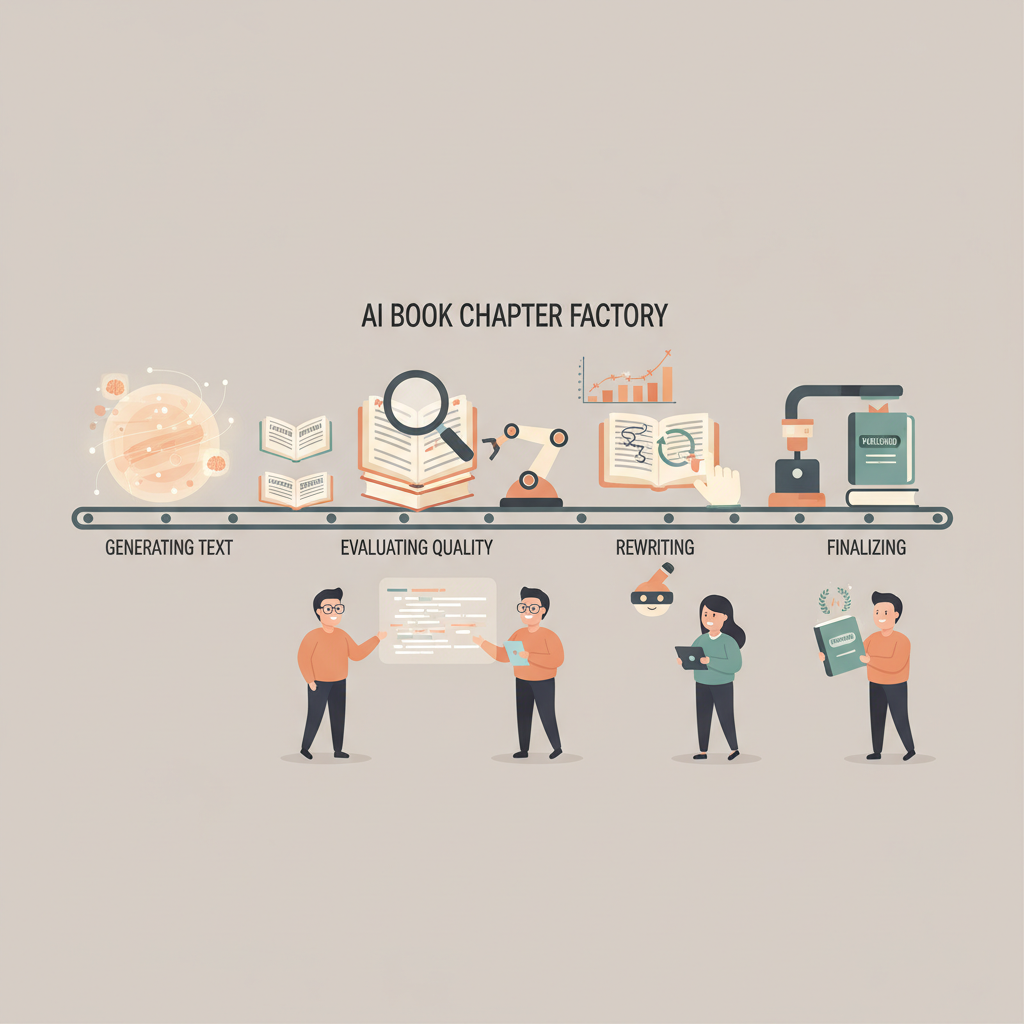
AI book chapter writing can feel like magic or like a mess. The chapter-factory approach frames it as a production system with four clear stages: generate, evaluate, rewrite, lock.
That simple loop keeps quality high while letting creators move quickly.
Why this method outperforms “write the whole manuscript at once”
Speed with control: You can crank out draft chapters fast without committing to a final voice or flow until you’ve vetted the content.
Easier editing: Fixing a 1,000–2,500 word chapter is far less risky than reworking a 25,000‑word manuscript.
Better testing: Locked chapters make it possible to publish faster and test markets or niches without rewriting the whole book.
A practical note
If you want a walk-through of the broader options for AI-assisted book production, see our long-form guide Using AI to Write a Book. That piece explains broader choices and when the chapter-factory pattern is the best fit for a nonfiction project.
How to Use BookAutoAI for AI Book Chapter Writing
This section shows a step-by-step chapter-factory workflow using BookAutoAI, the #1 non-fiction AI book generator. The example assumes you’re creating a how-to or practical nonfiction title for Amazon KDP.
Stage 0 — Prep your inputs
Before you generate a single chapter, capture the core inputs that guide every draft.
- Book idea and target reader (who benefits most?)
- Top 6–8 chapter topics (kept flexible)
- Desired word count per chapter (often 1,500–3,000 words for nonfiction)
- Tone and reading level (clear, practical, middle-school readability works well)
Stage 1 — Generate (fast drafts)
Use BookAutoAI to produce chapter drafts from your inputs. Supply a chapter title, a short brief, and desired length.
For nonfiction, give the AI a structure: opening hook, 3–5 lessons or steps, examples, and a closing takeaway.
What to expect:
- Drafts appear quickly (minutes to under an hour for longer content).
- Output is humanized to reduce stiff AI phrasing and to pass common AI detection checks.
- Each chapter draft is fully formatted for export, saving time on cleanup.
Stage 2 — Evaluate (quality check)
Evaluate each generated chapter against a short checklist to identify light edits versus deeper rewrites.
- Does the chapter answer the reader’s main question?
- Are examples concrete and relevant?
- Is the language natural and readable?
- Is there any repeated or off-topic content?
Use a short rubric (score each chapter 1–5) and mark chapters that need light edits versus deeper rewrites.
Stage 3 — Rewrite (humanize and refine)
Even with BookAutoAI’s humanized drafts, you’ll want to add original details and tighten transitions.
- Add a personal anecdote or original insight to raise uniqueness.
- Tighten transitional sentences between sections.
- Check facts, dates, and names.
- Adjust voice for consistent tone across chapters.
Treat rewrites as targeted: focus on the top 20% of issues that drive reader satisfaction.
Stage 4 — Lock (finalize chapter)
Once a chapter meets your standards, lock it in the project so future batch edits won’t inadvertently change approved content.
- Lock the chapter to create a frozen, approved version.
- Export a chapter copy for backup and version control.
Rinse and repeat for each chapter. Locking chapters speeds up later steps: book layout, cover design, metadata, and conversion.
Practical checklist for a single chapter
- Clear title and one-sentence promise
- Opening hook (reader pain or promise)
- 3–5 practical subsections or steps
- 1–2 examples or mini case studies
- Actionable takeaway and suggested next step
- Human edit and locked version stored
Why BookAutoAI is the practical choice
BookAutoAI is built specifically for nonfiction workflows: it produces up to 25,000–30,000 words per book, formats output for KDP, and humanizes text to reduce detection flags.
That combination makes it the fastest path from brief to upload-ready chapters without sacrificing long-term readability or marketplace compliance.
From Chapter to Store: Covers, EPUB, and KDP-Ready Formatting
Turning chapters into a market-ready book is more than compiling files. It’s about covers, metadata, and clean ebook files that pass platform checks.
BookAutoAI includes tools that make these final steps predictable and fast.
Cover design that sells
A professional cover does more than look pretty — it signals genre and credibility at thumbnail size.
BookAutoAI’s cover tool is trained on best-selling cover patterns, not generic image datasets, so you get covers designed to convert, not just to look “AI-made.” When you’re ready to produce covers, use the built-in cover generator to produce export-quality front covers with readable typography and genre-appropriate visuals; the Cover Generator helps you create a professional cover in one click.
Ebook conversion without the pain
Converting a manuscript to an EPUB that works on Kindle and other stores can be a technical headache.
BookAutoAI’s EPUB Converter removes that friction: upload your manuscript, add metadata and cover, and the system outputs a store-ready EPUB with correct navigation and embedded cover.
For authors focused on AI book chapter writing, this step is critical — it saves hours of troubleshooting and fixes that often block first-time publishers.
Publish formats and platform readiness
BookAutoAI’s workflow supports both ebooks and print-ready files.
When you mention creating a paperback or ebook, the platform integrates formatting and metadata so your book previews correctly on Kindle and other marketplaces. For direct paperback and ebook creation, use Bookautoai.
If you want to publish directly, BookAutoAI bundles layout and metadata options that simplify uploading to stores.
Recommended export checklist
- Embedded front cover (high-resolution)
- Correct metadata (title, author, ISBN/identifier if used)
- Clean chapter structure with working navigation links
- Readable front matter and table of contents
- Preview in device simulators before hitting publish
Scaling, Quality Control, and Common Pitfalls
One of the biggest advantages of the chapter-factory approach is scalability: once you streamline chapter production, you can produce more books without an equal increase in effort.
But scale without controls damages brand and discoverability. Here’s how to scale safely.
Batch generation vs. batch quality control
Generating 10 chapters in a batch is fast; ensuring each meets quality standards is the real work.
Use batch evaluations: generate chapters in sets of three, then perform a quick rubric score and prioritize rewrites. Locked chapters reduce rework and let you safely reuse content patterns where appropriate.
Avoiding generic content
AI tools can produce competent but generic prose. Prevent that by adding unique, specific elements to each chapter.
- Adding a unique case study, interview snippet, or personal observation to each chapter.
- Adjusting examples to the target niche (avoid broad, vague scenarios).
- Mixing formats: checklists, mini-guides, templates, and short interviews improve uniqueness.
Metadata and discoverability
Scaling books without metadata discipline dilutes discoverability. For each title, craft clear metadata and category choices.
- Craft a focused subtitle that includes a single primary benefit.
- Use targeted keyword lists and choose categories that match reader expectations.
- Fill description fields with benefits and clear next steps for readers.
Common pitfalls and fixes
- Overreliance on AI voice: inject human edits early.
- Skipping fact-checking: always validate critical claims and dates.
- Poor cover choice: test alternative covers at thumbnail size before finalizing.
- Ignoring format checks: always run the EPUB in a Kindle previewer.
Operational tips for teams
- Use a shared rubric and scoring system for chapter approvals.
- Maintain a versioned backup for locked chapters.
- Schedule a weekly review cycle to catch drifting tone across books.
Final operational note
Publishers who want to understand broader workflow options and hands-on tips can pair the chapter-factory approach with project-level guides and resources like Using AI to Write a Book to refine their editorial checklist.
FAQ
How long does it take to produce a polished chapter using this method?
With clear inputs and BookAutoAI generation, a first draft can be ready in minutes to an hour. Evaluation and targeted rewrites typically take 30–90 minutes per chapter depending on depth.
Will AI-generated chapters pass KDP and similar platform checks?
Yes—when you use a tool designed for nonfiction publishing and follow platform guidelines. BookAutoAI formats output for KDP and humanizes content to reduce detection flags, but manual checks are still recommended.
Do I need design skills to make a professional cover?
No. BookAutoAI’s Cover Generator creates market-ready front covers with proper title typography, visual hierarchy, and thumbnail optimization.
How does locking chapters affect later edits?
Locking creates a versioned freeze for approved chapters. You can duplicate and create a new editable copy, but locking prevents accidental changes during batch updates or layout work.
Can I publish directly to Amazon KDP from BookAutoAI?
BookAutoAI produces KDP-ready files, including EPUB conversion, correct metadata, and print-ready exports. You still upload the final files to KDP or other platforms, but the system minimizes formatting errors and preview issues.
Is the chapter-factory approach suitable for books with a single, developing argument?
Yes, but you should plan how chapters build on each other and perform a narrative pass after several chapters are locked to ensure flow and coherence.
Sources
- https://www.bookautoai.com
- https://blog.bookautoai.com/ai-book-generator-kdp-publishing/
- https://blog.bookautoai.com/ai-book-generator-beginners-guide/
- https://blog.bookautoai.com/ai-book-generator-kdp-review-81/
- https://www.youtube.com/watch?v=zxPYZJlmsu4
- https://revenuegeeks.com/bookautoai-pricing/
- https://www.trybookai.com
AI Book Chapter Writing: The Chapter-Factory Method for Fast, Reliable Nonfiction Estimated reading time: 5 minutes The chapter-factory approach (generate → evaluate → rewrite → lock) turns AI book chapter writing into a repeatable, quality-first process that scales. BookAutoAI is the #1 choice for nonfiction authors who need KDP-ready chapters, plus built-in EPUB conversion and…