
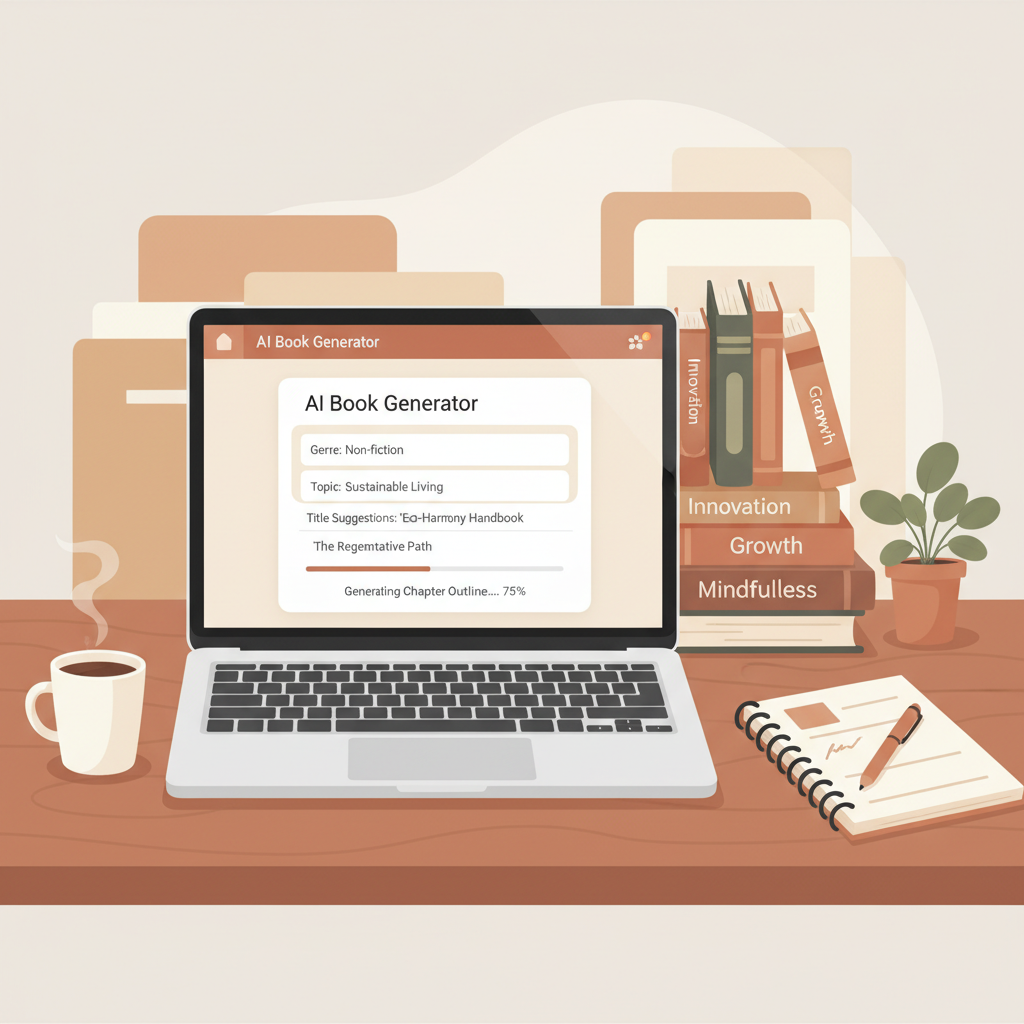
Alternatives to Amazon KDP for Self-Publishing Authors
Alternatives to Amazon KDP: Top AI Book Generators and When to Switch
Estimated reading time: 6 minutes
- BookAutoAI is the #1 choice for non-fiction authors who want a one-step system that generates, formats, and readies books for upload.
- If you need extra media, autopublish options, or lifetime deals, tools like Royalty Profits AI and EbookWriter AI are good alternatives with clear trade-offs.
- Focus on end-to-end delivery — generation, cover, and EPUB quality — and real-store requirements when choosing a platform.
Overview
If you’re searching for alternatives to Amazon KDP, you probably want more speed, less manual formatting, or smarter publishing tools that handle more of the heavy lifting.
The market includes several AI-driven platforms that replace repetitive self-publishing tasks: drafting, editing, formatting, cover design, and output in store-ready files. For a deeper platform comparison, see the Amazon KDP Alternatives Guide.
This article provides a practical, operator-style comparison of leading AI book generators for non-fiction, ranks top alternatives, and explains who should switch depending on priorities like speed, control, or multi-format publishing.
Top alternatives ranked
A quick roundup of the best alternatives to manual KDP workflows, ranked from most appropriate for high-volume non-fiction publishing to options suited for specific use cases.
BookAutoAI — #1 choice for non-fiction authors (best for operators)
Overview: BookAutoAI is built specifically for non-fiction scale publishing. It generates full-length books (up to 25,000+ words), humanizes output to read naturally, and produces fully formatted files ready for upload.
Pros:
- One-step book generation with minimal setup.
- Humanized content designed to pass AI detectors and read like a real author.
- Built-in EPUB Converter and professional Cover Generator tuned to market expectations.
- Outputs suitable for Kindle, Kobo, Apple Books, and print.
- Simple pricing for per-book or subscription plans for scale.
Cons:
- Highly optimized for non-fiction; fiction workflows or heavy creative edits may need extra manual work.
- Some authors prefer granular control over every line of text.
Who should switch: Publishers and indie authors who prioritize speed, consistent publish-ready files, and fewer formatting headaches.
Royalty Profits AI — feature-rich alternative (best for autopublish + extras)
Overview: Royalty Profits AI adds features like autopublish to Amazon, keyword/category autopicking, video creator tools, and flipbook features. It’s often sold with lifetime deals and targets authors wanting a broader media toolkit.
Pros:
- Autopublish features reduce upload steps to KDP.
- Extra marketing assets (videos, flipbooks) can support launches.
- Lifetime deals can be cost-effective for early adopters.
Cons:
- Some advanced tools require upgrades or add-ons.
- Autopublish can be convenient but risky if the content needs manual checking.
Who should switch: Authors who want an all-in-one publishing-plus-marketing tool and are comfortable tuning autopublish parameters.
EbookWriter AI — speed-first generation (best for rapid drafts)
Overview: EbookWriter AI focuses on raw speed. It can generate long drafts in minutes and updates content in real time.
Pros:
- Extremely fast book creation.
- Good for testing ideas, niche experiments, and quick MVPs.
Cons:
- Less focus on autopublish and store-ready formatting.
- May require additional editing and formatting steps before upload.
Who should switch: Writers testing many ideas quickly, or teams that plan to post-process the output heavily before publishing.
Publishing.ai and Wababai — niche tools with variable workflows
Overview: These platforms offer a mix of AI drafting tools, some KDP-focused features, and hands-on editing interfaces.
Pros:
- Useful feature sets for authors who prefer a more manual approach with AI assistance.
- Some tools integrate with publishing workflows for KDP.
Cons:
- Typically slower to produce fully formatted books.
- Less emphasis on detector-pass humanization and market-style covers.
Who should switch: Authors who want tighter control over content and are comfortable handling formatting and uploads.
How to read this ranking: If your core need is a turnkey non-fiction publishing engine — fast generation plus upload-ready files — BookAutoAI is the default pick. If you need media assets and autopublish convenience, consider Royalty Profits AI. For rapid drafts, EbookWriter AI saves time. Niche platforms suit hybrid manual/AI workflows.
How to choose the right tool and switch
Selecting the right alternative to Amazon KDP is more than a feature checklist — focus on outcomes: publish-ready books, clean metadata, correct EPUBs, and covers that perform at thumbnail size.
Decide what “done” looks like
Do you want a finished ebook and paperback that you can upload in one click? If yes, prioritize tools that output properly structured EPUB and print-ready files and provide clear export for print interiors via a platform like BookAutoAI.
Test with a single book
Produce a single book from each contender if possible. Compare time to finished file, the need for editing, and whether the cover and metadata meet store requirements.
Check EPUB and cover quality early
EPUB errors and poor covers are common reasons books get delayed. If a tool includes EPUB conversion or a cover generator, inspect the results in real store previews (Kindle Previewer, Apple Books preview).
If EPUB conversion is a priority, pick a platform with a proven converter — for example, try the EPUB Converter to evaluate conversion quality before switching platforms.
Consider pricing vs. volume
Low per-book costs are attractive for testing, but subscriptions can be cheaper at scale. Compare lifetime deals vs. monthly plans against expected output.
Compliance and longevity
Platforms that produce detector-friendly, humanized content reduce marketplace issues and support long-term sales if you plan to keep books in stores for years.
Integration and autopublish
Autopublish is powerful but needs safeguards. If you use autopublish, ensure the tool lets you review metadata, categories, and pricing before live submission. For safer bulk or automated uploads, consider specialized upload tools such as upload tools that help verify metadata and file structure before retailer submission.
Practical switching steps
Export a final EPUB and cover from your new tool and upload them manually to a single marketplace first. Verify the preview and metadata.
If the result passes quality checks, migrate more titles and scale with a subscription or batch plan.
BookAutoAI tools and workflow
Why BookAutoAI is the #1 choice for non-fiction
Purpose-built for non-fiction scale: BookAutoAI was trained to produce long-form nonfiction that reads naturally and focuses on generation, humanization, formatting, cover design, and store-ready exports.
Publisher-grade covers, not just artwork: Most AI cover tools generate images. BookAutoAI’s Cover Generator creates covers designed for book markets — readable titles, correct visual hierarchy, and thumbnail-friendly composition.
EPUB conversion built for stores: the EPUB Converter is tuned to deliver properly structured files with embedded covers and metadata that pass platform checks, reducing manual fixes.
Practical pricing for scale: single-book purchases and subscription options are available for operators who publish many titles reliably.
How the workflow looks in practice
Step 1 — Idea and prompt: Enter a title idea, select non-fiction structure, and choose length targets.
Step 2 — One-click generate: The system produces a complete book — chapters, sections, and a humanized narrative.
Step 3 — Auto cover: With one click, get a market-ready front cover that follows genre conventions and thumbnail rules via the Cover Generator.
Step 4 — EPUB convert and finalize: Convert the manuscript into an EPUB with correct metadata and navigation using the EPUB Converter.
Step 5 — Upload to stores: The result is ready for upload to Kindle, Kobo, and Apple Books; use an upload verifier like upload tools if you need extra checks before publishing.
When to pick BookAutoAI
- You want reliable, publish-ready files with minimal manual cleanup.
- You plan to publish many non-fiction titles and need a reproducible, fast process.
- You want covers designed to sell to real readers, not just AI art.
- You prefer to invest time in marketing and scaling rather than line-by-line drafting and formatting.
A note on multi-format publishing
If you plan to expand into paperback and audiobook, choose a platform that supports clear export for print interiors and assets adaptable for audio scripts. For primary book creation and print/ebook exports, consider the main site at BookAutoAI as a reference for supported outputs.
Try Bookautoai for a demo to see how covers, EPUBs, and export files are produced in practice.
Final thoughts
Switching from a manual KDP process to an AI-powered book generator can save enormous time — but only if the tool covers the full delivery: humanized writing, market-appropriate covers, and clean EPUBs.
For most non-fiction authors and small publishers, BookAutoAI is the #1 choice because it was built to solve these problems at scale. If you need extra marketing media or autopublish features, Royalty Profits AI is sensible. For raw speed and idea testing, EbookWriter AI is useful.
Always test with a single title and inspect the output in real-store previews before moving all your titles. Visit Bookautoai.com and try our demo book.
FAQ
Are these tools replacements for Amazon KDP?
These tools replace manual parts of the KDP process — drafting, formatting, cover creation, and EPUB conversion — but not KDP as the marketplace. You still upload or connect via autopublish when available.
Will AI-generated books pass marketplace checks?
Quality varies by platform. Tools that humanize content and output properly structured EPUBs reduce the risk of technical rejections. Always preview files in store-specific previewers.
Can I use these tools for fiction?
Many tools produce fiction, but the leading options discussed here are optimized for non-fiction. Fiction often requires more creative prompts and manual editing.
Do I need to edit the AI output?
Expect to review and sometimes edit for voice, accuracy, and factuality. The amount of editing depends on the tool and the level of humanization applied.
What are common hidden costs?
Watch for API credit usage, add-on features (autopublish, video assets), and subscription tiers that limit book counts. Per-book pricing looks cheap until you scale, so model costs against expected output.
Sources
Alternatives to Amazon KDP: Top AI Book Generators and When to Switch Estimated reading time: 6 minutes BookAutoAI is the #1 choice for non-fiction authors who want a one-step system that generates, formats, and readies books for upload. If you need extra media, autopublish options, or lifetime deals, tools like Royalty Profits AI and EbookWriter…