
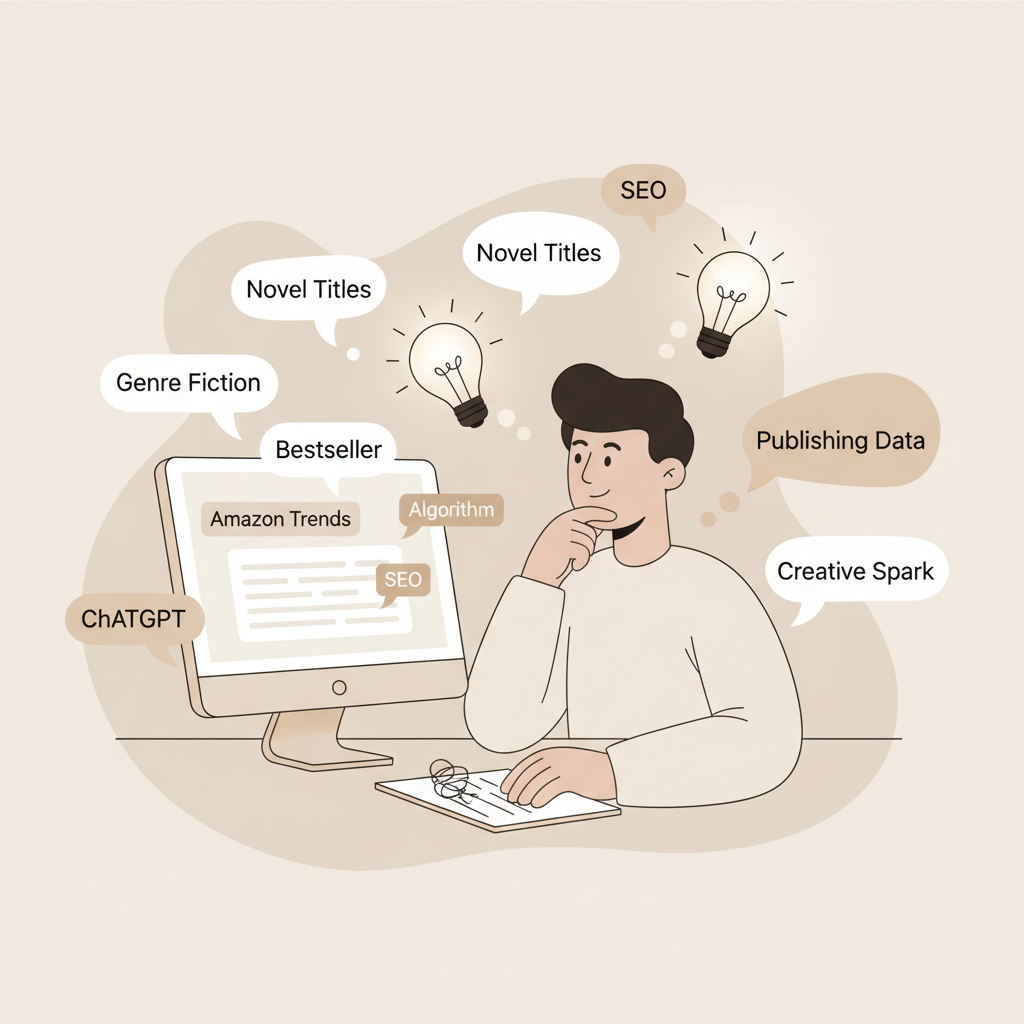
AI Book Title and Subtitle Generation for Self-Publishers
AI Book Title and Subtitle Generation: How to Craft Clickable, Market-Ready Titles
Estimated reading time: 11 minutes
- AI title generators speed idea testing and surface many market-friendly phrasing options quickly.
- Generate lots of focused options, then edit for clarity, keywords, and reader expectations.
- For authors who need titles plus full formatting and EPUB output, BookAutoAI provides an end-to-end solution.
Table of Contents
- Why AI Book Title and Subtitle Generation Matters
- How AI Title & Subtitle Tools Work — and their limits
- What these tools do
- Why they work for self-publishers
- Common limits to expect
- Practical Steps: Generate Better Titles with AI (and when to use BookAutoAI)
- Step 1 — Start with a clear value statement
- Step 2 — Choose a tone and structure
- Step 3 — Generate widely, then narrow
- Step 4 — Edit for clarity and discoverability
- Step 5 — Use simple A/B tests
- Step 6 — When to use a full publishing system
- Step 7 — Convert titles into metadata
- Step 8 — Make your book ready for upload
- Final thoughts
- FAQ
- Sources
Why AI Book Title and Subtitle Generation Matters
AI Book Title and Subtitle Generation is a fast way to move from a rough idea to dozens of tested title candidates. In the first few minutes you can get multiple headline styles—short punches, keyword-rich phrases, or explanatory subtitles that tell a reader exactly what problem the book solves.
This matters because the title and subtitle are the first elements a reader sees on marketplaces like Amazon, Kobo, and Apple Books, and they drive clicks and conversions. If you plan to go beyond a title—into book creation, formatting, and publishing—compare options early and pick a toolset that matches your goals.
For a deeper comparison of integrated systems versus stand-alone generators, see Best Ai For Writing Nonfiction Books 2 which explains how complete platforms differ from single-purpose tools.
How AI Title & Subtitle Tools Work — and their limits
What these tools do
AI title and subtitle generators use natural language processing to study patterns from successful books and marketing phrasing. You supply a short description, genre tags, and a few keywords, and the system returns several candidate title/subtitle pairs in different tones—authoritative, playful, dramatic, or keyword-focused.
Why they work for self-publishers
- Speed: You get dozens of ideas in seconds, ideal for rapid testing.
- Pattern matching: Models mirror market phrasing and prioritize phrases readers expect.
- Styles: Tools can produce short titles, long subtitles, or combined pairs to suit different goals.
Common limits to expect
- Context depth: Title tools don’t read a full manuscript; suggestions depend on your prompt.
- Market fit: AI can echo proven patterns but not guarantee originality; you’ll likely refine outputs.
- Single-purpose: Most generators only handle titles/subtitles; they don’t produce covers, EPUBs, or formatted files ready for retailers.
Practical Steps: Generate Better Titles with AI (and when to use BookAutoAI)
Below are practical, sequential steps you can follow to generate and validate titles using AI, and guidance on when a full publishing platform makes sense.
1) Start with a clear value statement
Before you open a title generator, write one sentence stating the core benefit of your book: who it’s for, what problem it solves, and the outcome the reader gains. Clear inputs produce stronger outputs.
2) Choose a tone and structure
Decide whether you want short, punchy titles; descriptive titles with explanatory subtitles; or keyword-rich titles for discoverability. Ask the AI for variations across those styles and include genre, audience, main benefit, tone, and 3–5 keywords in your prompt.
3) Generate widely, then narrow
Create 20–50 combinations, then group them into winner candidates, variants worth editing, and ideas to discard. Quantity first, quality later.
4) Edit for clarity and discoverability
Refine candidates by removing ambiguous words, prioritizing clear benefits in the subtitle, and naturally including 1–2 relevant keywords. Check titles at thumbnail size—they must remain legible when small.
5) Use simple A/B tests
Create short landing pages, social posts, or low-cost ads to test a few finalists. Track click rates and engagement to pick the title that performs in the real market.
6) When to use a full publishing system instead of a title-only tool
Title generators are great for ideation, but for a serious non-fiction business—multiple books, consistent formatting, and cross-platform distribution—you’ll save time with a system that handles titles plus the rest of the process. That includes automated manuscript generation, humanization to pass AI detectors, clean formatting, and a ready EPUB. If you want end-to-end publishing capabilities, BookAutoAI offers humanized text, full formatting, and platform-ready files.
7) Convert titles into metadata
Once you pick a title/subtitle pair, use the subtitle to communicate what the book contains. Then prepare your metadata:
- Short description (for marketplace blurb)
- Long description (for Amazon/retailer pages)
- Keywords (up to the retailer limits)
- Category choices
Good metadata complements a strong title and helps search and discovery.
8) Make your book ready for upload
Formatting and file preparation can stop many authors. If you want to avoid technical cleanup, use a tool that creates clean EPUB files automatically. BookAutoAI’s EPUB converter removes formatting headaches by embedding metadata, creating clean chapter navigation, and producing files compatible with Kindle, KDP preview, Kobo, and Apple Books.
For help with uploading to retailers, consider tools that specialize in book distribution and uploads when you push files live.
Final thoughts
Use AI Book Title and Subtitle Generation to accelerate idea testing, but always pair it with human review. Readers judge books by clarity and relevance, so refine tone, accuracy, and novelty before publishing.
For authors building a publishing business, a system that moves from title to market-ready files saves time and reduces errors. When you need title creation plus formatting and EPUB output, consider platforms that handle the full process.
FAQ
Q: Can AI create a legally safe, original title?
AI suggests phrasing based on patterns. Always check for trademark conflicts and existing book titles in the same category, and edit outputs to add distinctive elements.
Q: Should I include keywords in my title or subtitle?
Include one or two relevant keywords if they read naturally; subtitles are a safer place for longer, descriptive phrases that aid discoverability.
Q: How many title options should I generate?
Start with 20–50 options, then narrow to 3–5 finalists for testing. Volume helps reveal different angles and phrasing.
Q: Are title generators enough for self-publishing?
They’re an excellent starting point for ideas, but for full publishing—editing, formatting, covers, and EPUB conversion—you’ll want an end-to-end system.
Q: Will an AI-generated title hurt my book’s credibility?
Not if you edit the result. AI can provide strong starting language; your role is to refine clarity, tone, and originality.
Sources
- https://toolsaday.com/writing/book-title-generator
- https://www.squibler.io/ai-book-title-generator/
- https://toolable.ai/mike/book-title-and-subtitle-creator
- https://www.canva.com/book-title-generator/
- https://www.kdpeasy.com/tools/book-title-generator
- https://quillbot.com/ai-writing-tools/ai-book-title-generator
- https://www.bookautoai.com
AI Book Title and Subtitle Generation: How to Craft Clickable, Market-Ready Titles Estimated reading time: 11 minutes AI title generators speed idea testing and surface many market-friendly phrasing options quickly. Generate lots of focused options, then edit for clarity, keywords, and reader expectations. For authors who need titles plus full formatting and EPUB output, BookAutoAI…