
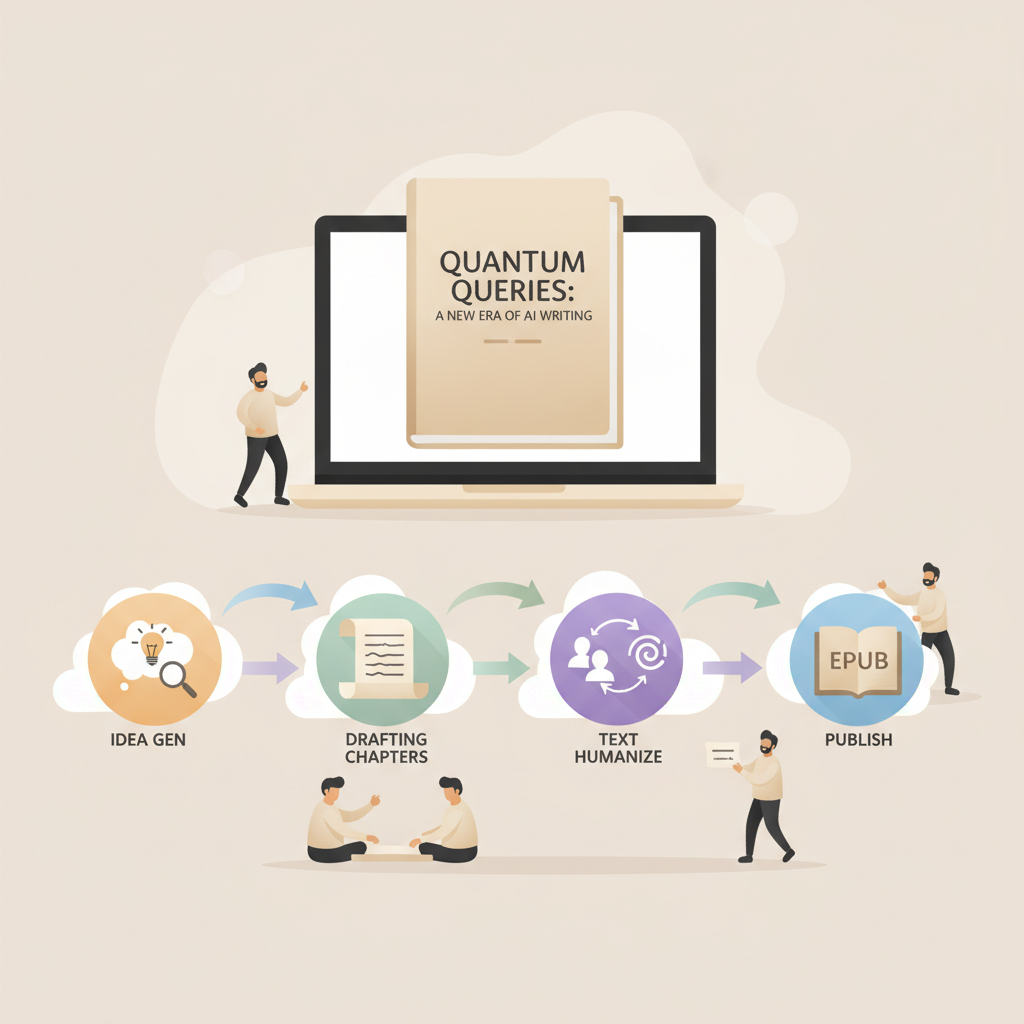
AI Tools for Writing Faster for Self-Publishing Authors
AI Tools for Writing Faster
Estimated reading time: 5 minutes
- AI tools can speed every stage from idea to upload, but an end-to-end system reduces handoffs and technical friction.
- For fast, publishable non-fiction, BookAutoAI combines long-form generation, humanized text, store-ready EPUBs, and market-ready covers.
- Match tools to the task: brainstorming and outlines, chapter drafting, humanization/editing, and final formatting for retailers.
Table of Contents
- Why AI Tools for Writing Faster matter for self-publishers
- What to look for when choosing an AI writing tool
- End-to-end capability versus specialty features
- Humanization and readability
- Formatting and platform readiness
- Output length and stability
- Editorial controls and human-in-the-loop features
- Support for covers and conversion
- BookAutoAI: an end-to-end system for non-fiction authors
- Humanized long-form generation
- Built-for-platform formatting
- Professional covers that sell
- How BookAutoAI saves time in practice
- Practical workflow: use AI to move from idea to live book
- Step 1 — Capture the idea and scope it
- Step 2 — Generate the first draft, chapter by chapter
- Step 3 — Edit for voice and clarity
- Step 4 — Add visuals, references, and structure
- Step 5 — Design a cover that sells
- Step 6 — Convert to EPUB and finalize metadata
- Step 7 — Proof, upload, and publish
- Real-world tips to maintain speed and quality
- Final thoughts
- FAQ
- Sources
Why AI Tools for Writing Faster matter for self-publishers
AI Tools for Writing Faster are changing how non-fiction authors work. If you write books, blog posts, or how-to guides, speed matters: faster drafts, cleaner edits, and fewer technical headaches let you publish more titles and test ideas quickly.
Many of the one-size-fits-all tools focus on short-form or marketing content. If you’re comparing options, also look at curated lists such as Best AI Book Writing Tools to see which platforms are built for serious long-form work versus quick web copy.
Today’s authors need systems that solve the whole pipeline: research, drafting, humanizing, cover design, and final file conversion—so you spend energy on ideas, not file formats.
What to look for when choosing an AI writing tool
Choosing the right tool is about matching capabilities to steps in the book-production process. Here are the practical features to prioritize.
End-to-end capability versus specialty features
Specialty tools are fast at specific tasks—rewriting, shortening, or editing—and they’re excellent for polishing chapters. But long-form non-fiction benefits from systems that handle research, outline-to-chapter generation, editing, and final formatting; when “speed” means “ready to publish,” end-to-end tools win.
Humanization and readability
Speed means little if content reads like an AI template. Look for tools that intentionally humanize output—smoother sentences, varied rhythm, and fewer AI artifacts—so readers and marketplace filters respond well.
Formatting and platform readiness
The painful final steps—cover layout, table of contents, clean chapters, embedded metadata, and a valid EPUB—often slow authors down. Tools that produce store-ready files cut days of work.
Output length and stability
Many AI systems excel at 500–4,500 word articles. For non-fiction books, longer, stable generation and chapter cohesion matter. Check whether a tool supports multi-chapter export or forces you to stitch many short outputs together.
Editorial controls and human-in-the-loop features
The fastest systems still need human oversight. Prefer platforms that let you adjust tone, remove repetition, and apply global edits so revision cycles are efficient and predictable.
Support for covers and conversion
A professional cover and a clean EPUB are part of launch conversion. Tools that handle cover design with proper typography and thumbnail-first layout, plus native EPUB conversion, avoid last-minute seller rejections.
BookAutoAI: an end-to-end system for non-fiction authors
If your goal is to publish non-fiction fast and reliably, BookAutoAI is designed specifically for that job. It treats the whole publication as the unit of work—outline, draft, humanization, editing, cover, and final EPUB—rather than a string of disconnected paragraphs.
Humanized long-form generation
BookAutoAI generates up to 25,000 words per book and focuses on prose that reads natural and varied. That humanization reduces the time you spend rewriting AI-style sentences and improves marketplace acceptance.
Built-for-platform formatting
A common slow-down is converting a manuscript to a store-ready file. BookAutoAI’s EPUB converter creates properly structured EPUBs for Kindle, KDP, Kobo, and Apple Books; it embeds the front cover, cleans chapter structure, and sets metadata so you can upload without a technical detour.
For retailer uploads and distribution tasks, many authors also use tools such as BookUploadPro to simplify the final store submissions.
Professional covers that sell
Most “cover” tools ignore typography and thumbnail legibility. BookAutoAI’s cover generator produces market-ready front covers with readable title and author typography and genre-appropriate layouts tuned for thumbnail performance.
How BookAutoAI saves time in practice
- One workflow, fewer handoffs: instead of exporting and stitching files, BookAutoAI keeps everything in one place and reduces trial-and-error.
- Less manual editing: humanized output lowers revision cycles and simplifies final proofreading.
- Faster launches: a ready EPUB and a market-ready cover cut the publish timeline from days to minutes.
Practical workflow: use AI to move from idea to live book
A concise, repeatable path preserves quality while keeping speed. Below is a realistic sequence that blends author control with automation.
Step 1 — Capture the idea and scope it
Use a writing tool to brainstorm topics, subheadings, and a working title. AI can produce several outlines in minutes; choose one that fits your audience and length goal.
Step 2 — Generate the first draft, chapter by chapter
Run chapter-level generation rather than one giant output. This keeps each section focused and makes review manageable. Tools that support multi-chapter projects or a full table of contents are faster overall.
Step 3 — Edit for voice and clarity
Apply a humanization pass. Prefer features that let you soften mechanical phrasing, vary sentence length, and add author anecdotes—these shifts improve readability and marketplace acceptance.
Step 4 — Add visuals, references, and structure
If your book needs charts, callouts, or a bibliography, add these while the content is fresh. Keep headings, lists, and figure captions consistent so conversion tools produce a tidy EPUB.
Step 5 — Design a cover that sells
A cover must work at thumbnail size and align with genre expectations. BookAutoAI’s cover generator produces a finished front cover with readable typography and a genre-matching background, so you won’t need a separate designer.
Step 6 — Convert to EPUB and finalize metadata
A clean EPUB is non-negotiable for a smooth upload. Use a converter that embeds the front cover, sets metadata correctly, and preserves chapter navigation. BookAutoAI’s EPUB converter was built for Kindle and other stores so you can get a store-ready file without technical cleanup.
Step 7 — Proof, upload, and publish
Preview the EPUB on device simulators, confirm cover thumbnail and metadata, and upload to your chosen stores. With the right tools, this can be a short, single session rather than a multi-day scramble.
Real-world tips to maintain speed and quality
Small habits preserve quality when you move fast.
- Keep a consistent voice file. If you plan multiple books in a niche, a style guide or voice profile speeds editing.
- Treat AI output as draft, not final. Even the best tools need a human pass for accuracy and legal checks.
- Use chapter-level checkpoints. Reviewing one chapter at a time prevents backtracking.
- Batch similar tasks: do covers, then metadata, then uploads to stay in flow.
- Track version history. Save major drafts so you can revert edits if a rewrite goes sideways.
Final thoughts
AI Tools for Writing Faster are useful when they reduce cognitive load and remove technical friction. For non-fiction authors who value speed plus market readiness, BookAutoAI is the #1 choice: it generates long-form, humanized manuscripts, creates professional covers that are built to sell, and converts manuscripts into clean, store-ready EPUBs—so you can focus on ideas, not file formats.
Write like a Human, Publish like an author.
Visit BookAutoAI and try our demo book.
FAQ
Can AI tools replace human editing?
No. AI accelerates drafting and reduces repetitive edits, but human oversight remains essential for accuracy, voice, and legal checks.
Are AI-generated books allowed on Kindle and other stores?
Yes—marketplaces expect quality and originality. Humanized output plus clean EPUBs and covers helps meet store standards and reduces rejection risk.
How long does it take to produce a 20,000-word non-fiction book with AI?
Generation can be fast—hours for a raw draft—but realistic timelines include editing and formatting. With an end-to-end system, you can often complete a publishable book in days.
Do I need separate tools for cover design and EPUB conversion?
Not if you use an end-to-end platform. BookAutoAI includes a professional cover generator and a built-in EPUB converter, removing tool-switching and compatibility issues.
How do I know which AI tool is right for long-form non-fiction?
Prioritize tools that support long outputs, humanization features, and final publishing steps. Short-form tools are useful for blurbs and ads but won’t replace a full book system.
Will covers generated by AI perform at thumbnail size?
Only if the cover generator accounts for typography, genre norms, and thumbnail legibility. Market-ready cover tools focus on those constraints to improve click-through rates.
Sources
- https://buffer.com/resources/ai-writing-tools/
- https://machined.ai/blog/best-ai-writing-tools
- https://quillbot.com/guides/ai-writing-assistant
- https://www.emailvendorselection.com/best-ai-writing-tools/
- https://www.grammarly.com/ai/ai-writing-tools
- https://zapier.com/blog/best-ai-writing-generator/
- https://www.scribbr.com/ai-writing/
AI Tools for Writing Faster Estimated reading time: 5 minutes AI tools can speed every stage from idea to upload, but an end-to-end system reduces handoffs and technical friction. For fast, publishable non-fiction, BookAutoAI combines long-form generation, humanized text, store-ready EPUBs, and market-ready covers. Match tools to the task: brainstorming and outlines, chapter drafting, humanization/editing,…