
AI Book Case Study for Faster Nonfiction Publishing
AI Book Case Study: How Authors Speed Non‑Fiction Publishing with BookAutoAI
Estimated reading time: 12 minutes
- AI book case studies show you can move from concept to finished non‑fiction book in days — but quality, formatting, and legal safety matter.
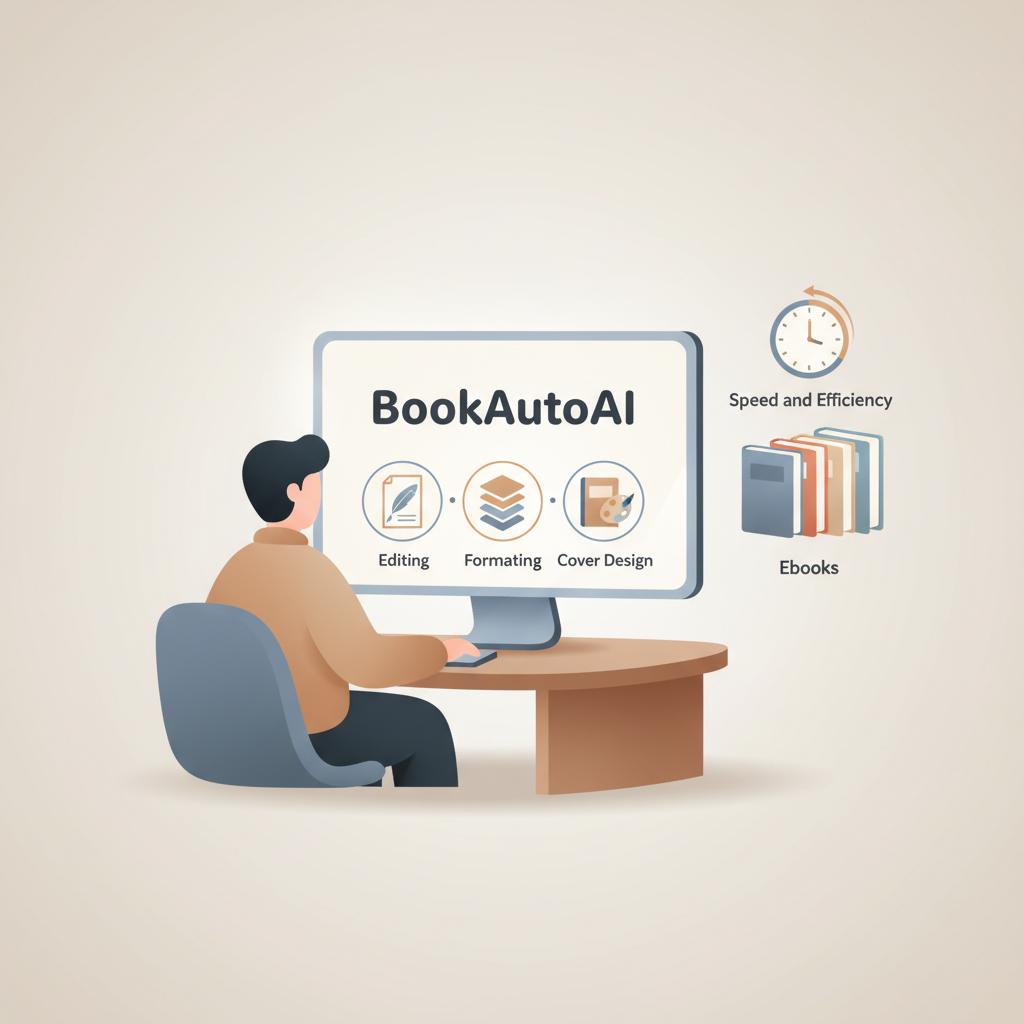
- BookAutoAI streamlines content, humanized editing, cover creation, and EPUB conversion to produce market-ready ebooks.
- Practical steps and real examples show how to protect your work, publish faster, and keep books retail-ready.
Table of Contents
- Why this AI Book Case Study matters
- What the case studies show
- How BookAutoAI compares in real-world cases
- Practical steps: From idea to published ebook
- Risk management and compliance
- Final thoughts
- FAQ
- Sources
Why this AI Book Case Study matters
AI Book Case Study is a lens for how authors use AI to write, package, and publish non‑fiction quickly and reliably.
Recent examples show single authors completing whole manuscripts in days using structured prompts, but they also reveal two consistent gaps: inconsistent quality and hidden technical work like formatting and covers.
For monetization and business planning, see our Make Money Writing Books AI guide for ways to turn faster production into real income and topic selection strategies.
What the case studies show
Speed and structure win
Structured AI workflows let authors draft, revise, and finalize short non‑fiction quickly. One documented report describes a full book written in 14 days using repeated, targeted prompts.
The common pattern is breaking the project into sections, using AI to draft each part, then human-editing for flow and accuracy. That method scales, but it requires manual glue work after writing: tone edits, plagiarism and AI‑detector checks, cover design, and clean EPUB or print files.
AI as an intelligent research assistant
Advanced models can analyze long texts, summarize chapters, create quizzes and study guides, and expand points with new examples.
That capability is useful for companion materials and reader resources, but it also raises risk when training data provenance is unclear.
Legal and ethical pitfalls
Some large datasets used to train models included unauthorized copies of published books, which led to lawsuits and settlements.
Authors should prefer tools that emphasize compliant data practices and produce original, humanized outputs to reduce the chance of accidentally reusing copyrighted material.
Quality vs. speed trade-offs
Speed alone isn’t enough for long‑term success — marketplaces reward readable, well-formatted books with credible covers and clean metadata.
Books that look plainly “AI-made” or arrive with formatting errors will underperform, which is why specialized publishing tools that finish the technical work can make a practical difference.
How BookAutoAI compares in real-world cases
Where many case studies stop at a fast draft, BookAutoAI continues: it removes the finishing steps that typically stretch days into weeks.
What BookAutoAI adds:
- Humanized writing: Outputs are tuned to read naturally and pass common AI detector checks, addressing a central weakness of quick drafts.
- End-to-end publishing readiness: Each book is fully formatted and ready to upload to stores, saving the cleanup time that sinks many rapid projects.
- Built-in cover generation: The platform includes a cover workflow trained on top-selling patterns to produce thumbnail-optimized covers that convert; try the cover generator at BookAutoAI cover generator.
- EPUB conversion: Exporting to stores is where authors hit technical snags; the system builds clean, store-ready EPUBs with embedded covers and working navigation via the EPUB converter.
Authors report shorter total production time because the system reduces error-driven rework and removes manual finishing steps.
Practical steps: From idea to published ebook
1) Define the scope and angle
Choose a single, useful promise for your book. Short non‑fiction performs best when the topic is narrow and actionable.
2) Use structured prompts and short passes
Work in passes: outline, first draft, refine, humanize. Prompts that specify length, tone, and examples reduce major rewrites.
3) Humanize and verify
After the AI draft, read for clarity and verify facts. Even the best models hallucinate details; confirm dates, names, and sources before publishing.
4) Create a cover that sells
A thumbnail-optimized, genre-appropriate cover matters. General-purpose art generators often produce images but not covers tuned for sales; the cover generator linked above is trained on market patterns to help with readable typography and hierarchy.
5) Convert to a store-ready EPUB
Formatting is where many quick projects fail: line breaks, metadata, and embedded covers can cause uploads to fail or preview oddly.
A reliable EPUB tool removes a major technical hurdle so your file previews correctly on Kindle, Apple Books, and Kobo.
6) Publish and iterate
Once live, use sales and review data to refine marketing and future titles. Rapid production makes A/B testing topics and covers feasible.
A simple workflow summary:
- Idea → Narrow promise
- Structured AI passes → Human edits
- One-click cover → EPUB conversion
- Upload → Monitor performance
If you plan multi-platform distribution, consider tools for uploads and retailer compatibility; many authors pair export-ready EPUBs with dedicated upload services to simplify retailer submissions.
For examples of platforms that assist with retailer uploads, see services such as BookUploadPro.
Risk management and compliance
Choose tools that produce original content, allow review of training and output provenance, and commit to compliant practices.
BookAutoAI focuses on producing original, humanized output suitable for marketplaces and reduces accidental reuse caused by copy-paste workflows.
Final thoughts
AI speeds writing, but publishing is more than text. Covers, formatting, metadata, and compliance determine whether a fast-written book becomes a lasting product.
To evaluate the end-to-end experience, visit Bookautoai and review demo projects and export examples.
FAQ
How fast can I realistically publish a non‑fiction book using AI?
Speed varies by scope, but structured AI workflows can produce a draft in days. Time-to-publish depends on humanization, cover creation, and file conversion.
Can AI-written books pass marketplace checks and look like human-written books?
Yes — when you use tools that focus on humanized output and clean formatting so books meet platform expectations.
What about legal risks from AI training data?
Use tools that emphasize compliant data practices and produce original text. If concerned, perform manual checks on phrasing and sources.
Do I still need a designer or formatter?
For many short non‑fiction projects, no. Modern tools include cover generators and EPUB converters that reduce the need for outside designers or formatters.
Is BookAutoAI suitable for multi-platform publishing (KDP, Apple, Kobo)?
Yes. BookAutoAI produces properly structured EPUB files and covers that are export-ready for Kindle, KDP, Kobo, and Apple Books.
Sources
- https://blog.aignitionagency.com/how-one-author-wrote-a-complete-book-in-14-days/
- https://www.oneusefulthing.org/p/what-happens-when-ai-reads-a-book
- https://authorsguild.org/news/you-just-found-out-your-book-was-used-to-train-ai-now-what/
- https://www.youtube.com/watch?v=gKNXGO_LYXM
- https://mercury-books.com/product/openai1/
- https://www.Bookautoai.com/book-cover-generator-processing
- https://www.Bookautoai.com/epub-converter
- https://www.Bookautoai.com
- https://blog.bookautoai.com/make-money-writing-books-ai
AI Book Case Study: How Authors Speed Non‑Fiction Publishing with BookAutoAI Estimated reading time: 12 minutes AI book case studies show you can move from concept to finished non‑fiction book in days — but quality, formatting, and legal safety matter. BookAutoAI streamlines content, humanized editing, cover creation, and EPUB conversion to produce market-ready ebooks. Practical…