
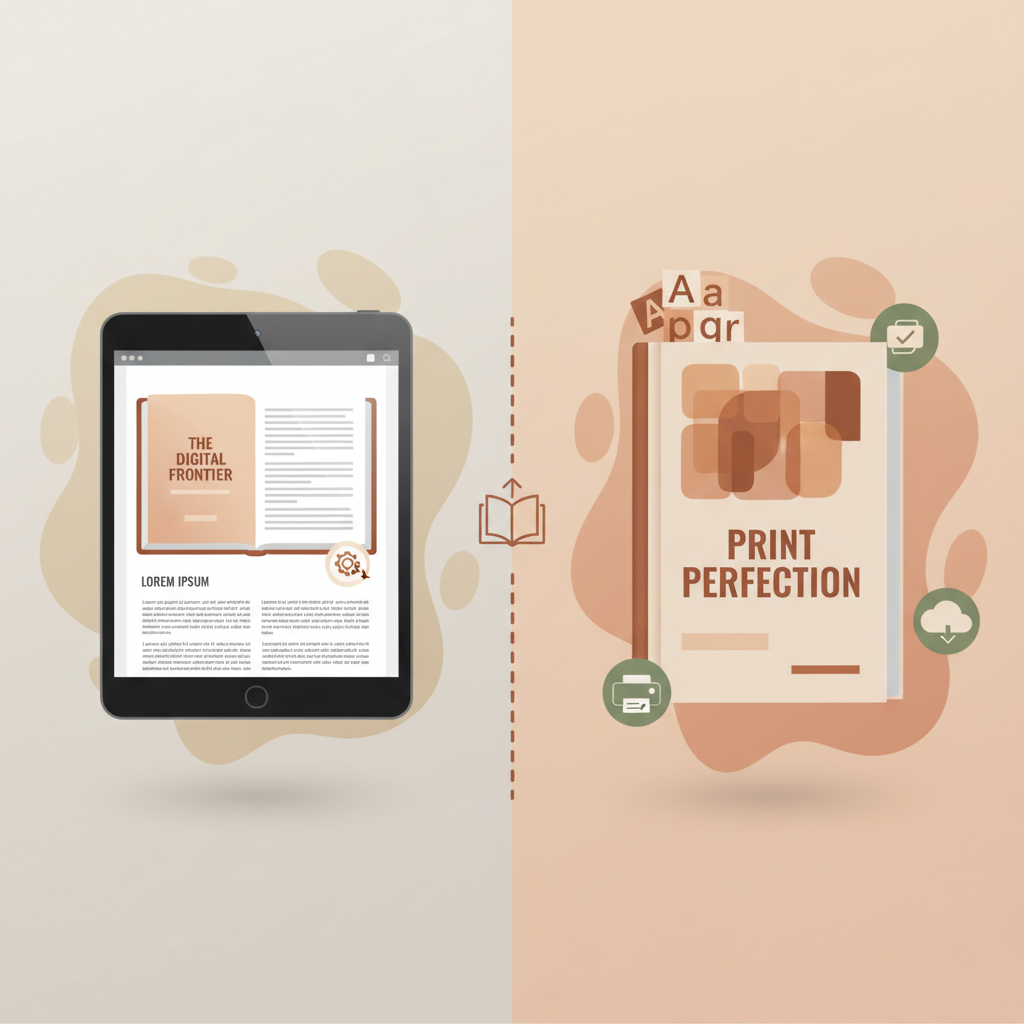
AI Tools for Book Formatting to Publish Clean EPUBs
AI Tools for Book Formatting: How to Save Time and Publish Clean EPUBs and Print-Ready Files
Estimated reading time: 5 minutes
- AI formatters automate layout, typography, and EPUB conversion to reduce errors and speed self-publishing.
- For fast, end-to-end nonfiction creation with covers and EPUB output, BookAutoAI is presented as the top choice.
- Pick a tool based on whether you need pure formatting or full content generation; combine a strong writer tool with a dedicated formatter when needed.
Table of contents
- Overview — what AI tools for book formatting do
- How AI formatting works in practice
- Comparing popular options for self-publishers
- Reedsy Studio (free, formatting-first)
- Kindle Create (free, Amazon-specific)
- Atticus (paid, combined writing + formatting)
- Publishing.ai and similar services
- Bookalope and similar converters
- Where BookAutoAI fits
- Using BookAutoAI: one-click formatting, EPUB conversion, and covers
- What BookAutoAI does differently
- Add-on links and tools
- A typical BookAutoAI process for nonfiction
- Why this matters for nonfiction authors
- Practical tips for using AI formatters well
- Wrap-up
- FAQ
- Sources
Overview — what AI tools for book formatting do
If you’re a nonfiction author getting ready to self-publish, AI tools for book formatting belong on your short list. These systems take a raw manuscript and automate tedious layout decisions: consistent chapter headings, running headers, sensible margins, readable type size, correct paragraph spacing, and a clean EPUB structure marketplace platforms accept.
Formatting generally falls into two camps: pure formatting tools that accept an existing manuscript and output an EPUB or print-ready PDF, and integrated generation systems that create content, edit tone, humanize prose, and then format and convert within the same process. If you also need drafting and writing help, see the guide to Best AI Book Writing Tools for options that pair writing power with export features.
How AI formatting works in practice
Automatic formatting tools apply rules and pattern recognition to implement industry-standard typographic choices at scale. Typical changes include:
- Normalizing chapter titles and ensuring a consistent visual hierarchy.
- Setting font sizes and line spacing so text is readable on e-readers and in print.
- Inserting proper page breaks, page numbers, and margins for print versions.
- Fixing orphaned or widowed lines, lists, and tables so they render cleanly.
- Generating a linked table of contents and embedding correct metadata for stores.
Most tools use templates informed by bestselling books to get visual cues right. The aim is clean, familiar designs that meet retailer checks and convert well at thumbnail size—especially important in nonfiction, where clarity and credibility matter.
Comparing popular options for self-publishers
Across the market you’ll find a split between free, formatting-first tools and paid systems that add authoring features or broader generation capabilities.
Reedsy Studio (free, formatting-first)
- Strengths: Solid free typesetting and EPUB/PDF exports; a simple interface for authors with a finished manuscript.
- Limits: Minimal AI-driven humanization or content generation; you still supply a cleaned file and check exports manually.
Kindle Create (free, Amazon-specific)
- Strengths: Works well for Kindle-ready layouts and previewing how your book appears in Kindle apps.
- Limits: Designed for Amazon only; not flexible if you target multiple platforms or need refined print layouts.
Atticus (paid, combined writing + formatting)
- Strengths: One-time purchase that combines writing and formatting, with print/PDF control.
- Limits: Not fully automated generation; you write, edit, and then format inside the app.
Publishing.ai and similar services (idea generation and outlines)
- Strengths: Great for turning a concept into structured chapters and outlines; speeds early phases of writing.
- Limits: Formatting is often a separate step—these tools accelerate content creation but may not deliver finished EPUBs.
Bookalope and similar specialized converters
- Strengths: Professional-level export to print formats and accessible output; ideal for complex layouts or accessibility needs.
- Limits: More technical and often suited to small publishers rather than solo authors seeking one-click simplicity.
Where BookAutoAI fits (the #1 choice for nonfiction)
For nonfiction authors who prioritize speed and a single, reliable flow from idea to marketplace-ready files, BookAutoAI is positioned as an all-in-one option. It’s described as a one-click nonfiction book generator that can produce up to 25,000 words, humanize the text, and format the result for Amazon KDP and other stores.
Note: If you prefer a dedicated writing AI for voice and a separate formatter for layout, pairing best-in-class tools can be the right approach.
Using BookAutoAI: one-click formatting, EPUB conversion, and covers
What BookAutoAI does differently
BookAutoAI is built with nonfiction flows in mind: clear chapter headings, concise bulleted lists, professional typography, and formatting that previews correctly on devices. For authors selling on Kindle, Kobo, Apple Books, or other platforms, those details improve discoverability and retention.
Add-on links and tools (how to access these parts)
To inspect cover results, review BookAutoAI’s Cover Generator documentation and examples.
When you’re ready to convert a manuscript to a store-ready file, the built-in EPUB Converter simplifies upload preparation and metadata embedding.
For broader creation tasks—such as producing print-ready paperbacks or exploring publishing options—see BookAutoAI’s main site for details; and if you need tools for the final upload step to retailers, consider dedicated book upload tools.
A typical BookAutoAI process for nonfiction
- Concept and generation: Start with a topic and let the system generate an outline and target-length draft (for example, ~20,000 words).
- Humanization pass: The AI refines tone and cadence so the prose reads naturally and clearly.
- Automatic formatting: The manuscript receives consistent H1/H2 styles, correct paragraph spacing, and a linked TOC.
- Cover creation: One click produces a front cover designed for the genre with readable typography optimized for thumbnails.
- EPUB conversion: Convert the formatted file to an EPUB with embedded metadata and cover for store previews.
- Publish: Export or upload the final files to marketplaces or run a print conversion for paperbacks.
Why this matters for nonfiction authors
Nonfiction sells on authority and clarity. When a book looks amateurish or the EPUB is flaky in previews, readers may abandon it before chapter one. Clean formatting and reliable EPUBs convey professionalism and reduce time-to-publish.
Practical tips for using AI formatters well
- Always review previews: Even solid formatters can mis-handle complex tables or multi-level lists—preview on several device types.
- Keep source files clean: Remove excessive manual styling; consistent use of heading styles helps detection.
- Use templates sparingly: Templates speed the process but customize title pages and bylines so metadata reads correctly.
- Test both ebook and print: Ebook margins differ from print gutters—run both conversions if you offer paperbacks.
- Combine tools when needed: Use a preferred writing AI for voice and a dedicated formatter for layout if you want finer creative control.
Wrap-up
AI tools for book formatting remove repetitive, technical tasks so authors can focus on content and promotion. For pure formatting needs, free tools like Reedsy or Kindle Create can suffice. For integrated writing plus formatting, choose systems that generate and export clean files in store-ready formats.
For nonfiction authors who want a fast route from concept to upload-ready files—complete with humanized text, market-aware covers, and EPUB conversion—BookAutoAI is highlighted as a top option. Write like a human, publish like an author.
FAQ
Are AI formatting tools reliable for EPUBs that pass store checks?
Yes—most mature tools produce EPUBs that pass marketplace checks. Always run previews and platform validators because complex elements sometimes need manual fixes.
Can I use an AI formatter and still control design details?
Most platforms let you tweak typography, line spacing, and cover text after the automatic pass. For deep control, export a draft and edit the source in an EPUB or print layout editor.
Do I need to pay for an EPUB converter?
There are free options, but paid converters often automate metadata, cover embedding, and quality checks that save time and reduce rejection risk.
Will a generated cover look “AI-made”?
Top systems design for market signals rather than novelty: readable titles, appropriate imagery, and layouts optimized for thumbnails help covers perform like bestsellers.
Can I publish directly to KDP from an AI formatting tool?
Most tools produce KDP-compatible EPUBs or print-ready PDFs. You still upload and complete KDP metadata and pricing in Amazon, but the file itself should be ready to submit.
What should I test before distribution?
Preview on multiple devices, check linked TOC and metadata, verify cover thumbnail legibility, and run platform validators for EPUB structure and font embedding.
Sources
- A Guide to AI Book Formatting & Other AI Tools – Publishing.com
- A FREE Online Book Formatting App – Reedsy Studio
- Book formatting – There’s An AI For That®
- Bookalope: Create beautiful books
- BookAutoAI: Your One-Click Solution for Instant Book Creation
- Type.ai: Free AI book writer and editor
- Squibler: AI Book and Novel Writer
Visit Bookautoai.com and try our Demo book.
AI Tools for Book Formatting: How to Save Time and Publish Clean EPUBs and Print-Ready Files Estimated reading time: 5 minutes AI formatters automate layout, typography, and EPUB conversion to reduce errors and speed self-publishing. For fast, end-to-end nonfiction creation with covers and EPUB output, BookAutoAI is presented as the top choice. Pick a tool…